
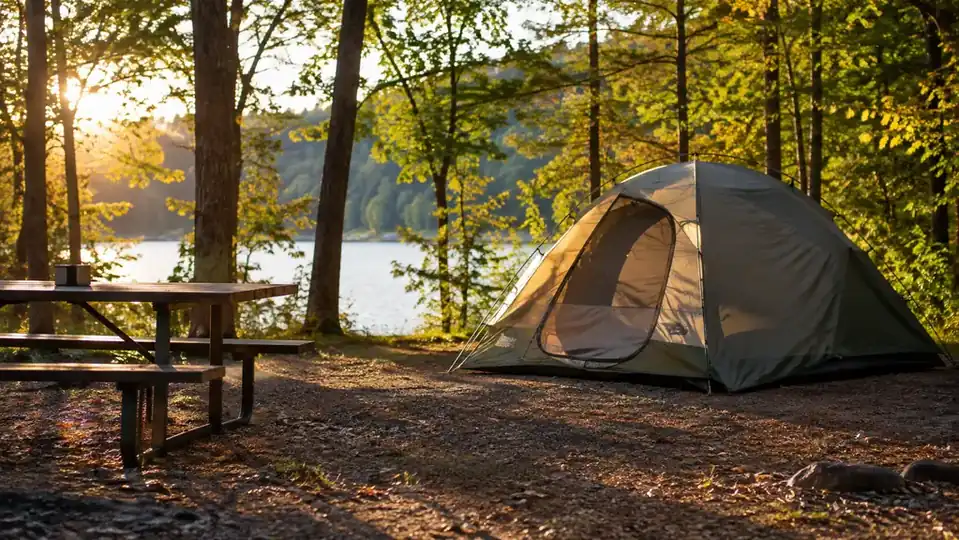
Back in April I told Marla we were going to do this camping season right: one tent, every trip, no switching gear between weekends. We slept in a Coleman Sundome for fourteen nights spread across Clinton Lake, Perry Lake, the Lake of the Ozarks, Mark Twain National Forest, and a week in Colorado. I am a retired HVAC technician from Olathe, Kansas, and I spent thirty years looking at how things are built and what fails first. The Sundome is not a fancy tent. It is a straightforward dome shelter that sets up fast, keeps the rain out, and has earned a permanent spot in the bed of my 2014 Tacoma. Somewhere around the third trip I stopped thinking about the tent entirely, which is the highest compliment I can give any piece of gear.
Marla sleeps cold, so most of my gear decisions start with her. A tent that leaks or drafts means a long night for both of us. The Sundome never started that conversation. The only middle-of-the-night complaint all season came from a raccoon at Perry Lake, and I am not sure any tent could have solved that one. I will get the boring details out of the way first, then tell you what held up, what did not, and who should buy one.
The Quick Verdict
A simple, dependable dome tent that gives car campers fast setup and dry nights without overthinking anything. It is the tent I reached for every weekend this season.
Amazon Check Today's Price →The tent that earned its spot in the truck
After a full season of state park weekends, the Coleman Sundome is the shelter I trust for fast setup and dry nights. Check today's price on Amazon and see the current reviews for yourself.
Amazon Check Today's Price on Amazon →How I've Used It
I bought the 4-person version, which sounds like too much tent for two people and is exactly right. The floor fits a queen-size air mattress with a path to the door, and our duffels ride in the far corner. We set up in a cold April wind at Clinton Lake, at Perry Lake in May when the ticks were out, in the Ozarks in June during a stretch of afternoon storms, and in Colorado in July when the nights dropped into the forties. The tent went up and came down at least twenty times over the season.
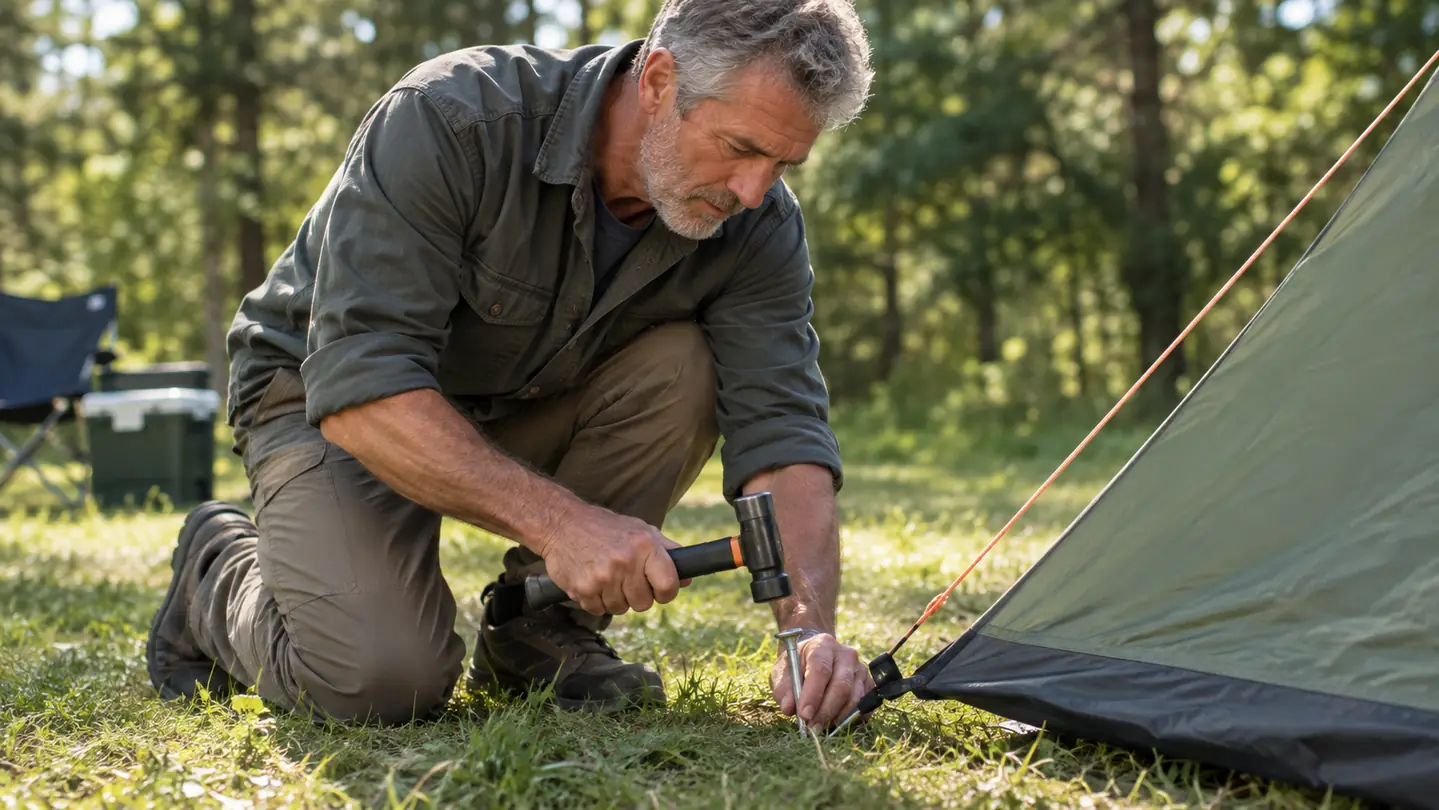
Setup with two people takes about eight minutes. The poles are already attached to the tent, which is the detail that makes it fast. You unfold the body, stake the corners, push the poles through the sleeves, and click the ends into the feet. My rule with any tent is to stake it and guy it out before I trust it, and I did that every night. The night the wind picked up at Clinton Lake, the difference between a staked tent and a loose one showed up in the neighbor's campsite.
I also used it solo for three nights at Mark Twain National Forest in October when Marla had other plans. By myself, setup was twelve minutes. That is the honest number for one person. The tent does not care whether it holds one or two, and it packs small enough that I did not miss the extra room.
I kept a few notes as the season went on, mostly so I could answer the questions people ask at the campground. Does it leak? No. Does it take forever to set up? No. Is it worth the money? That one I will let you decide, but I have not once regretted buying it.
How It Handles Rain
The Sundome comes with a rainfly that covers the top and partway down the sides. I test that weatherproof claim the hard way. In June at the Lake of the Ozarks we got three nights of steady rain, the kind that starts after dark and does not quit. The fly shed it. The floor is a bathtub style, which means the seams sit up off the ground, and that is the difference between dry and soggy when your site drains poorly.
One thing I learned the first weekend: the fly has to be staked out to do its job. Coleman includes the stakes. If you leave the fly lying against the tent, you will get condensation inside, and people blame the tent for what is really a setup problem. I keep the fly a few inches off the tent body and stake the corners. We stayed dry every night, including the three wet ones in the Ozarks.
I will say the included stakes are light. They bent on a couple of rocky sites, and I replaced them with heavier ones after the second trip. That is a small fix and worth doing before you head out.
Space, Layout, and Sleeping
For two people, the 4-person Sundome is roomy. The queen air mattress fits with a little space at the foot, and the walls are steep enough that you are not fighting fabric all night. Marla sleeps cold, so she used her 20-degree bag with a foam pad under the mattress. She never once blamed the tent.
Center height is enough to sit up and change clothes without the awkward crouch. I am not a tall man, so take that with a grain of salt. The door is a single D-shaped opening, which is fine for two. If you are a family of four, size up to the 6-person version, because four people in a 4-person tent is four people in a 4-person tent.
Storage is what you make of it. There is a small gear pocket on one wall, and we hung a lantern from the center loop. Most of our stuff lived in the truck under the bed cap, which is the right way to car camp anyway.
What a Season Does to It
After twenty-plus setups, here is the honest wear report. The fiberglass poles have held up. The zippers still run smooth, which is the first thing I check on any tent, because a tent with a broken zipper is a tent you will replace. The floor has no holes and the seams are still sealed.
The stakes are the weak point, as I said. The carry bag is adequate, not great, and the opening is tight, so packing takes patience. The tent shows light wear where the poles meet the grommets, which is normal for a season. I expect several more years out of it, and I say that as someone who has watched cheap tents die in one season of regular use.
Wind is the limit. A dome tent is not a cabin. We had one night at Clinton Lake with gusts strong enough that we re-staked at midnight, and the Sundome flexed but held. I would not take it above treeline in Colorado, and I did not. The week we spent up there we stayed in a forested site, and the tent was fine.
I checked the seams at the end of the season with a flashlight, the way I used to inspect ductwork. No separation, no worn stitching at the stress points. The zipper pulls are still attached, which sounds like a small thing until you have replaced a zipper pull at a campsite with pliers.
The rainfly fabric is still in good shape after a season of sun and storms. I expected the coated side to show wear by October, and it does not. The velcro tabs that hold the fly to the poles are still tight, which matters, because a fly that flaps in the wind is a fly that wears out.
How It Packs and Travels
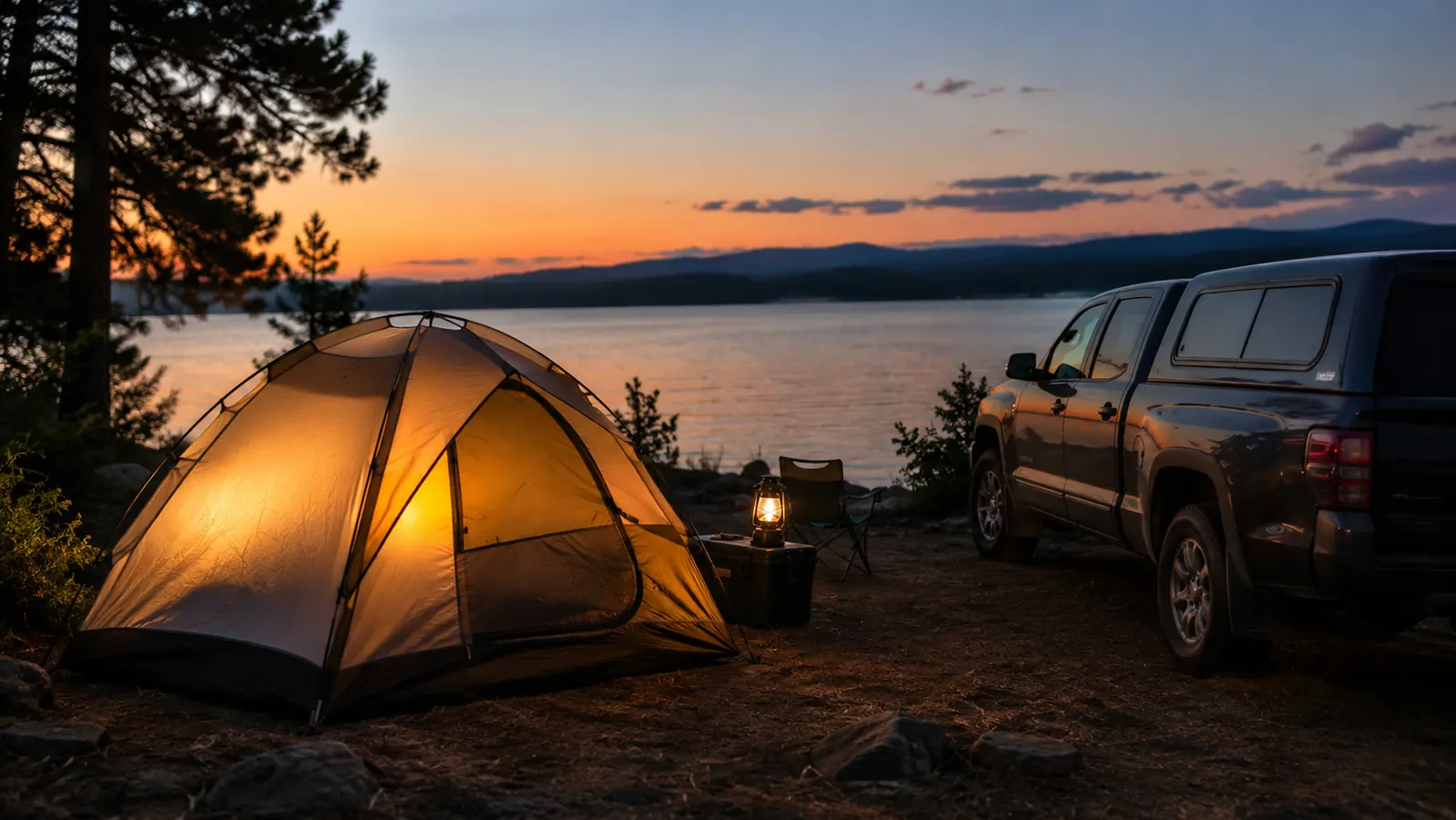
The Sundome lives in the bed of my Tacoma under the cap, so it does not need to be tiny. Packed, it is a cylinder about twenty inches long, which is easy to slide beside the cooler. The 4-person version weighs about twelve pounds, which is nothing for a truck and everything for a backpack. This is a car-camping tent, full stop.
The bag has a simple drawstring and a handle, and it will hold the tent and the fly if you roll them the right way. The first two trips I fought the bag. Once I learned to fold the tent in thirds instead of stuffing it, everything fit. That is a ten-minute lesson, not a real complaint.
Because it lives under the bed cap, I never worried about packing it wet. We only packed it damp once, after the Ozarks rain, and it dried in the sun at home the next day. The fabric is a standard polyester, and it does not hold smells the way some cheaper tents do.
Where It Falls Short
No tent is perfect, and the Sundome has a few things I would change. The fly does not reach the ground, so in a hard sideways rain the lower walls can get wet. We never had water come inside, but I could see it happening in a worse storm than we caught. The single door means the person on the far side climbs over the other person at night, which is a marriage test.
Ventilation is adequate, not excellent. The ceiling mesh helps, and on cool nights we ran the fly loose for airflow. On a hot, still August night it gets warm inside, which is true of any single-door tent. I would not sleep four people in it on a hot night. Two people with the fly off, it is fine.
The other thing I would mention is the footprint. Coleman does not include one. I bought a generic footprint that matched the floor size, and it has saved the floor from a few sharp rocks. If you camp where the ground is rocky, it is worth doing the same.
One more honest note: the Sundome is not a tent you will pass down to your kids. The materials are good for the money, not great. The zippers are standard, the poles are fiberglass, and the floor is a coated polyester. It is built to give you years of dependable weekends, and then you replace it. For the way most families camp, that is a fair trade.
What I Liked
- Sets up in about eight minutes with two people, thanks to attached poles
- Bathtub floor and a rainfly that kept us dry through three straight nights of rain
- Room enough for a queen air mattress in the 4-person size
- Held up through twenty-plus setups in a season with no zipper or pole failures
- Packs down small enough to live under the bed cap of a Tacoma
Where It Falls Short
- Included stakes are light and bent on rocky sites; replace them
- Rainfly stops partway down, so driving rain can wet the lower walls
- Single door means the far sleeper climbs over the near sleeper at night
- No footprint included, and I recommend one for rocky ground
Three straight nights of rain at the Lake of the Ozarks and not a drop came through the floor or the fly. That is the whole review.
Who This Is For
This tent is for car campers who want a dependable shelter without overthinking it. If you camp out of a truck or SUV, stay at state parks, and want something that goes up in minutes and keeps the rain off, the Coleman Sundome is a solid choice. It is also a good first tent for a family that camps a few weekends a year, because it is simple enough for the kids to help set up.
I would also put the Sundome in front of anyone who is new to camping and does not want to learn a complicated shelter. The poles are attached, the colors match, and the whole thing makes sense the first time you open it. My sister-in-law set one up by herself last summer after a single walkthrough, and she is not a camper.
Who Should Skip It
Skip the Sundome if you backpack, because it is heavy and packs long, and nobody wants to carry a fiberglass pole tent on their back. Skip it if you regularly camp in exposed high country, where a four-season tent is the honest answer. And if you want two doors, or a fly that reaches the ground, you will be happier spending more. The Sundome knows exactly what it is: a simple, affordable car-camping tent, and it is very good at that job.
If you camp in the same spot all season and never move it, a cabin-style tent with more room is a better use of your money. And if you want every piece of gear to be the last one you ever buy, the Sundome will frustrate you. It is a good tent, not a forever tent. It will last for years of normal weekends. It is not built for a decade of hard use.
The tent I reached for all season
After fourteen nights in Kansas, Missouri, and Colorado, the Coleman Sundome is the first tent I grab from the truck. Check today's price on Amazon and see why it suits weekend car campers.
Amazon Check Today's Price on Amazon →