
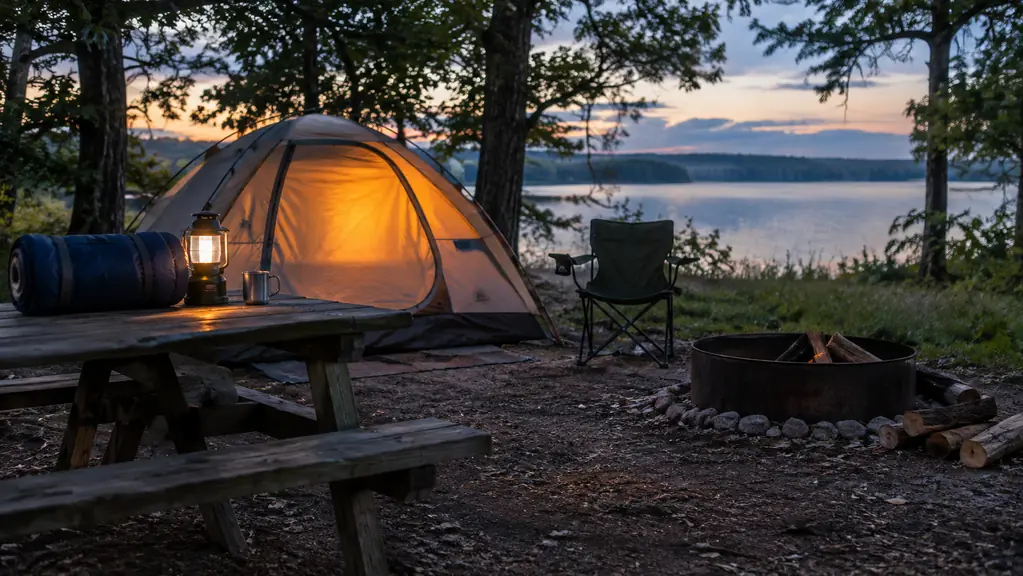
After 30 years in HVAC, I know heat loss when I feel it, and my wife Marla feels it faster than anyone I've met. She sleeps cold. Put her in a 70-degree bedroom under a light blanket and she's curled up by midnight. So when we started camping together out of the back of our 2014 Tacoma, her sleeping bag was the first thing I replaced. The Coleman Heritage Big & Tall 10°F flannel bag has been on roughly 22 nights of camping over the last year, and it has earned a permanent spot in the bed cap.
This is the long version of that review. Not the first-night impression, but what the bag looks like after a season of Kansas wind, Ozark humidity, a week in Colorado, and a washing machine that has seen better days. If you sleep cold, or you're married to someone who does, here's what I'd want to know before I spent my own money.
The Quick Verdict
The warmest, roomiest rectangular bag we've owned in 40 years of camping. The 10°F rating is a survival rating, not a comfort rating, and it rolls up big. But for car camping with a cold sleeper, nothing we've tried beats it.
Amazon Check Today's Price →Cold sleepers need room, not just a temperature rating
The Coleman Heritage Big & Tall gives Marla the room to move and the flannel to stay warm. See today's price on Amazon and decide if it fits your setup.
Amazon Check Today's Price on Amazon →How I've Used It
The bag went to work on its first real test in early April at Clinton Lake, when the overnight low hit 38°F. Marla slept in it on a 3-inch foam pad inside our tent, and she reported two things the next morning. She was warm, and she had actually turned over during the night without fighting the bag. That second detail is what sold me. She moves around a lot in her sleep, and the XL cut gives her room to do it without letting cold air in through the opening.
Since then it's been to Perry Lake in May, Lake of the Ozarks in June and again in September, Mark Twain National Forest in July, and a week in Colorado in August where the nights dropped into the 40s at altitude. I've slept in it myself on the nights Marla didn't need it, which is how I can tell you what it's like from the inside instead of just from watching her sleep. I'm 6 feet tall and 210 pounds, and I had room to spare. That's not a claim a lot of sleeping bags can make.
Washing has happened three times, usually after a trip where the bag picked up campfire smoke. It goes into a front-loading washer on cold with a gentle cycle, and I hang it over the deck railing to dry for a full day. The flannel comes out soft and the loft comes back. That's more than I can say for the old synthetic bag we retired, which clumped up after its second wash and never slept the same.
We've also used it on warm nights, which is a test people forget about. In June at Lake of the Ozarks, when it didn't drop below 70, Marla just unzipped it and used it like a blanket. A lot of cold-rated bags turn into a sweat box the moment the weather warms up, but because this one opens flat and the flannel breathes, it worked fine half open. That flexibility is why it lives in the bed cap all year instead of coming inside for the summer.
What Makes the Heritage Big & Tall Different
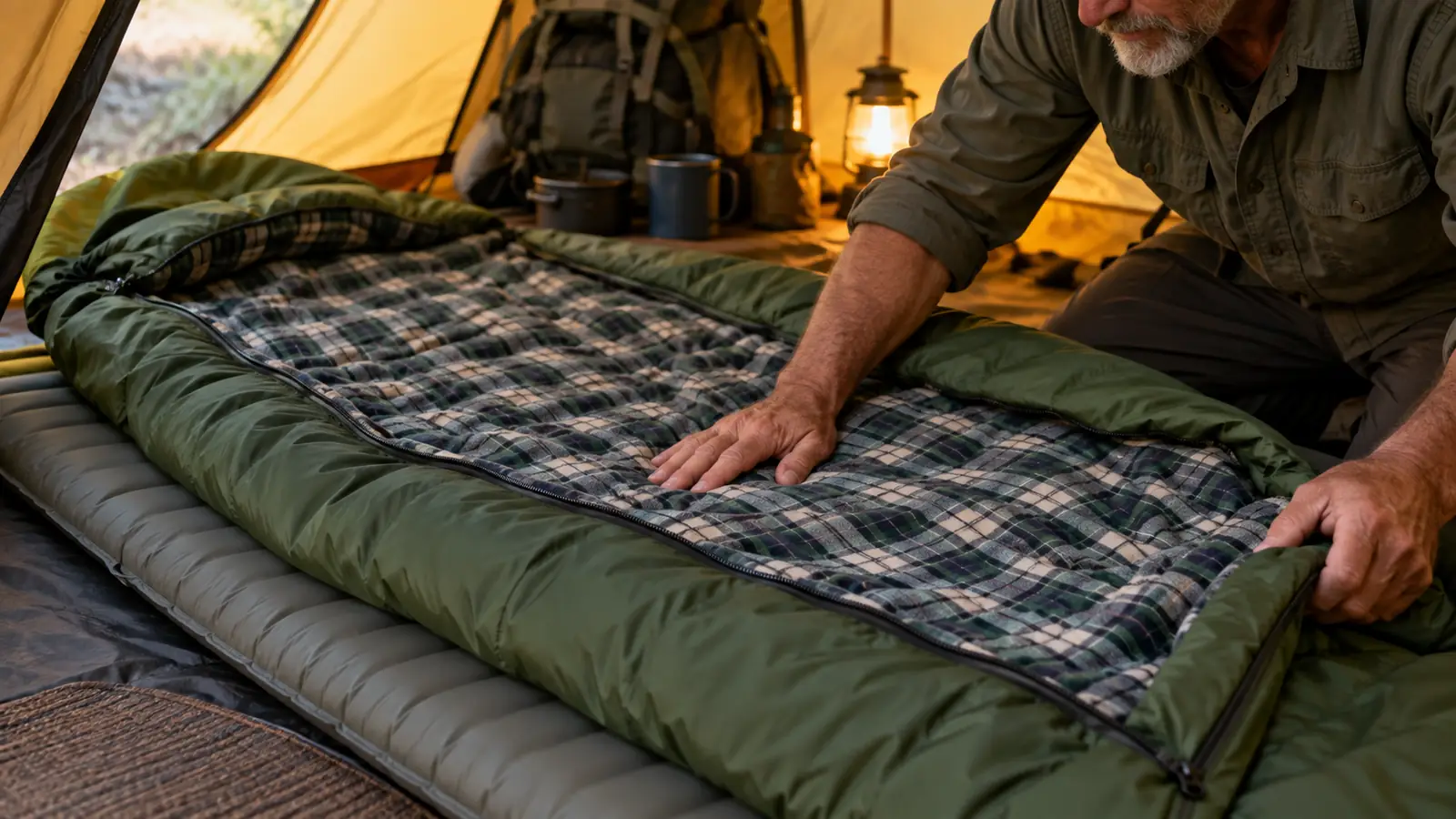
The first thing you notice is the lining. It's flannel, not the slippery nylon most bags use. Flannel against your skin feels like a bed at home, and it doesn't have that cold shock when you first climb in. Marla noticed it on night one. She gets into the Coleman and the bag doesn't feel like a refrigerator. For a person who sleeps cold, that first minute matters more than any rating on the tag.
Second is the cut. The Big & Tall part isn't just a label. This bag is built for someone up to 6 foot 7 inches, which means a normal-size person gets real room to move. Rectangular bags are already roomier than mummy bags, and this one is a rectangular bag with extra room on top of that. If you sleep on your side like I do, or you turn over a lot like Marla does, that room matters more than saving a few ounces of weight.
Then there are the details that only show up over time. The zipper has a draft tube behind it, so cold air doesn't sneak through the teeth on a windy night at Perry Lake. The hood cinches with a drawcord, which Marla uses when the temperature drops. And the whole thing is machine washable, which sounds like a small thing until you own a bag that can't be washed and smells like three seasons of campfire smoke.
One small thing that's easy to miss in a store: getting in and out is easy. The zipper runs the full side, so you can open the whole bag like a blanket, climb in, and pull it over you. On the old bag we had, you entered through a short opening and had to shimmy down into it, which woke you up more than it helped. The Coleman opens fully, and for someone with achy joints, that's a real convenience at 2 AM.
How It Held Up Over the Season
The honest headline: after 22 nights and three washes, the bag sleeps about the same as the day it arrived. The flannel hasn't pilled or thinned. The zipper hasn't snagged once, which surprised me, because a snagged zipper is the thing that kills most sleeping bags. The stitching around the zipper base, the spot that fails first on cheap bags, is still tight. I've owned bags that started unraveling there in a single season.
The loft has held up too. Synthetic bags lose their puff over time, and cheap ones lose it fast. This one still puffs up when you unroll it, and it still feels like there's real insulation between you and the ground. I don't know how many seasons it'll keep doing that. After one full year, I can't point to any decline, and for a bag that gets rolled and unrolled as often as this one does, that's a legitimate compliment.
The one wear issue is cosmetic. The bag has a permanent crease down the middle from living rolled up in the bed cap between trips. It doesn't affect warmth, but if you're the type who likes gear to stay perfect, know that this is a bag that looks lived in after a season. I consider that a feature. It's a camping bag, not a showpiece, and it's earned that crease.
We roll it rather than stuff it, which is the recommended way for this bag, and the fabric has stayed smooth. No snags from the zipper, no pulls in the flannel. The bag also spent a full weekend getting rained on indirectly at Mark Twain when the tent leaked a little, and it dried out fine. Damp flannel dries faster than I expected, which matters in Missouri humidity.
Where It Falls Short
Let's be clear about the 10°F rating. That number is a survival rating, which in the sleeping bag world means you won't freeze to death at 10°F, not that you'll be comfortable at 10°F. Marla is comfortable in this bag down to the upper 30s with a good pad and a base layer. Below that, she adds a blanket or wears a heavier layer. If you're shopping for a bag that will keep you toasty at 10°F, this is not that bag, and no rectangular bag at this weight is.
The other tradeoff is bulk. This bag is big when it's rolled. It takes up a serious chunk of the bed cap, and it's heavy to carry more than a few yards. That's fine for car camping, which is exactly what we do. But if you're backpacking, this is the wrong bag, full stop. A mummy bag that packs to the size of a loaf of bread is what you want for that job, and the Coleman is not trying to be that.
One more honest note. A sleeping bag only keeps you warm if you have insulation underneath you. The first night Marla used it on a bare tent floor, she was cold, and the bag got blamed unfairly. On a sleeping pad, even a basic 3-inch foam one, she's fine. If you buy this bag and you still sleep cold, check your pad before you blame the bag. That's the HVAC guy in me talking. The floor of the tent is a heat sink.
One thing to know if you're buying this for a smaller person: the extra room works both ways. Marla is a side sleeper and the room is exactly what she needs, but if she were a small, still sleeper, she'd be swimming in it and carrying a lot of dead air that needs to warm up. If you're a 5-foot-2 person who sleeps like a log, a regular-size bag will serve you better. The Big & Tall size is the point of this bag, not a bonus.
There's no compression sack in the deal, and you'll want one only if you're trying to save space. Rolled the way it comes, the bag is what it is: a big cylinder that rides fine in the bed cap but wouldn't fit in a full backpack. I don't hold that against it, because it's not built for that job. Just know what you're buying before the box shows up.
The Alternatives I Considered
Before I settled on the Coleman, I looked at the obvious alternatives. A mummy bag rated to 0°F would have packed smaller and rated colder, but Marla hates feeling wrapped up, and a mummy bag is the definition of wrapped up. A similar flannel bag from Dunnock got good reviews and I nearly ordered it, but the sizing ran smaller and the zipper complaints showed up in the long reviews. I've owned enough cheap gear to know that pattern.
Down was the other option, and down is wonderful stuff, warm for the weight and packable. But down is expensive, it's miserable when it gets wet, and we car camp, so we don't need to save weight badly enough to pay for it or to baby it. The Coleman does the job for our kind of camping, which is sleeping in a tent within 50 feet of the truck, and it does it without the fuss.
I also looked at a bag with a fleece lining, and fleece is soft, no question. But fleece holds odor worse than flannel and it doesn't breathe as well in humidity. After a July trip to Mark Twain, I was glad we had the flannel. It stays dry against the skin in a way fleece doesn't.
What I Liked
- Flannel lining feels warm and dry against the skin, even on the first night of the season
- XL cut gives a cold sleeper room to turn over without letting cold air in
- Zipper has never snagged once in 22 nights
- Machine washable, and the loft comes back after washing
- Draft tube and drawcord hood keep drafts off your neck and back
Where It Falls Short
- 10°F rating is a survival rating, not a comfort rating; count on the upper 30s for real comfort
- Rolls up big and heavy; it eats bed cap space
- Needs a decent sleeping pad underneath or you'll feel ground cold
- Not a backpacking bag, and it doesn't pretend to be
- Picks up a permanent crease from being stored rolled
The first night Marla slept in it, she woke up warm and told me she'd turned over twice without fighting the bag. That's the whole review in one sentence.
Who This Is For
Buy this bag if you car camp out of a truck or an SUV, if you sleep cold, or if you're married to someone who sleeps cold and you want to stop hearing about it at 2 AM. It's also the best spare bed we own. It lives in the bed cap, and it's the first thing I grab when a guest needs a place to sleep. It unrolls into a real bed for someone who didn't plan on staying over. For our kind of camping, the Coleman does everything we ask of it, and it does it year after year.
Who Should Skip It
Skip it if you're backpacking, because it weighs too much and rolls up to the size of a small cooler. Skip it if you regularly camp below 20°F and expect to be comfortable, because you'll want a mummy bag or an extra blanket on top. And skip it if you need a bag that packs small for a motorcycle trip or a tight car. This is a big, warm, honest rectangular bag for people who sleep within sight of their vehicle. That's us. If that's also you, this one is worth a hard look.
Give the cold sleeper in your tent some room
After a full season of trips, the Coleman Heritage Big & Tall is the first bag I'd put a cold sleeper in. Check today's price on Amazon.
Amazon Check Today's Price on Amazon →