
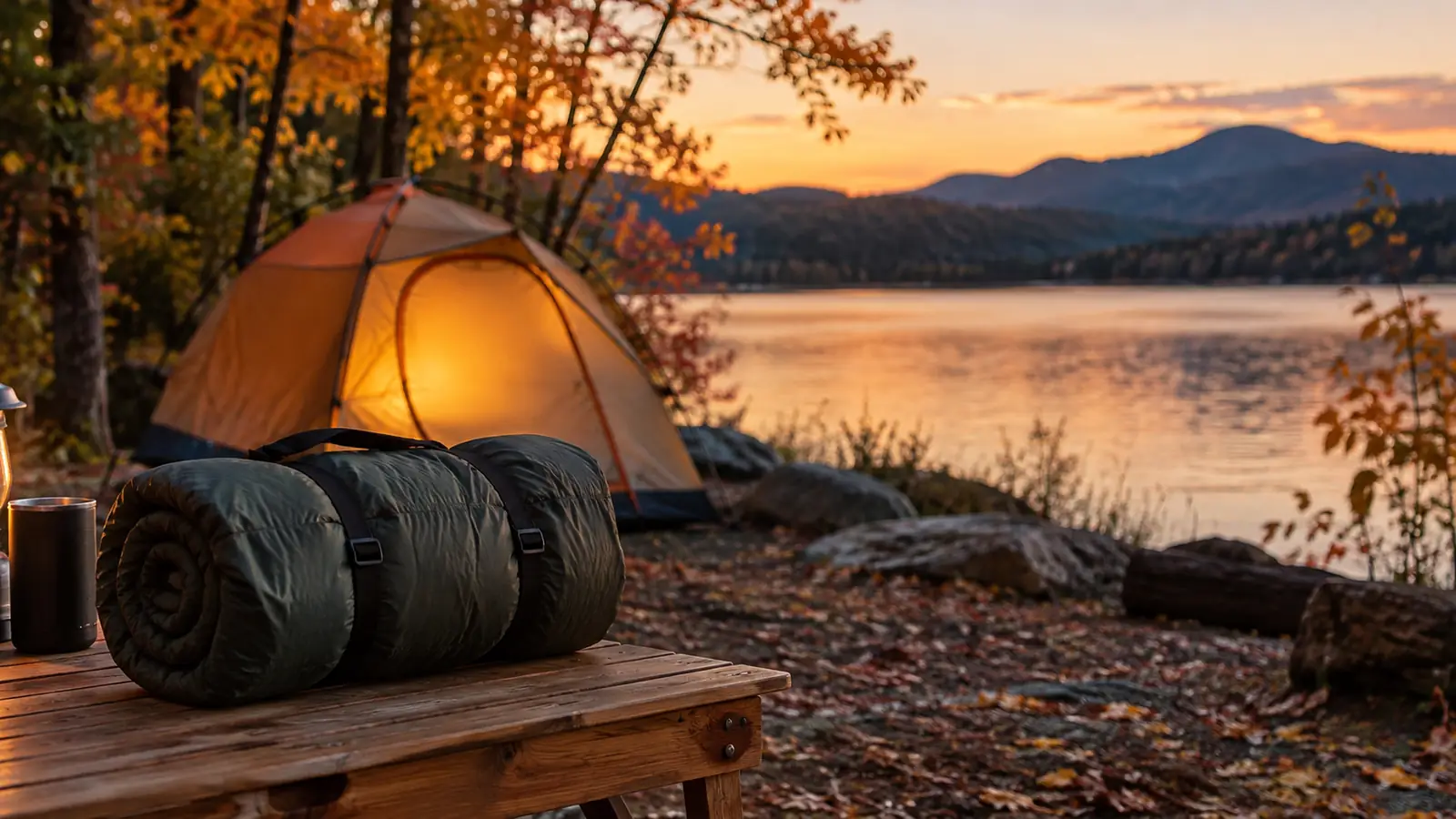
Here's the short answer before I get into the weeds: if you need a bag that actually keeps you warm when the temperature drops below freezing, get the Coleman Heritage. If you mostly camp in summer, run hot at night, or want a soft spare for the guest room, the Dunnock costs less and does that job fine. I tested both out of the back of my 2014 Tacoma at Clinton Lake, Perry Lake, and Lake of the Ozarks, and the honest take is that these two bags are not competing for the same night. I've got both in camp right now, and I reach for each one for a different reason.
I'm Curt Ballard, 59, retired from HVAC work in Olathe, Kansas. Marla and I camp most months from April through October, and Marla sleeps cold, so I've spent years chasing a bag that keeps her warm without turning her into a burrito. The Coleman Heritage is a 10°F rated flannel bag with synthetic insulation, a draft tube, and a cut that fits adults up to 6 ft 7. The Dunnock is a cotton flannel bag with no cold rating to speak of. I slept in both, on purpose, and here's what I found. Neither one is junk. They're just built for different seasons, and buying the wrong one means a long, cold night.
| Coleman Heritage | Dunnock Sleeping Bag | |
|---|---|---|
| Cold-weather rating | Rated to 10°F with synthetic insulation, a draft tube, and a cinch hood | No cold rating; built for mild nights and indoor use |
| Draft protection | Full-length draft tube, draft collar, and a hood that cinches tight | No draft tube; cold air sneaks in through the zipper on cool nights |
| Fit for tall sleepers | XL cut fits adults up to 6 ft 7 in | Roomy rectangular cut, but snug for anyone much past 6 ft |
| Fabric feel | Cotton flannel shell with a soft flannel liner | Cotton flannel through and through, soft from the first night |
| Warm-weather comfort | Built for cold; runs warm when the nights get mild | Light and breathable; the bag Marla reaches for in summer |
| Price | Fair for a cold-rated bag, and often on sale | Usually the cheaper of the two |
| Durability and care | Machine washable; two seasons in, mine still looks new | Machine washable, but cotton flannel can shrink in a hot dryer |
| Best for | Cold nights, hunting camp, spring and fall trips | Summer camping, sleepovers, guest room |
Where Coleman Wins
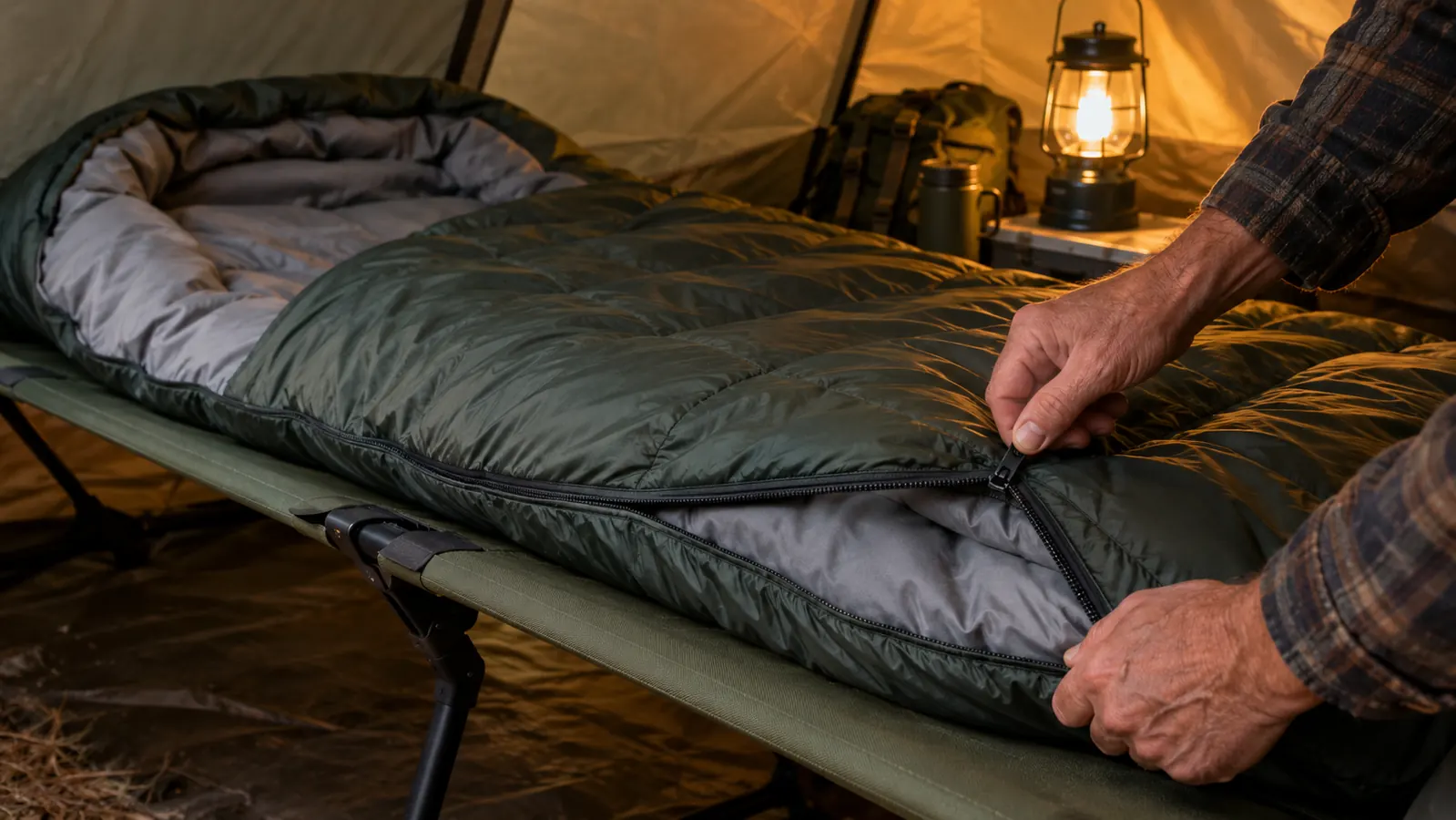
The Coleman Heritage wins the only test that matters for cold sleepers: the 2 a.m. test. The 10°F rating is honest in my experience. I've slept in it down to the upper 20s with a pad underneath and a base layer on, and I stayed warm without piling on blankets. The draft tube runs the full length of the zipper, which stops the cold air that sneaks in through the teeth, and the hood cinches down around your head so you can tuck your face in and keep the heat where it belongs. Marla, who sleeps colder than anyone I know, has used it on trips where the low hit 27°F and did not complain once. That has never happened with any other bag we own. On the trip to Colorado last summer, when the high country nights dropped into the 30s, the Coleman was the only bag I packed, and I never once woke up cold. That night taught me more than any spec sheet could.
The XL cut is the other reason I reach for the Coleman. I'm 6 ft 1 and I have room to move my feet and shoulders without fighting the fabric. The bag is built for adults up to 6 ft 7, so tall sleepers don't have to choose between a flannel bag and a bag that fits. It's also machine washable, which matters after a season of campfire smoke, and the synthetic insulation keeps working even if it gets damp, which cotton cannot claim. For a bag that lives in the bed cap of my Tacoma from April to October, that durability is the point. Two seasons in, mine still looks and sleeps like the day I bought it.
Where Dunnock Wins
I'm not going to pretend the Dunnock doesn't have its place, because it does. It wins on price, plain and simple. It's usually the cheaper bag, and for someone who camps a handful of warm nights a year, spending less makes sense. It also wins on pure softness. The cotton flannel is comfortable from the first night with no break-in period, and the rectangular shape feels less like a cocoon and more like your bed at home. Marla actually prefers the Dunnock for warm nights because she runs hot once summer arrives, and the lighter fabric lets her sleep without sweating through a mummy bag. That matters more than people think.
The Dunnock is also the bag you don't worry about. If somebody spills coffee on it or it gets dragged through the grass, you shrug it off, because it's a simple cotton bag that cost less and cleans up in the wash. It's the bag I hand to guests, the one that lives by the couch for afternoon naps, and the one I grab for the rare summer night when the forecast says 70°F and I want something light. For those jobs, it's honestly the better tool. The mistake is expecting it to do cold-weather work, because it won't. That's not a flaw in the bag. It's a flaw in the expectations.
Sleep warm on the nights that actually get cold
The Coleman Heritage is the bag I grab from September through May. It's rated to 10°F, fits tall adults, and it's the flannel bag Marla slept through a 27°F night in without a single complaint. If you camp in the spring and fall, this is the one.
Amazon Check Today's Price on Amazon →How I Tested Both Bags
I started with the Coleman Heritage on a trip to Clinton Lake last October. The forecast called for a low around 31°F, and Marla and I set up in the trees near the water. She slept in the Coleman with a decent pad under her, and she was warm all night. I checked on her around 2 a.m. and she was still zipped up to her chin, which for Marla is the highest compliment a sleeping bag can get. I slept in the Dunnock that same night in a separate tent, and I can tell you the difference was not subtle. By 3 a.m. I was wearing a fleece jacket inside the bag and still thinking about the thermos. I planned it that way on purpose, because I wanted to see what each bag did when it mattered.
To be fair, I didn't judge the Dunnock only on a freezing night. I used it at Perry Lake in May when the low was around 58°F, and on a 62°F night at Lake of the Ozarks in June. On those nights it was genuinely comfortable. Cotton flannel against your skin feels like home bedding, and the rectangular cut gives you room to move. The problem only shows up when the mercury drops. The Dunnock has no draft tube, no hood cinch, and no insulation rating, so once the temperature gets into the 40s, you feel every degree. On a mild night it's great. On a cold night it's a blanket with a zipper. I gave the Dunnock every chance to impress me, and on those nights it did.
One more thing about the testing: both bags have to live in the bed cap of my Tacoma, so packed size matters. The Coleman rolls up with a couple of straps and takes about the space of a big duffel. The Dunnock, being cotton, squeezes into a smaller roll, but it comes out wrinkled and needs a few minutes to fluff back up. Neither one is a backpacking bag, and that's fine, because I'm not backpacking. I'm driving to a lake, setting up camp, and sleeping well.
The Coleman got its toughest test in April at Mark Twain National Forest, where the weather turned cold and wet. The forecast said 45°F and rain, which is the worst combination for a sleeping bag, because damp air steals heat faster than dry cold. I stayed dry and warm inside the Coleman, and that night convinced me the synthetic insulation is the reason to buy it. Cotton flannel on its own, like the Dunnock, holds moisture and turns clammy in weather like that. Rain is the real test of a sleeping bag, and the Coleman passed.
I should also say that I tested both bags on the same pad and in the same tent, so the only variable was the bag itself. That's the fair way to compare, and it's the reason I trust these results.
Flannel vs Synthetic: What the Difference Actually Means
The title of this comparison asks a fair question: flannel or synthetic warmth? Here's what I learned after two seasons. Flannel is a fabric, not an insulator. It feels great against your skin and traps a little warmth, but it does not stop the cold. Synthetic insulation, the kind in the Coleman Heritage, is what actually holds heat between you and the outside air. The Coleman gives you both: a cotton flannel shell and liner so it feels like home, with synthetic fill underneath that does the real work. The Dunnock is all flannel and nothing else, which is why it feels soft and light and why it fails when the temperature drops. Once you understand that, the choice gets a lot clearer.
That combination matters more than the rating on the tag. A bag rated to 10°F only helps if it has the structure to back it up: a draft tube, a hood that cinches, a zipper that doesn't gap. The Coleman has all of those. The Dunnock has none of them, because it was never designed for that job. It's a fair-weather bag with fair-weather construction. I've seen cheap bags rated to 20°F that felt colder than a blanket at 40°F, because the rating assumed a tent, a pad, a base layer, and a full stomach. The Coleman is one of the few bags where the rating and the reality line up. In other words, the tag is a promise, and the construction is the proof.
And one more honest note: flannel is heavier than modern synthetics when it gets wet. If you pack the Coleman in the morning after a damp night, the cotton shell takes longer to dry than a nylon shell would. I solve that by airing it out over the tailgate while I drink my coffee. It's a small tradeoff, and I'll take it, because the flannel feel is worth the extra drying time. It's the one thing I'd change if I could.
Who Should Buy Which
Buy the Coleman Heritage if you camp in the spring and fall, if you sleep cold, if you're tall, or if you hunt. It's a serious bag for serious nights, and it will last you years. Buy the Dunnock if you only camp in summer, if you run warm, or if you need a spare bag for guests and kids. There's no shame in a mild-weather bag. Just know what it is before you buy it, and don't take it into the 30s expecting it to carry the night. That's the whole review in one sentence.
The way I think about it: the Coleman is the bag you plan a trip around. The Dunnock is the bag you grab on the way out the door. Both have a place in a camp box, but if you can only buy one and you camp in March or October, you already know the answer. I don't say that to sell you anything. I say it because it's true.
If you're still on the fence, think about the coldest night you actually plan to spend outside. If that night is below 40°F, buy the Coleman Heritage and don't look back. If the coldest night of your year is a summer night in the 60s, save the money and get the Dunnock. I keep both in my camp gear, but the Coleman is the one that earns its spot.
One last thing about the Dunnock: if you already own one and you're wondering whether you need the Coleman, the answer depends on your coldest night. The Dunnock is not a bad bag. It's a bag for the wrong season. The Coleman covers the nights that actually test you, and for a camper like me, that's what the money is for.
Get the Coleman Heritage for your next cold trip
I've used mine for two full seasons and it's still in great shape. If you want a flannel bag that keeps its promise on cold nights, the Coleman Heritage is worth a look.
Amazon Check Today's Price on Amazon →