
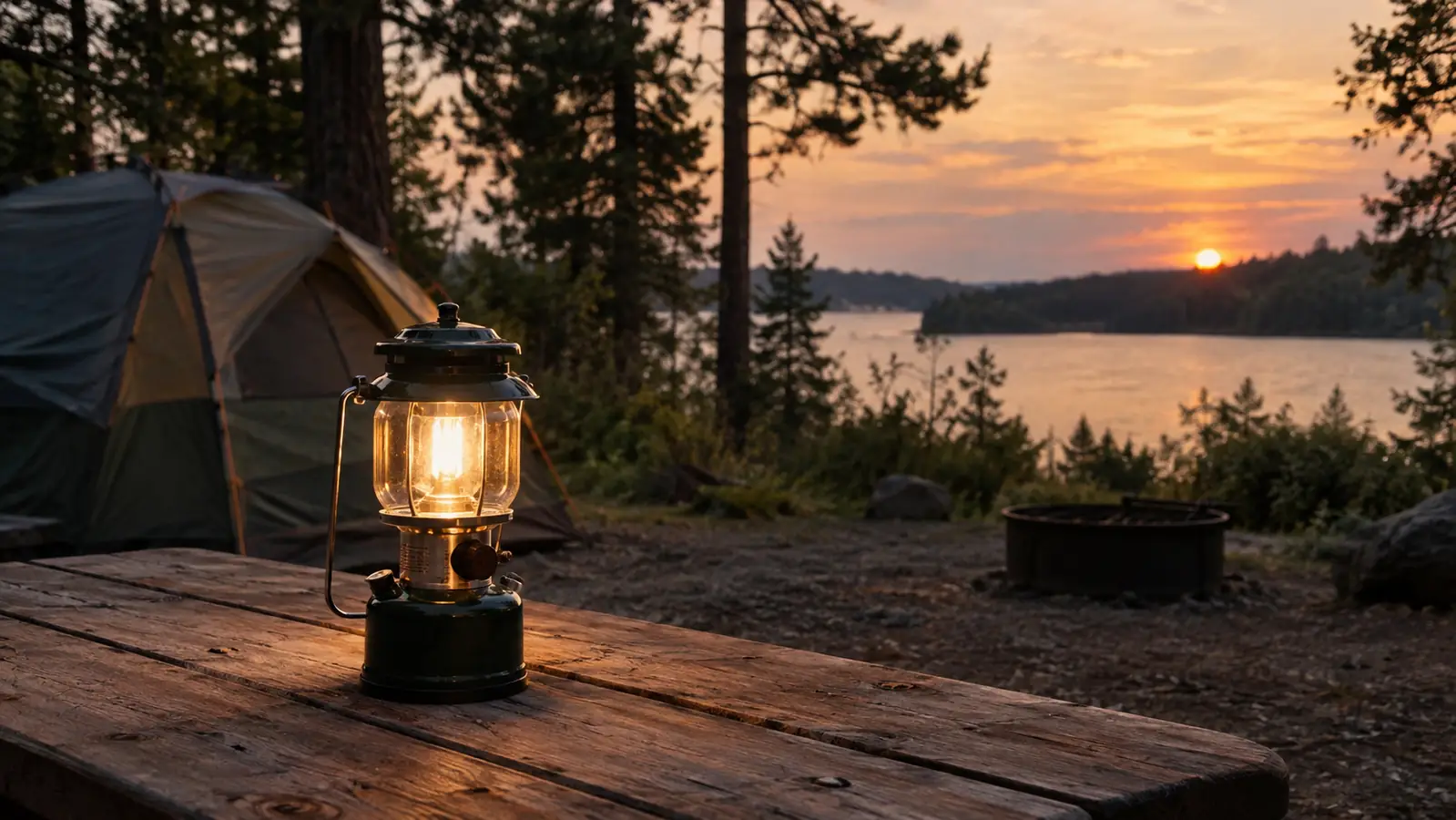
I spent thirty years working on furnaces and air conditioners, so I have a professional bias: I trust equipment that works when the power goes out. That is why, when the old propane lantern finally gave up on a rainy night at Clinton Lake, I replaced it with the Energizer X1000, the big LED camping lantern that runs on four D batteries. My neighbor brought his Lepro rechargeable lantern on that same trip, and we spent the week trading them back and forth across the picnic table like a couple of kids comparing toys. By the end of that week I had a strong opinion. After a full season of state park weekends, a stretch at the Lake of the Ozarks, and the long trip west to Colorado, I have a stronger one.
Short version: if you want a lantern you can hand to someone and trust to work next month, next season, or next Tuesday after it sat in a drawer all winter, buy the Energizer X1000. If you would rather never buy another battery and you always camp where you can charge a phone anyway, the Lepro is a genuinely good lantern. For the way I camp out of a 2014 Tacoma with a bed cap, batteries won, and it was not close.
| Energizer X1000 | Lepro Rechargeable | |
|---|---|---|
| Runtime on a full charge or fresh batteries | Up to 300 hours on low with fresh D cells, around 20 hours on high. Lasts me a whole season. | Roughly 8 to 24 hours per charge depending on brightness. You will plug it in every couple of nights. |
| Power source | Four D batteries. Sold at every gas station and hardware store in the country, in the middle of the night if you need them. | Built-in rechargeable battery, USB-C cord included. |
| Top brightness | 1,000 lumens. Lights the whole camp, table to bathhouse. | Plenty for a tent or a table, but tops out well below 1,000. |
| Water resistance | IPX4 rated. Handles rain, splashes, and tent condensation. | Fine in a dry tent. I would not leave it out in a storm. |
| Ongoing cost | You will keep buying D batteries. | No consumables. You pay for the lantern once, and the power is free. |
| Forgot to charge it | Nothing to charge. Fresh batteries and it is ready at 2 a.m. | A dead lantern until you find an outlet or a power bank. |
| Weight and pack size | Four D cells add heft. It rides in the bottom of a tote. | Lighter and slimmer. Tucks into a backpack or a door pocket. |
| Best for | Off-grid trips, emergency kits, cabins, anywhere you cannot count on power. | Car campers and basecamp users who charge devices anyway. |
How I Tested Them
I did not set up a lab, and I did not time anything with a stopwatch. I camped, the way most people camp. The Energizer came with me to Clinton Lake in May, Perry Lake in June, the Lake of the Ozarks in July, and a week in Colorado in August. The Lepro came on two of those trips, which meant I could run them side by side in the same conditions on the same nights. I kept the Energizer in the same tote as the camp kitchen, and the Lepro rode in the cab of the Tacoma, so neither one got special treatment. I used them in steady rain, in wind off the lake, and on nights cold enough that Marla wore her fleece hat to bed. I also ran the test that matters more than any lumen number: I left both lanterns in the back of the Tacoma for a month, then tried to use them with zero preparation.
The Energizer lit up on the first turn of the dial. The Lepro needed a charge before it would do anything, which is exactly the difference I want to talk about. I ran both on their low and high settings, and I paid attention to how the light looked at the table, not just how bright it measured. Neither lantern failed in any dramatic way, and neither one is a bad product. They just answer different questions, and the longer I used them, the clearer the answers got.
Where the Energizer X1000 Wins
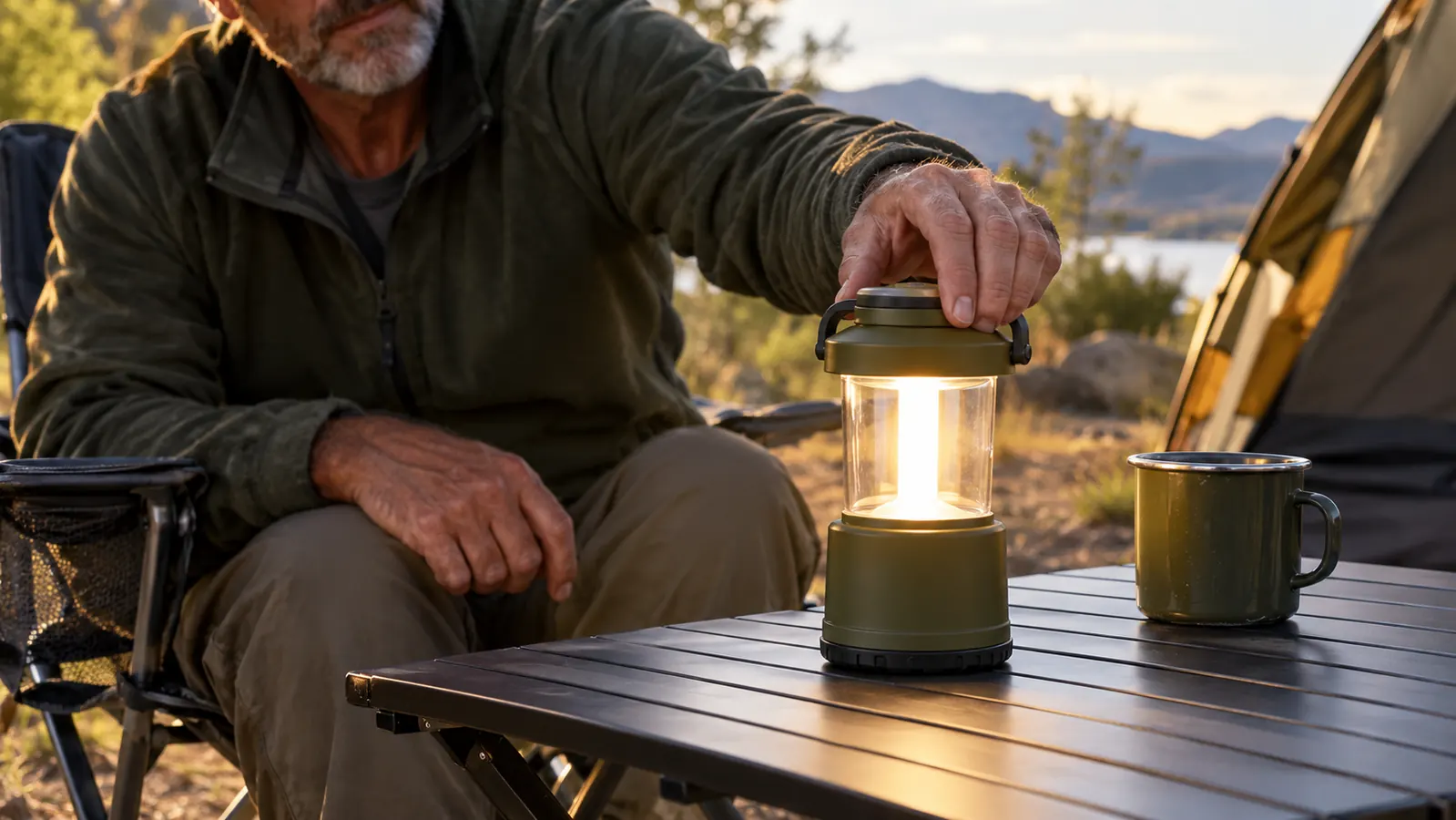
The number that matters most to me is runtime. The X1000 will run up to 300 hours on its low setting with a fresh set of D cells, and around 20 hours on high. On a normal trip I run it four or five hours a night, which means a set of batteries lasts me a whole season of weekends. I put fresh cells in it in April, and I honestly could not tell you the last time I changed them. On the cold nights in Colorado, when the temperature dropped into the thirties, it never slowed down. That is the whole point of a camping lantern. You do not want a piece of gear you have to think about. You want it sitting there on the table, glowing, doing its job night after night, without you ever wondering whether you remembered to charge it.
Water resistance is the other thing I care about, because I have killed more gear with tent condensation than with actual rain. The X1000 is rated IPX4, which in plain language means it handles a drizzle, a splash, and the damp that collects on everything in a tent on a cold night. We had a steady rain at Perry Lake in June and I left the lantern on the picnic table under the awning all evening. It never flickered, never dimmed, never complained. At 1,000 lumens it lights the whole camp: the table, the grill, and the path to the bathhouse. We do not even bring headlamps out at night anymore. On the high setting it is almost too much for a small site, so most nights I run it on medium, and I have never once wished for more light.
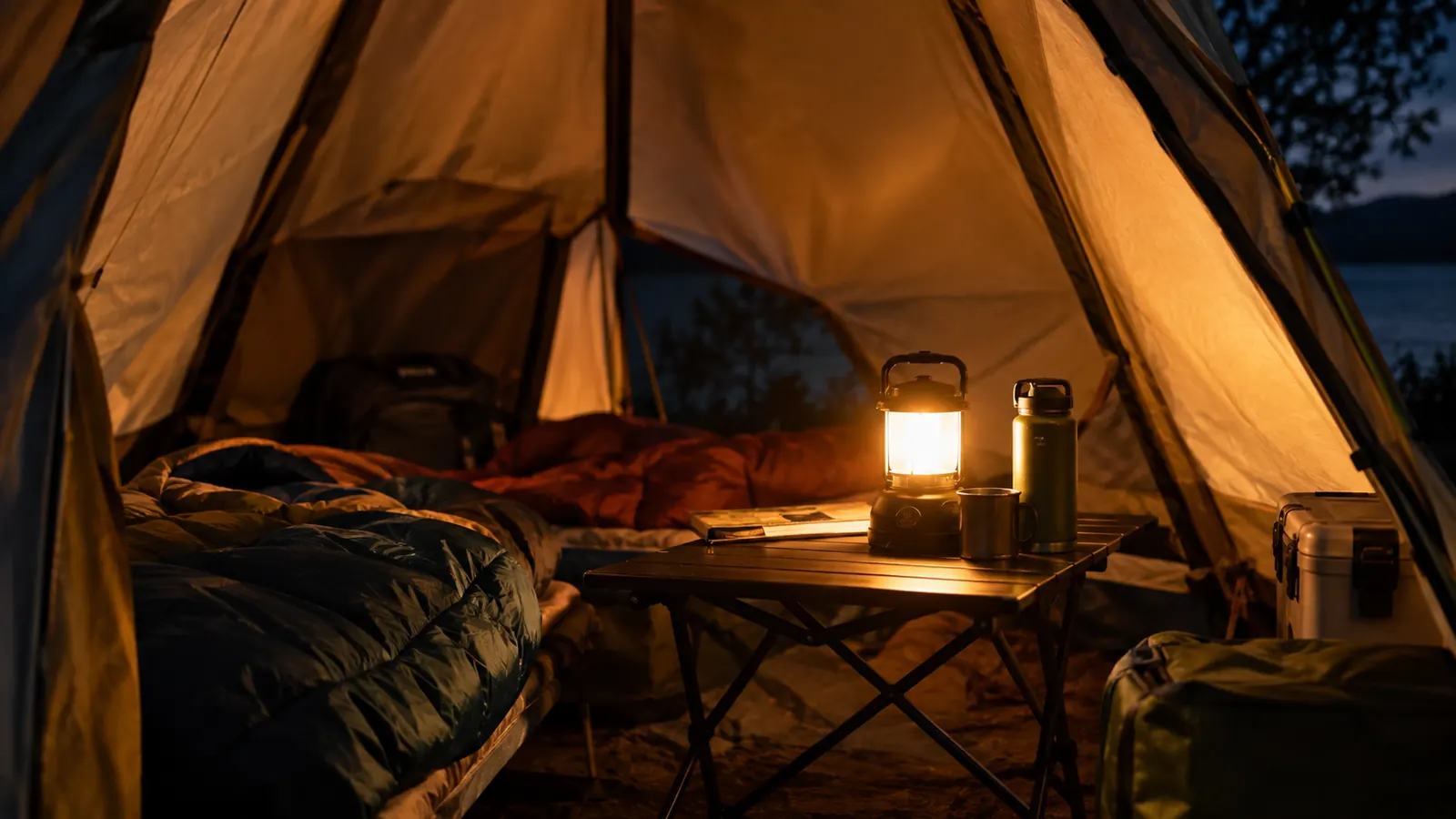
Marla reads by it for an hour every night before she sleeps. She sleeps cold, so she is in the tent early with a book, and the lantern sits on the camp chair beside her. It does not dim as the night wears on, and it does not buzz or whine the way some cheaper LED lanterns do. On the nights we leave it on all evening, the light stays the same color from the first page to the last. That steady, quiet light is worth a lot at the end of a long day outdoors.
Where the Lepro Rechargeable Wins
I will give the Lepro its due, because it wins two categories that matter to a lot of campers. First, it costs nothing to run. The Energizer asks for a fresh set of D cells every so often, and while batteries are not a fortune, they are a recurring expense you have to remember to buy. The Lepro never asks for anything but a wall outlet or a USB port. If you camp dozens of nights a year, that difference adds up, and if you already own a power bank, keeping it fed costs you nothing extra. Rechargeable batteries do lose capacity over the years, and that is a tradeoff you accept with any of them.
Second, the Lepro is lighter and slimmer. I could slide it into a backpack without a second thought, and in the Tacoma it tucked into the door pocket, where the Energizer rides in a tote with the rest of the camp kitchen. For backpackers, kayakers, or anyone who counts ounces, the Lepro is the easier lantern to carry. It also charges with the same USB-C cord my neighbor uses for his phone, so he never carries a spare battery of any kind. One cord does everything, and that is a real convenience.
The honest truth is that if you camp where you already charge your phone every night, the Lepro fits your routine better than the Energizer does. A weekend at a state park with electric hookups, or a basecamp with a power station, and the rechargeable is the more convenient lantern. My neighbor charges his from the same power bank that tops off his phone, and he has never once been caught with a dead lantern. It is the lantern I would hand to any weekend camper who already lives off a power bank. I am not going to pretend otherwise just because I picked the other one.
The Test That Settled It
In August, on the trip to Colorado, I ran the test that settled the argument for good. We had driven nine hours, set up camp in the dark, and I realized the power bank in the Tacoma was dead because I had left it plugged into the dash charger with the truck off. The Lepro had maybe twenty percent left in it. The Energizer, with the same D cells I had put in back in April, lit the whole site without a pause. That is the difference between a lantern and a piece of gear you have to manage. On a trip, I already manage enough.
That is not a knock on the Lepro. Every rechargeable device has that same weakness, including my phone. But the whole reason I keep a lantern in the truck is so I do not have to think about power. I know some campers like to see a battery meter and a USB port on everything they own. I used to be that way myself. But a lantern is the one piece of gear where I want the simplest possible answer. The Energizer X1000 is the only lantern I own that I have never had to plan around. I grab it, I turn the dial, it works. That is worth more to me than any feature on a spec sheet.
Want the lantern that was still lit when the rain stopped?
After a full season of nights at Clinton Lake, Perry Lake, and the Ozarks, the Energizer X1000 is the lantern I reach for first. It runs on D batteries you can find anywhere, shrugs off rain, and lights the whole camp at 1,000 lumens. See today's price on Amazon.
Amazon Check Today's Price on Amazon →Who Should Buy Which
If you camp like I do, out of a Tacoma with a bed cap, often in places where the nearest outlet is the one at the ranger station, buy the Energizer X1000. It will still work next year, and it will still work at 2 a.m. when you realize you forgot to charge something. It is the lantern I hand to Marla without a second thought, and the one I grab when the power goes out at home in January. It does not care whether you planned ahead, because it never needed to be charged in the first place. We have used it on quick overnights and on the long Colorado trip, and it has never once needed anything from me.
If you are a weekend camper who always has a power bank, or you backpack light and count every ounce, buy the Lepro. It is lighter, it costs nothing to run, and it charges off the same cord as your phone. My only advice is to charge it before you leave the driveway, the way you charge your phone before a trip. Both are honest lanterns. They just answer different questions, and the right answer depends on how you camp.
The Bottom Line
I have used cheaper lanterns that threw more light for one night and then collected dust in the garage. I have used rechargeable lanterns that are easier to carry than anything on the shelf. But the lantern I actually reach for, every single trip, is the Energizer X1000. It is not the lightest, and it is not free to run. It is simply the one that is always ready, whether we are at Clinton Lake for a weekend or in Colorado for a week. If that is what you need from a lantern, you already know which one to buy. That is the whole review, right there.
My pick after a full season: batteries.
The Energizer X1000 won this comparison because it is ready when I am, rain or shine, all season long. Check today's price on Amazon and see if it fits your trips.
Amazon Check Today's Price on Amazon →