
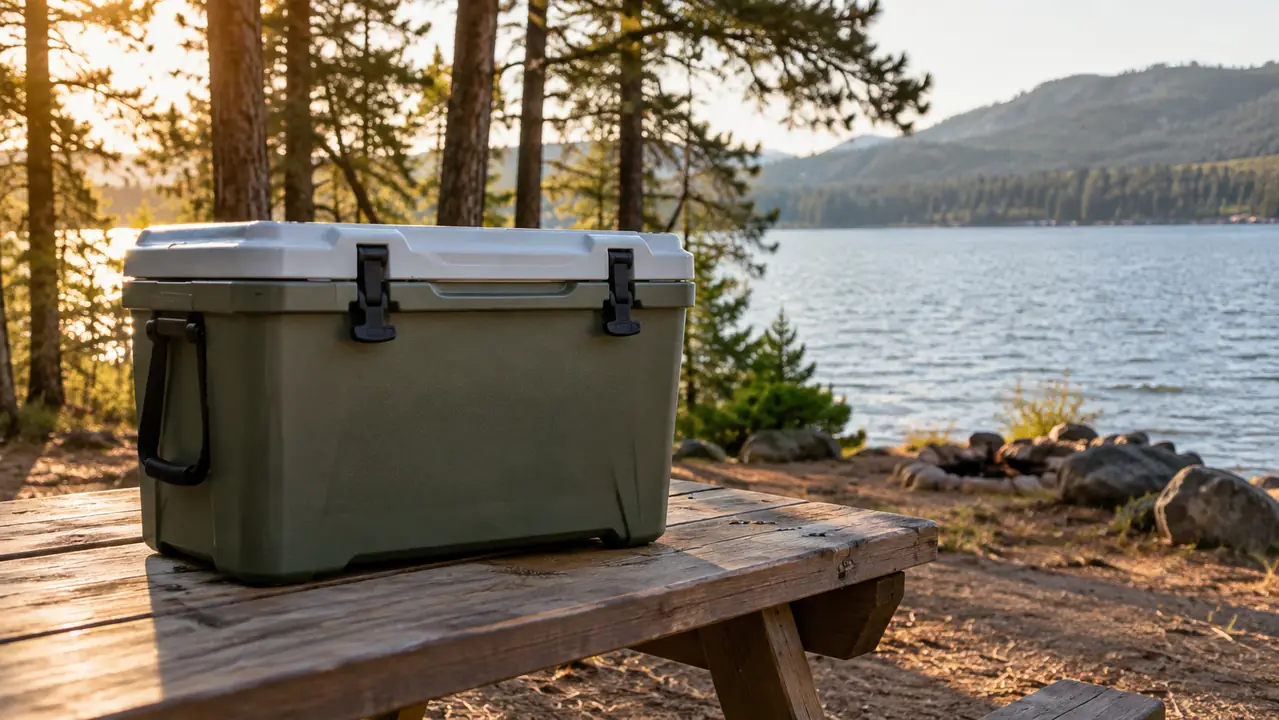
I have owned a lot of coolers. For thirty years I carried the same cheap plastic ones, the kind with the latch that breaks by August, and I told myself they were fine. Then last spring, before our usual first trip to Clinton Lake, my wife Marla pointed at the old cooler in the garage and said, 'That thing leaks and everything floats in it.' She was right. I bought a YETI Tundra 45 in April, and I have used it on every trip since: Clinton Lake, Perry Lake, the Ozarks, and one long week in Colorado. This is what six months of real use looks like.
I am not going to tell you it is cheap, because it is not. I am going to tell you whether it earns its keep, and for my kind of camping, it does.
The Quick Verdict
The YETI Tundra 45 is the last cooler I expect to buy. It holds ice for a full long weekend even in Kansas heat, it is built like a tank, and it is heavy enough that you will plan around it. If you car camp and you are tired of replacing coolers, this is the one.
Amazon Check Today's Price →The cooler that ended my cooler rotation
After six months and a dozen trips, the YETI Tundra 45 is the one piece of gear I never think about. It just works. Check today's price on Amazon and see if it fits your camp setup.
Amazon Check Today's Price on Amazon →How I've Used It
We car camp out of a 2014 Tacoma with a bed cap, so the Tundra 45 rides in the back with the tent and the chairs. It is not a small cooler. Empty, it is heavy, and loaded with a weekend of food and drinks it is a two-person job to lift it onto the tailgate. I am 59 and I do not pretend otherwise. I built a sliding platform out of two sheets of 3/4 inch plywood and a pair of 200 pound drawer slides, and it lets me pull the cooler to the edge of the bed instead of climbing in after it. That took an afternoon and it made the weight a lot easier to live with. But if you have back trouble, this is still a real consideration.
Our standard load is a bag of ice, a gallon of water, a half gallon of milk, eggs, butter, a pack of brats, chicken for one night, and enough soda and beer for two people for three days. That fills the Tundra 45 about two thirds full. The first trip, I packed it the way I always had, with loose cans and bags, and I learned fast: the Tundra 45 works best when you pack it tight. The more full it is, the longer the ice lasts. On our second trip I started freezing water bottles and using them as ice packs. I freeze six 16 ounce bottles the night before and stand them upright along the sides. They act like ice packs for the first two days, and when they thaw we drink them, which means we carry less water. That one change made a bigger difference than any cooler feature.
I have used it in 95 degree heat at Perry Lake, in a thunderstorm at the Ozarks, and on a week in Colorado where the nights dropped into the 40s. It has been rained on, baked in the sun, and bounced down gravel roads. The worst moment was at the Ozarks in July, when a storm blew in and the campground lost power for the better part of a day. The cooler sat in the bed of the truck through the whole thing, and when the power came back the food was still cold. It has never leaked, never cracked, and never let a single can float in a puddle of meltwater. The drain plug works, the latches still snap shut, and the lid still seals like the day I bought it.
Ice Retention: The Number That Matters
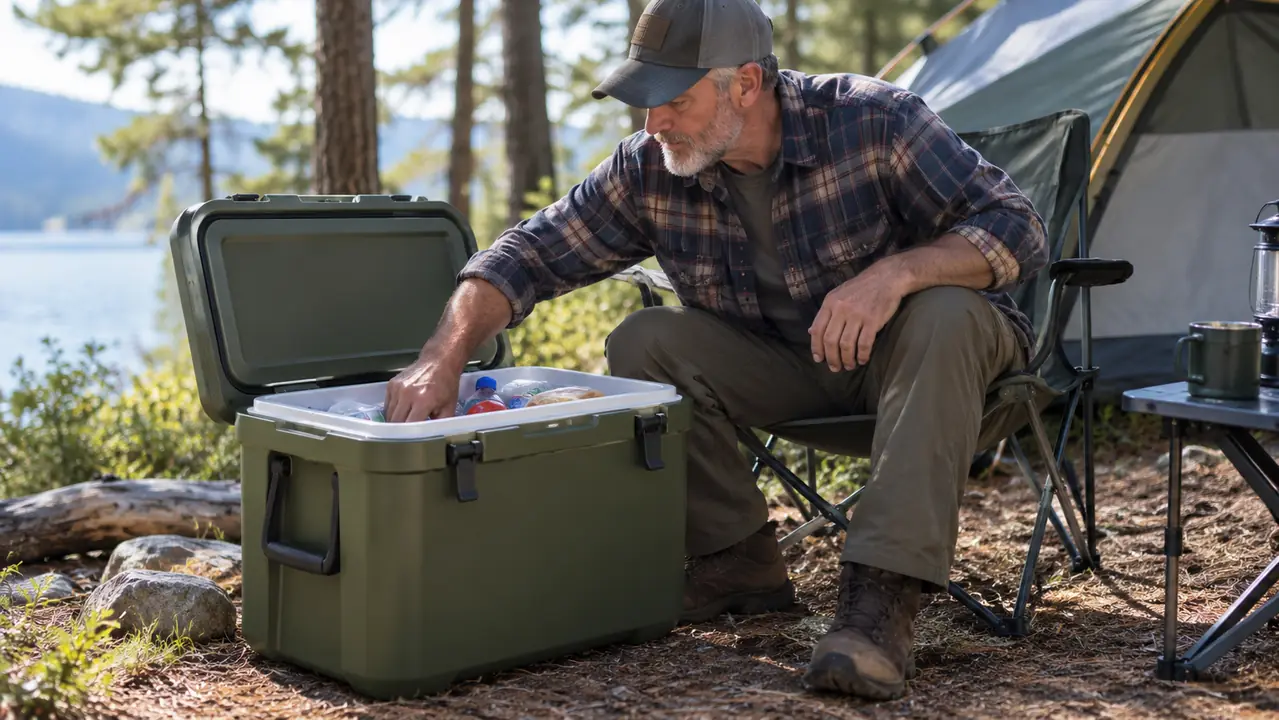
I kept a log on our Colorado trip because I wanted to know, not guess. We left Olathe on a Saturday morning with a full bag of ice and a load of food that had been in the fridge overnight. I wrote the outside air temperature on a scrap of paper each morning before coffee and took a quick look at the ice. Day one was 84 at noon and the ice was solid. Day two hit 88 and the ice had only rounded on the edges. Day three was 91, the bag had settled into one solid block, and the milk was still cold. Day four was 86 and there was still ice in the bottom. Five days later, back home, there was still ice in the cooler. Not a slush, actual ice. The drinks were cold the whole week, the chicken was still cold on day three, and the only thing that got soft was the butter, which I had left in the door of the cooler like an idiot.
The Tundra 45 does not keep ice forever. No cooler does. But it keeps ice longer than any trip I take, and that is the standard that matters. For a long weekend, which is what most of us actually do, it is overkill in the best way. You stop thinking about ice on day two, which is exactly the point. I also learned that pre-chilling is worth a full day of ice. The night before a trip I put a bag of ice in the cooler with the lid closed and let it sit overnight. In the morning I dump the meltwater, add the cold food, and put the fresh bag on top. That step costs one bag of ice and it is the simplest way to get more out of this cooler.
One thing I will say plainly: the advertised ice retention numbers depend on conditions. In 95 degree sun with the lid opened every hour, you will not get a week. You will get three or four days, which is still better than the old cooler gave me in spring weather. If you pre-chill the cooler the night before, pack it full, and keep it in the shade, it will embarrass any cooler I have owned. The July weekend at Perry Lake proved that to me. The truck was parked in full sun all day Saturday, and by Sunday morning the ice was down to a layer of slush. That was on me, not the cooler. Put it in the shade and it is a different machine.
Build Quality and the Things That Hold Up
The first thing you notice is the weight. The Tundra 45 is built with thick rotomolded plastic, and it feels like it was made to be dropped off a tailgate. I have dropped it, loaded, onto gravel. I have slid it across a concrete pad. I have left it in the bed of the truck in the sun for a week. The worst thing I did to it was in July at the Ozarks, when I slid it out of the truck bed and it got away from me, hitting the gravel hard on one corner. I expected a crack or at least a scar. There is a scuff on that corner now, barely visible, and the lid still seals. My old cooler would have split wide open. I checked the seal after that drop, running my finger along the gasket, and it was still seated all the way around. It looks the same as the day I bought it, which is more than I can say for any cooler I have owned.
The latches are the part I was most worried about, because every cooler I have owned had latches that broke. These are heavy rubber latches that snap shut with a solid click, and after six months they still work. They stay out of the way when they are open, which sounds small until you have caught a shin on a floppy latch. The lid seal is a thick rubber gasket that has not warped or cracked. After the storm at the Ozarks, the cooler sat in two inches of standing water for most of the night, and the inside stayed dry. The drain plug is a simple threaded plug that has never leaked, and it drains fast enough that I do not have to tip the cooler to get the water out.
The handles are the one thing I would change. They are sturdy and they have a wide grip, but they are not padded, and when the cooler is full they dig in. With two people it is fine. With one person, even for a short carry, you feel every pound. I have learned to use a hand truck for anything more than a few steps, and I recommend you do the same. If I were buying again I would still buy the YETI, but I would add a folding hand truck to the budget at the same time.
What It's Like to Live With
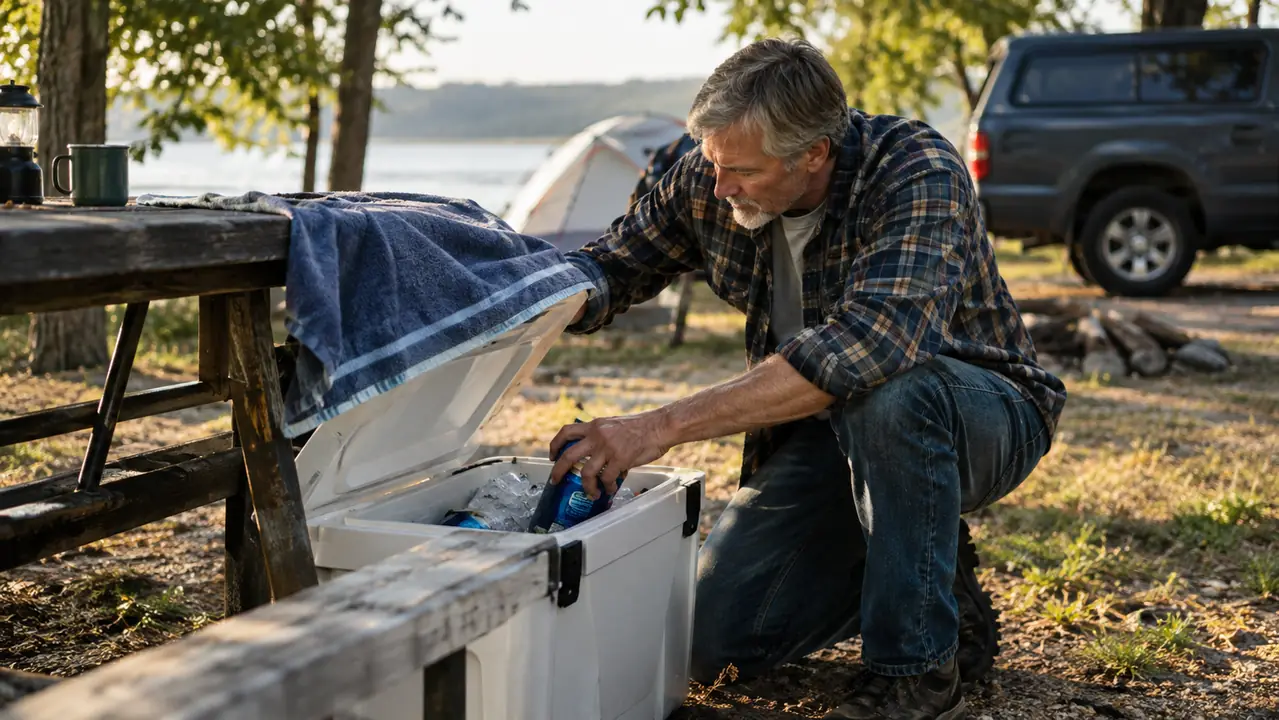
The Tundra 45 is not a cooler you throw in the back of a car and forget. It is a cooler you plan around. It is heavy, it is bulky, and it takes up a real chunk of the truck bed. But once it is in place, it stays in place. It does not slide, it does not tip, and it does not need to be tied down the way my old cooler did. I still strap it down out of habit, but on the washboard gravel road into Mark Twain National Forest, it never shifted an inch. The molded feet on the bottom keep it off the ground, so it does not sit in meltwater or morning dew the way my old cooler did.
Cleaning is easy. The interior is smooth, so a hose and a rag handle most messes. The drain plug means I do not have to tip it to empty it, which my back appreciates. The exterior wipes down with a damp cloth, and the latches do not collect grime the way I expected. After the Colorado trip I hosed it out, pulled the plug, and let it air dry in the sun for an hour. It was ready for the garage with no smell and no scrubbing. That is more than I can say for the old cooler, which always needed a bleach rinse by the end of the season.
The one thing that surprised me is how much I use the non-cooler features. The lid is flat and strong enough to sit on, which means it doubles as a seat or a prep surface. Marla sets a cutting board on it when she chops vegetables, and I have sat on it to pull on my boots. It does not flex or bow under me. The tie-down slots on the sides are actually useful, and I have used them to strap the cooler upright in the truck bed. The measurements on the lid are a small thing, but I have used them to measure out a marinade more than once. Little things like that are the difference between a cooler you think about and a cooler you just use.
What I Liked
- Holds ice for a full long weekend even in Kansas summer heat
- Rotomolded shell shrugs off tailgate drops and gravel
- Latches and lid seal still work like new after six months
- Drain plug and smooth interior make cleanup quick
- Flat lid works as a seat or prep surface
Where It Falls Short
- Heavy when full; lifting it into the truck bed is a two-person job
- Handles are not padded and dig in on longer carries
- Price is steep next to a basic cooler
- Too big and heavy for anything but car camping
Five days later, back home, there was still ice in the bottom of the cooler. Not a slush. Actual ice.
Who This Is For
The YETI Tundra 45 is for the person who camps out of a car or truck, who is tired of replacing coolers every two years, and who wants to stop thinking about ice. It is for the person who packs for a long weekend and wants the food to still be cold on Sunday. It is for the person who has a truck bed or a trailer and does not mind the weight, because the weight is what makes it work.
It is also for the person who wants to buy one cooler and be done. I have owned a dozen coolers in my life. I expect the Tundra 45 to be the last one I buy, and at my age, that is a real recommendation.
One more group: people who host. We have used the Tundra 45 as the drink cooler for a family reunion at Clinton Lake and for a neighborhood cookout in Olathe. It held up for both, and it kept the drinks cold from early afternoon until dark. A cooler that can do holiday duty at home as well as it does camp duty is worth more than its price tag.
Who Should Skip It
If you camp out of a backpack, this is not for you. It is too heavy, too bulky, and you will hate it before the first mile. If you only camp once a year and your current cooler survives the season, you do not need this. If you are on a tight budget, the price will hurt, and a cheaper cooler will keep your food cold for a weekend if you pack it right.
And if you have back problems, I would think hard about it. The Tundra 45 is heavy when it is full, and the handles are not kind to a bad back. I manage because it lives in the truck bed and I use a hand truck for the long carries, but I would not want to carry it up stairs or across a beach. For those situations, a wheeled cooler or a smaller model makes more sense. The Tundra 45 is a truck-bed cooler first and a carry-it-anywhere cooler second, and you should buy it knowing which one you are.
Still on the fence?
The Tundra 45 is not a small purchase, but it is the kind of purchase you make once. If you car camp and you are tired of coolers that leak and break, check today's price on Amazon and see if it fits your setup.
Amazon Check Today's Price on Amazon →