
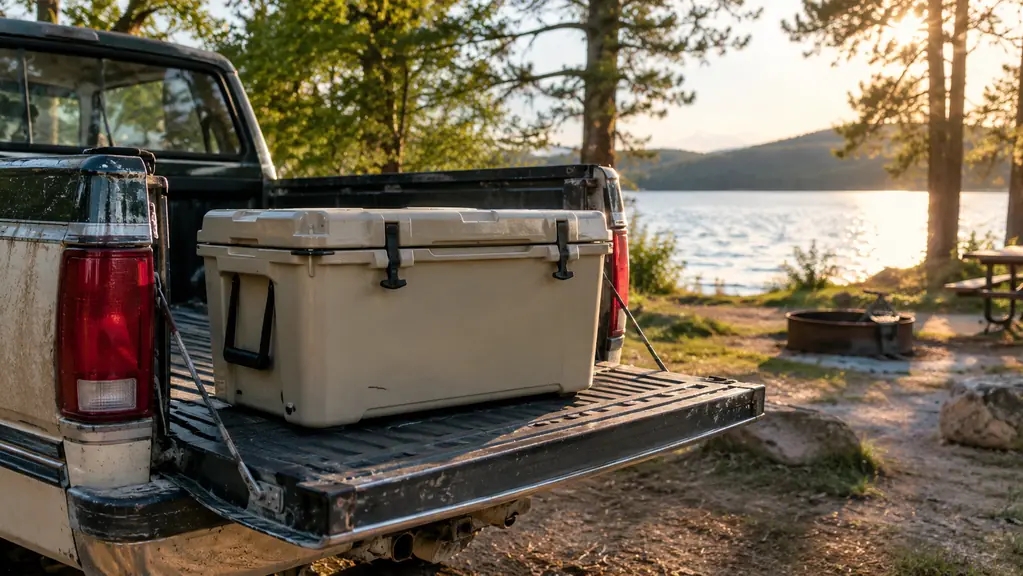
If you camp out of a pickup like I do, you have probably stood in the cooler aisle and asked yourself the same question I asked last spring: is the YETI Tundra 45 really worth three or four times what the Coleman Pro 45 costs? I am Curt Ballard, a retired HVAC tech from Olathe, Kansas, and I have camped since I was a kid. My wife Marla and I spend most months from April through October at Clinton Lake, Perry Lake, the Lake of the Ozarks, and Mark Twain National Forest, plus one long trip west every summer. So last year I bought both coolers, ran them side by side for a full season, and kept notes on everything from ice life to how they handle a gravel road.
The short answer is that both coolers are good at what they do, but they are built for different campers. The YETI Tundra 45 keeps ice longer, shrugs off abuse that would crack a cheaper shell, and holds its resale value, but it is heavy, expensive, and honestly overkill for a weekend at a developed campground. The Coleman Pro 45 keeps food cold for a two-night trip, costs a fraction of the price, and weighs half as much, but it will not hold ice for a week and it will not survive a hard drop. To be fair to both, I packed them the same way on every trip: same amount of ice, same food load, same spot in the truck bed, and I opened each one the same number of times a day. I logged the ice level every morning before breakfast and every night before bed. Over the season we did two trips to Clinton Lake, two to Perry Lake, a long weekend at the Lake of the Ozarks, a week in Mark Twain National Forest, and our usual week in Colorado in August. By October I had a notebook full of entries from eleven trips, and the pattern was consistent enough that I stopped second-guessing the results.
| YETI Tundra 45 | Coleman Pro 45 | |
|---|---|---|
| Ice retention | Held ice past day 4 in 94 degree heat; still had ice cubes on the morning of day 5 | Ice mostly gone by day 3; cold drinks but no ice on day 4 |
| Build quality | Rotomolded shell, rubber latches, no flex when you sit on it | Thin plastic shell that flexes; latches feel cheap but work |
| Weight | About 23 lbs empty; a real load to lift into the truck bed | About 12 lbs empty; easy for one person to carry |
| Price | Premium price, the kind you save up for | Budget friendly, often under half the price of the YETI |
| Durability | Survived gravel roads, dropped off the tailgate, no damage | Fine for normal use but a hard drop could crack the shell |
| Interior space | Thick walls eat into the interior; less room for food | Thin walls leave more room inside for the same 45 quart size |
| Best for | Long trips, hot climates, and people who want one cooler for a decade | Weekend trips, families on a budget, and anyone who does not want to lift 23 lbs |
Where the YETI Tundra 45 Wins
The first thing I noticed was the ice. In late June, we spent five days at Clinton Lake, and I packed both coolers the same way: I chilled them in the basement overnight, put two bags of ice in each one the morning we left, and kept them on opposite sides of the truck bed so neither sat in the sun all day. The thermometer read 94 the afternoon we set up camp. On the morning of day five, the YETI Tundra 45 still had ice cubes in the bottom, and I fished a cold soda out for Marla without digging through water. The Coleman Pro 45, packed identically, was mostly water by the end of day three, and the milk carton was floating in it. That is not a small difference. When Marla and I do our week in Colorado, we are often a two-hour drive from the nearest store that sells bagged ice, and the YETI is the difference between a cold steak on Thursday and a warm one. On that June trip, the YETI's ice held long enough that we actually brought the leftovers home, which we never do with the Coleman.
The YETI also wins on build quality in a way you feel the first time you pick it up. It weighs about 23 lbs empty, and that heft is the rotomolded shell, the same construction they use for kayaks and truck bed liners. There are no seams to split and no thin spots, so the shell does not flex when you sit on it. I have used the YETI as a camp seat more times than I can count, and it does not groan or wobble. The rubber latches have never popped open on a rough road, which I cannot say for the Coleman's plastic latches on the washboard road into Mark Twain National Forest last September. I also dropped the YETI off the tailgate onto gravel in July, a two-foot fall with the cooler loaded, and it did not leave a mark. I would not try that with the Coleman. It is not fragile, but it is a thin-shelled cooler, and a hard drop on a rock could crack it. For someone like me who expects gear to last longer than a few seasons, that matters. The YETI is the kind of thing you buy once and stop thinking about, and in my line of work, I have learned to trust gear that does not need babysitting.
Beyond the ice, the YETI has the small details that add up over a season. The latches are rubber and they close with a solid snap, and the gasket around the lid seals tight enough that I can feel the suction when I open it. The drain plug is big enough that water runs out fast when I tip the cooler onto its side to rinse it at the end of a trip, and the whole thing cleans up with a hose and a little dish soap. There is no liner to tear and no hinge to strip. After a season of hauling it in and out of the bed of my Tacoma, the only wear I can find is a few light scratches on the bottom from gravel, and those came from my own carelessness, not from the cooler failing.
Where the Coleman Pro 45 Wins
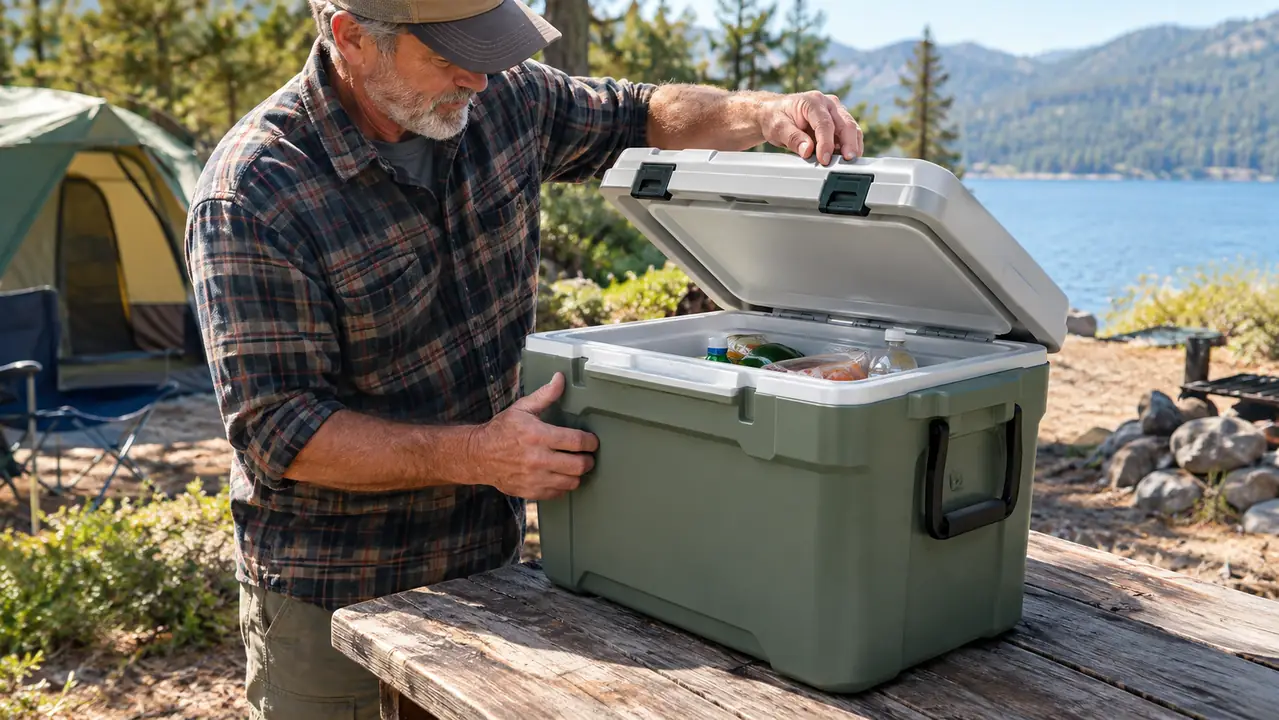
I am not going to pretend the Coleman wins on ice, because it does not. But it wins on the two things that matter most to a lot of campers: price and weight. The Coleman Pro 45 costs a fraction of what the YETI costs, and it weighs about half as much empty. Marla can carry the Coleman from the truck to the picnic table without help, and she is not looking to deadlift anything on a camping trip. The YETI, at 23 lbs empty and closer to 40 lbs loaded, is a two-hand job for me, and I am not a small guy. There is also this: the YETI's thick walls are what hold the ice, but they eat into the interior. The Coleman's thin walls leave more room inside, so the same 45-quart size holds noticeably more food. Over the July 4th weekend at Perry Lake, we took the Coleman because we were only out for two nights and the camp store sells bagged ice. Marla loaded it into the truck by herself, and when we needed more ice for the drinks, it was a five-minute walk to the store. The YETI stayed home, and we did not miss it once.
The Coleman is also the better choice if you are not sure how much you will actually use a cooler. A lot of people buy a premium cooler and then realize they only camp twice a year. If that sounds like you, the Coleman Pro 45 is a smart, honest purchase. It keeps food cold for a weekend, it is easy to haul, and if it takes a beating, you are not out a lot of money. My friend Dale bought one last fall after I told him to skip the premium cooler. He and his grandson camp maybe five weekends a year, all at developed state parks, and the Coleman has done everything he asked of it. I have recommended the same to a couple of neighbors, and none of them have complained. The Coleman also does not make you nervous. At a busy campground, you can leave it on the picnic table while you hike without lying awake wondering if it will still be there, because if it walks off, you are out a budget price, not a month of grocery money. There is real value in not having to babysit your gear, and for a lot of campers, that peace of mind is worth more than an extra day of ice.
The Coleman is also the easier cooler to live with day to day. Because it is light, you can tip it to drain the water without wrestling it, and you can carry it in one hand while you hold the tent bag in the other. When we take the Coleman, loading the truck is a two-minute job instead of a ten-minute one, and Marla does not have to wait for me to lift anything. It also takes up less of the bed, which matters in my Tacoma when we are hauling firewood, camp chairs, and the rest of the gear for a weekend. None of that makes it a better cooler. It just makes it the right cooler for a lot of people, and there is no shame in that.
The cooler that still had ice on day five
After a full season of side by side testing, the YETI Tundra 45 is the one I reach for on every long trip. Check today's price on Amazon and see if it fits your camping style.
Amazon Check Today's Price on Amazon →The YETI is the cooler I reach for on a long trip. The Coleman is the cooler I would tell a weekend camper to buy. Both of those statements are true.

Who Should Buy Which
Buy the YETI Tundra 45 if you camp for four or more days at a stretch, if you camp somewhere hot, if you drive rough roads, or if you are tired of replacing coolers every few years. It is also the better pick if you want one cooler that will outlast your truck. I have had mine for a full season, eleven trips, and it looks the same as the day I bought it, down to the latches. On our week in Colorado in August, when we camped above 9,000 feet and the nearest ice was a long drive down the mountain, the YETI was the piece of gear I trusted most. It rode in the bed of my 2014 Tacoma under the cap, stayed put on the washboard roads, and never once let a meal go warm. If you are the kind of person who would rather spend more once than spend less four times, the YETI is the cheaper cooler in the long run. I expect to hand mine down to my nephew someday, and I would not say that about the Coleman.
Buy the Coleman Pro 45 if you mostly do weekend trips, if you camp where ice is easy to buy, if you are on a budget, or if you do not want to lift 23 lbs every time you pack the truck. For a Friday-to-Sunday trip at Clinton Lake, where the camp store sells ice and you are never more than a short drive from a grocery store, the Coleman does everything you need it to do. It keeps burgers cold for the first night, drinks cold for the second, and if you need a bag of ice on Saturday, that is a five-minute errand. It is also the cooler I would pick for anyone who is not sure camping is going to stick. You can spend a lot less, learn what kind of camper you are, and upgrade later without feeling like you wasted money. The Coleman is a good cooler. It is just not a YETI, and it does not pretend to be. For a lot of campers, that is exactly the right call.
Ready to pick your cooler?
If the YETI Tundra 45 sounds like the cooler for your kind of camping, check today's price on Amazon. If you are still on the fence, the Coleman Pro 45 is a solid budget pick that will serve you fine for weekend trips.
Amazon Check Today's Price on Amazon →