
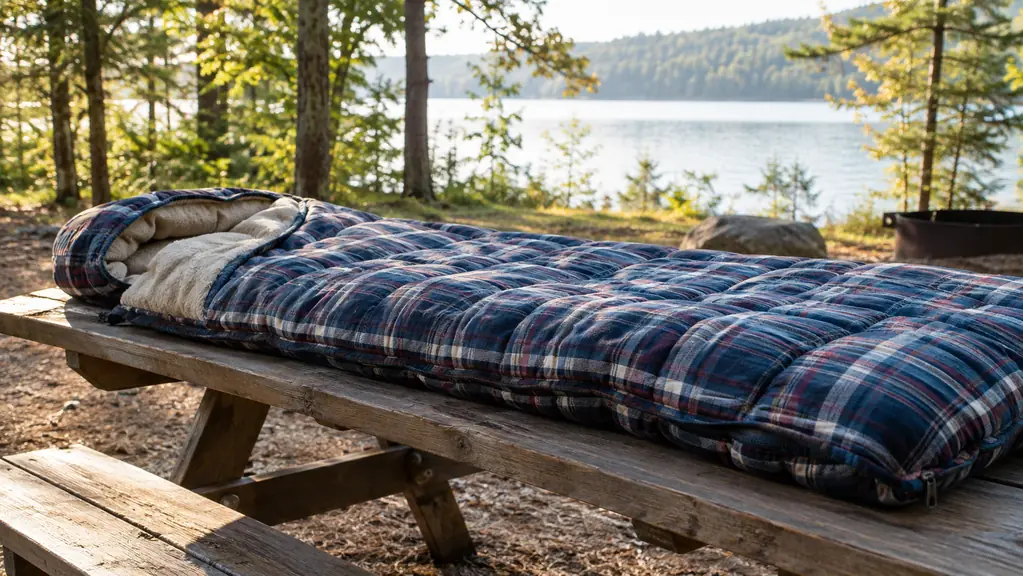
I spent 30 years as an HVAC technician in Olathe, Kansas, so I know what cold feels like and I know what insulation is supposed to do. When my wife Marla and I started camping more seriously a few years back, she told me straight out that she sleeps cold and that a cheap bag would ruin the whole trip. That is how I ended up testing the Coleman Heritage sleeping bag on more than a dozen nights across Clinton Lake, Perry Lake, the Lake of the Ozarks, and one trip to Colorado. This is the honest review I wish someone had given me before I bought it.
The Coleman Heritage is a flannel-lined, 10 degree rated bag that fits adults up to 6 foot 7. It is one of the most popular sleeping bags on Amazon, with over 3,800 reviews and a 4.7 star average. Popularity is not the same thing as proof, so I kept a notebook on every trip: what time the temperature dropped, how many layers Marla wore, whether either of us woke up cold, and how the bag held up to being packed and unpacked in the back of my 2014 Tacoma. Here is what I found.
The Quick Verdict
A roomy, warm, well-made flannel bag that is honest about its limits. Great for car camping down to about 30 degrees with a good pad. Not the bag for a 10 degree night, and not the bag for backpacking.
Amazon Check Today's Price →The flannel bag that finally got my cold-sleeping wife through a 38 degree night
After a dozen trips in Kansas and Missouri, the Coleman Heritage is the bag we reach for first. See today's price on Amazon and read the current reviews before you decide.
Amazon Check Today's Price on Amazon →How I've Used It
I have used the Coleman Heritage on 14 nights over the last two seasons. Most of those were at Clinton Lake and Perry Lake in Kansas, with a few at the Lake of the Ozarks and one week in Colorado. Marla used it on about half of those nights, and I used it on the rest. We car camp out of a 2014 Toyota Tacoma with a bed cap, so weight was never a concern. What mattered was warmth, room to move, and whether the bag would survive being stuffed into a duffel and hauled out again every month.
The bag is big. Coleman rates it for adults up to 6 foot 7, and at 5 foot 10 I had plenty of room to bend my knees and turn over without fighting the zipper. Marla is shorter and she said the extra room meant she could pull the bag up around her shoulders without the foot box feeling tight. That room is a real feature for cold sleepers, because a bag that fits snugly around your feet can cut off circulation and make you colder, not warmer.
I also tested the temperature rating the way a skeptic would. Coleman says 10 degrees, and I want to be clear about this: that number is a survival rating, not a comfort rating. On a night that got down to 38 degrees, Marla slept in the Heritage with a fleece liner and a base layer and she was comfortable. On a night that hit the upper 20s, I used the same setup and I was cold by 4 in the morning. If you are a cold sleeper, plan for the bag to be comfortable to about 30 degrees, not 10.
The first real test came in early May at Clinton Lake. The forecast called for a low of 44, and we had bought the bags a week earlier. We set up near the water, ate dinner, and turned in around 10. I woke up at 3 AM to check on Marla, and she was sound asleep, which for her is the highest compliment a sleeping bag can get. The next morning she said she never once thought about the cold. That trip sold me on the bag more than any spec sheet could have. The Colorado trip was the one that made me respect the rating's limits. We camped near Buena Vista in July, and the nights dropped into the low 40s at 8,000 feet. Marla slept warm in the Heritage with a fleece liner. I had an older synthetic bag that same week and woke up shivering both nights. The next month I bought a second Heritage for myself. That is how we ended up with two of them in the truck, and I have not regretted that purchase once.
What Nobody Tells You About the 10 Degree Rating
Here is the thing that the product page does not spell out. The 10 degree rating on the Coleman Heritage is the lower limit, the temperature at which a standard person can survive without hypothermia. It is not the temperature at which you will sleep well. Every sleeping bag company uses this same system, so Coleman is not doing anything unusual. But if you buy this bag expecting to be toasty at 10 degrees, you will be disappointed, and I would rather tell you that now than have you find out at 2 AM.
The other thing nobody tells you is that the bag is heavy. It weighs around 7 pounds, which is fine for car camping and completely wrong for backpacking. I carried it a quarter mile from the truck to a campsite at Mark Twain National Forest and I was glad the walk was short. If you are hiking miles to a campsite, this is not the bag for you. If you are driving to a site and setting up within sight of your vehicle, the weight does not matter at all.
The coldest night I logged was at Perry Lake last November. The thermometer on the picnic table read 28 at midnight, and by 4 AM it had dropped to 25. I was wearing a thermal base layer, wool socks, and a knit hat, and I was still cold. Not dangerously cold, just awake and uncomfortable cold, the kind that makes you check your watch every hour. I pulled the bag over my head and curled up, which helped, but I did not sleep well. The next morning I wrote in my notebook: 'Comfortable to 30, cold at 25, no way at 10.' I stand by that. Here is what I wish the listing explained. Coleman uses the same rating system as everyone else, which measures survival, not comfort. The test assumes you are wearing a base layer, using a sleeping pad, and are in a tent. Skip any of those and the real-world number drops. On that Perry Lake night I had all three, and I still bottomed out. If you camp where the mercury regularly hits 20, buy the next step down and treat this bag as a summer and shoulder-season bag.
The 10 degree rating is a survival rating, not a comfort rating. Plan for about 30 degrees and you will sleep fine. Plan for 10 and you will be disappointed.
The Flannel Lining and the Zipper
The flannel lining is the main reason Marla wanted this bag in the first place. Flannel feels warm the second you touch it, which matters when you are climbing into a cold tent at night. The cotton flannel is soft and it does not feel clammy against your skin the way some synthetic linings do. After 14 nights and several washes, the flannel still looks good and has not pilled or thinned out.
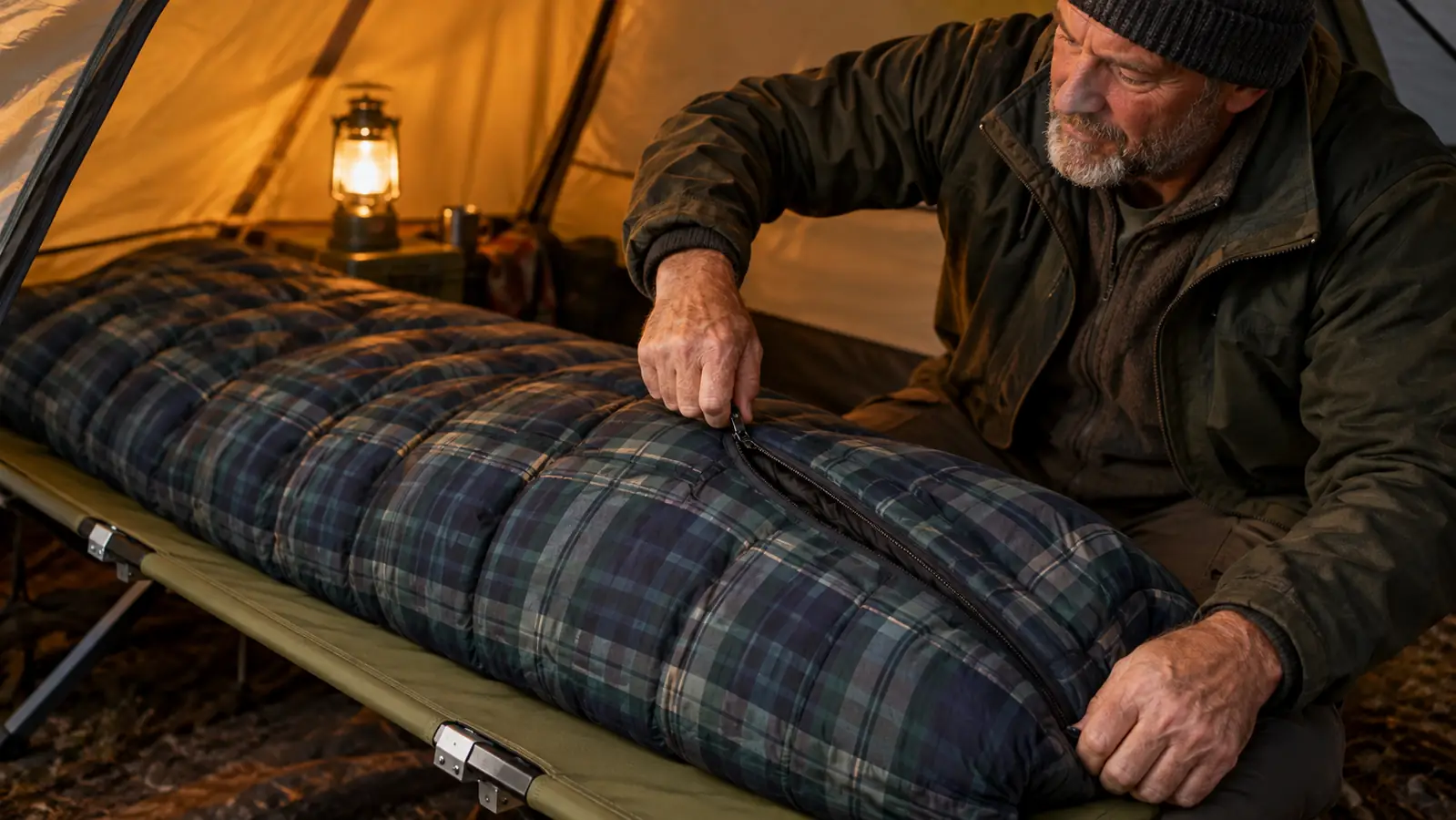
The zipper deserves a closer look because it is the part that usually fails first on a cheap bag. The Heritage uses a two-way zipper, which means you can unzip from the bottom to stick your feet out on a warm night. That sounds like a small thing, but it saved us on a couple of nights in May when the temperature swung from 50 down to 40 and back up again. The zipper has never snagged on the flannel, and it has never jammed, which is more than I can say for bags I have owned in the past.
One thing to know: the zipper is on the left side of the bag. If you are used to a right-side zipper, it will feel backwards for the first night. It is not a defect, it is just a detail that nobody mentions in the reviews. Marla and I each have our own Heritage bag, and we have not tried to zip them together, so I cannot tell you from personal experience whether the two bags mate. The product description does not promise that they do, so do not assume it.
The washing part is worth explaining because the label says machine washable, and that can mean different things. I wash ours on the gentle cycle with cold water, no bleach, and I hang them to dry on a clothesline in the garage. The first wash took a full two days to dry completely because the flannel holds moisture. Do not put one in a dryer on high heat. The flannel will shrink and the shell will wrinkle. I learned that the hard way with a different bag years ago, so I am passing it along. The two-way zipper earned its keep on a night in May at the Lake of the Ozarks. It started the evening at 52 degrees, so we zipped up. By 2 AM the tent had warmed to nearly 60 and I was sweating. I unzipped the bottom six inches, stuck my feet out, and went back to sleep without ever opening the top. In an old mummy bag I would have had to fight the whole zipper or just lain there. Small feature, real difference.
How It Held Up Over a Season of Use
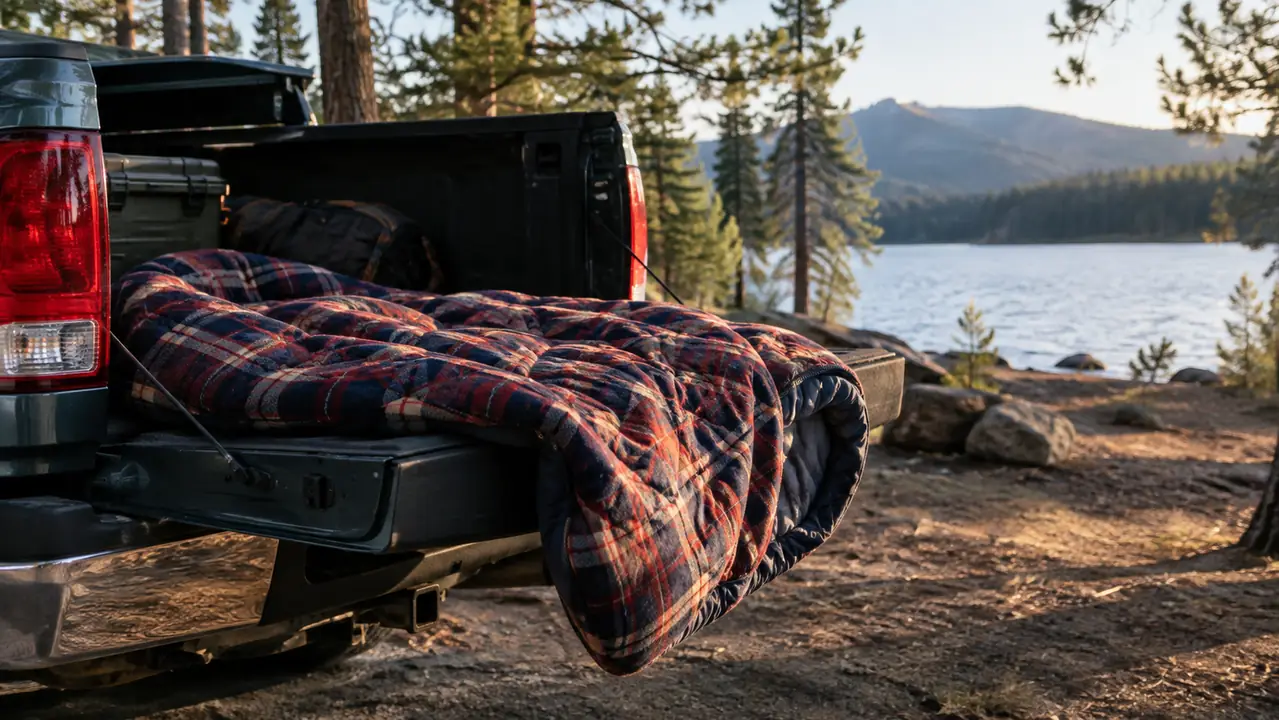
I am hard on gear. The sleeping bags ride in the bed of my Tacoma under a cap, and they get tossed around with the tent, the camp chairs, and the cooler. After a full season, the Heritage looks almost new. The stitching is holding, the zipper still runs smooth, and the flannel has not pulled away from the shell anywhere. I have washed it three times on a gentle cycle and hung it to dry, and it came out fine each time. Coleman says it is machine washable, and in my experience that claim is true.
The one wear issue I found is minor. The fabric on the bottom of the bag, where it rubs against the sleeping pad, is starting to show a little fuzz after a season of use. It is cosmetic and it has not affected the warmth, but it tells me the bottom fabric is not as tough as the top. If you are the kind of person who drags your bag across gravel, you will want to use a ground cloth or a pad cover.
I also want to mention the storage sack. The Heritage comes with a large cotton storage sack, which is the right way to store a sleeping bag long term. What it does not come with is a compression sack for travel. I bought a separate compression sack for the truck, because the storage sack takes up a lot of room. That is an extra cost that nobody mentions in the reviews, and it is worth budgeting for if you are short on space.
The wettest trip was a three-day stretch at the Lake of the Ozarks in June. It rained hard the first afternoon, and the campsite turned to mud. The bags were in the truck under the cap, so they stayed dry, but I watched a neighbor's bag sitting on a picnic table soak through its stuff sack. That reminded me to keep ours in a dry bag inside the truck, not just the cotton storage sack. The cotton sack is fine for home, but it is not waterproof. I also checked the stitching around the zipper track on both bags after that trip, because rain and mud are when cheap bags start to come apart. Every stitch held, and the zipper pulled smooth even after three days of humidity, which is the part I worried about most. I checked the seams on the foot box too, because that is where my toes push when I turn over. No separation, no loose threads, no sign that the wet week did any damage.
What I Liked
- Roomy rectangular cut: at 5 foot 10 I turned over all night without fighting the zipper, and Marla could pull the bag up to her chin without the foot box binding.
- Flannel lining that feels warm the second you touch it and stays soft after three washes.
- Two-way zipper that vents from the bottom on warm nights without opening the top.
- Machine washable, and the stitching and zipper held up through a full season in the bed of the truck.
- Cotton storage sack encourages proper long-term storage instead of a tight stuff sack.
Where It Falls Short
- The 10 degree rating is survival, not comfort. I slept cold at 25 degrees despite a base layer, wool socks, and a hat.
- Heavy at about 7 pounds; wrong for backpacking or any walk longer than a few hundred yards.
- Bottom fabric fuzzed where it rubbed the sleeping pad all season.
- Left-side zipper feels backwards if you are used to right-side bags.
Who This Is For
The Coleman Heritage is for car campers, first and foremost. If you drive to a campsite, set up within sight of your vehicle, and want a warm, roomy, comfortable bag for three-season camping, this is a strong choice. It is also a good pick for cold sleepers who run cold at night, because the flannel lining and the extra room give you space to add a liner or wear a base layer without feeling cramped. And if you are tall, the 6 foot 7 length is a genuine advantage that most bags in this price range do not offer.
It is also a great guest bag. We keep one in the house for when family or friends come to stay, and it has held up to being used by people who do not treat gear gently. For that purpose, the weight does not matter and the roomy fit is a plus.
Who Should Skip It
Skip the Coleman Heritage if you are a backpacker. At around 7 pounds, it is far too heavy to carry any real distance. Skip it if you plan to sleep out in genuine 10 degree weather, because the rating will not keep a cold sleeper comfortable at that temperature. And skip it if you are a side sleeper who needs a mummy bag that hugs your body, because the Heritage is a rectangular bag with a lot of extra space, and that space means your body has to warm a larger volume of air.
If you are a warm sleeper, you may also find the Heritage too warm for summer nights. On a 60 degree night in June, I unzipped it completely and used it as a blanket. That worked fine, but if you camp mostly in warm weather, a lighter bag would be a better use of your money.
Still deciding? The Heritage is the bag I hand to guests and the bag Marla reaches for first
It is not perfect, and I have told you exactly where it falls short. For car camping in three seasons, it has earned its place in our truck. Check today's price on Amazon and see if it fits your setup.
Amazon Check Today's Price on Amazon →