

When a box says 'a thousand lumens,' I don't get excited anymore. I've been camping since I was a kid, and I've spent most of my adult life working with my hands, first in HVAC and now out of a 2014 Toyota Tacoma with a bed cap. I've been through enough lanterns to know that the number on the package and the light you actually get can be two completely different things. So when the Energizer X1000 showed up before a spring trip to Clinton Lake, I did what I do with every piece of gear: I put it in the truck, used it on every trip for a season, and kept mental notes on what held up and what didn't.
This is the honest version of that review. Not the marketing version, and not the version that pretends every night under canvas is perfect. I'm going to tell you what the X1000 does well, where it falls short, and what I wish somebody had told me before I bought it. If you're a tent camper who wants a lantern that simply works, this should help you decide, and it should save you the trial and error I went through.
The Quick Verdict
A simple, tough, genuinely bright lantern that runs on batteries you can buy anywhere. What nobody tells you is that its real life is on the low setting, and that the battery math changes how you pack for a trip.
Amazon Check Today's Price →The first lantern I grab when the tent goes up
After a full season of tent camping with the X1000, it's the first thing I take out of the truck when we pull into a campsite. Check today's price on Amazon and see if it earns a spot in your bed cap the way it did in mine.
Amazon Check Today's Price on Amazon →How I've Used It
I didn't test this lantern in a basement with a light meter. I used it the way I use all of my gear: on real trips, in real weather, until something either proves itself or gets retired. Since April I've taken the X1000 to Clinton Lake, to Perry Lake in May, down to the Lake of the Ozarks in June, out to Mark Twain National Forest in July, and west to Colorado for the annual summer trip in August. That's seven trips and more than twenty nights of tent camping.
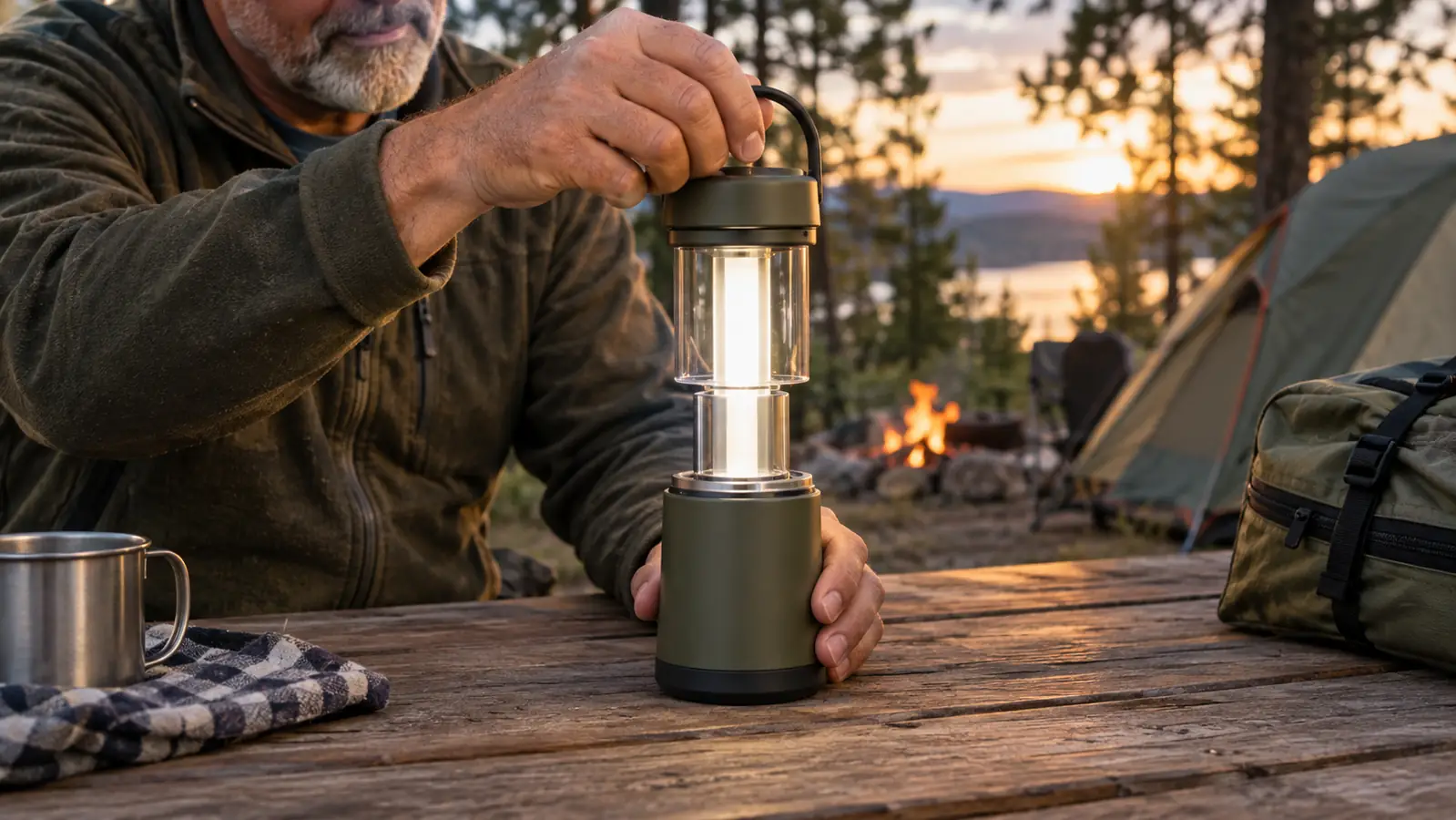
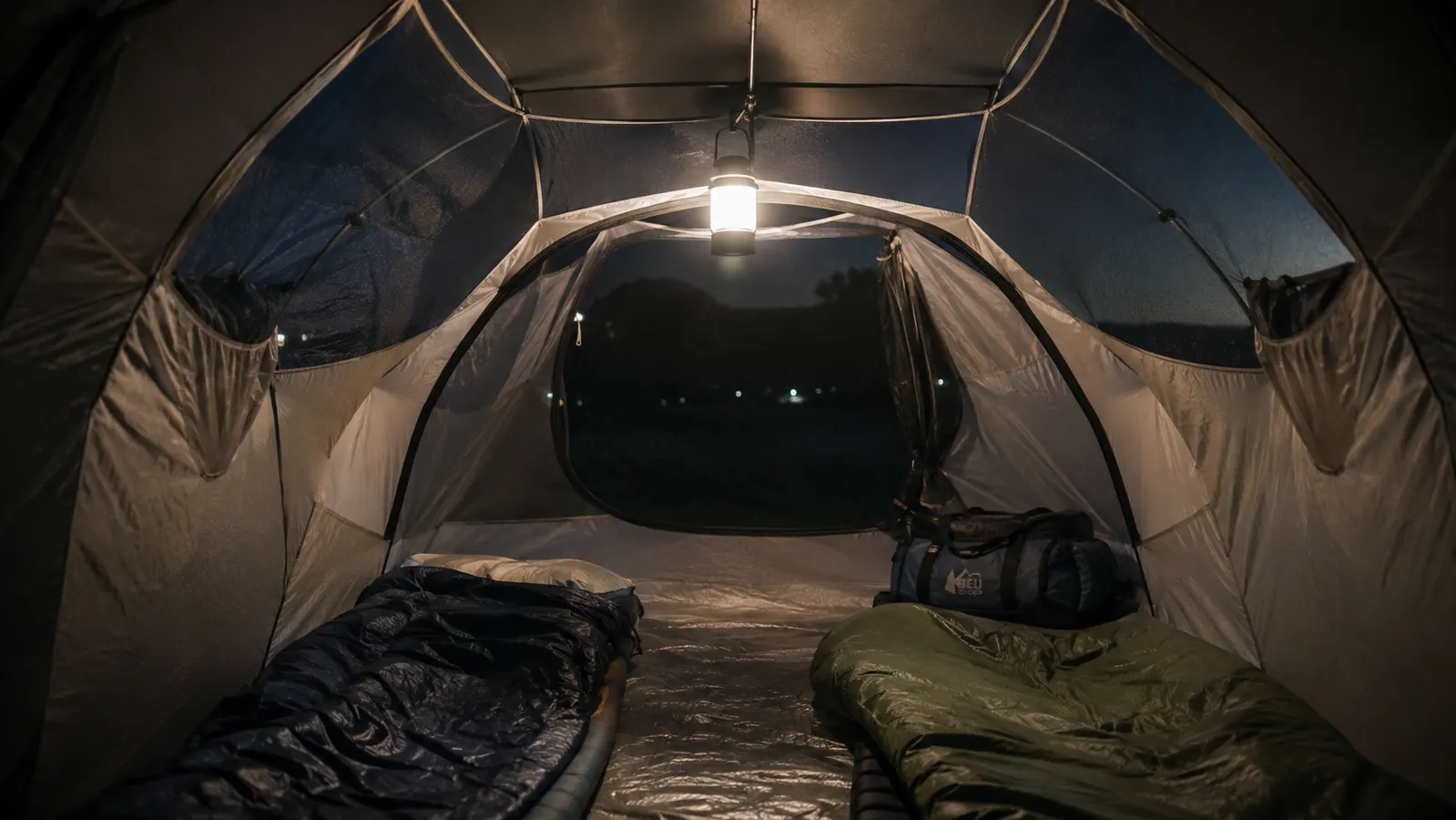
In the tent, I hung it from the ridge line, which is the position I like for reading and for finding things without getting out of the sleeping bag. On the picnic table, it sat on its base and lit the whole tabletop, which matters when you're cooking after dark. On the one trip where the weather turned, I set it on the tailgate under the bed cap and it rode out a solid rain without a complaint.
Marla sleeps cold, so she reads in the tent before she dozes off, and the lantern gets run on low for an hour or two every night. That's the test that matters to us: steady light, no flicker, no battery dying at ten o'clock. The X1000 passed that test every single night of the season.
What Nobody Tells You About the Battery Math
Here's the part the box doesn't advertise. The X1000 runs on three D batteries. That means two things. First, you can buy batteries at any gas station in America, which is a real advantage when you've driven three hours and realized you left the charger at home. Second, the lantern does not care about your USB port, your solar panel, or your power bank. If you want light, you either packed the D cells or you didn't. As a guy who spent thirty years working on furnaces and air conditioners, I like equipment that works without a screen and without an app. The X1000 is that kind of tool.
On high, that thousand lumens is a lot of light, and it burns through batteries. I ran it on high for one full evening at Perry Lake, and by the time we turned in, it was noticeably dimmer. On low, the story is completely different. I ran it for three straight evenings at Perry Lake, an hour or two each night, and it was still going strong when we packed up the truck on Monday morning.
So the honest advice is to plan around the low setting and treat high as a tool: a way to light up the whole campsite when you're setting up after dark, or when somebody drops a contact lens in the dirt. If you need hours of full brightness every night, you'll be packing a lot of batteries. That's not a flaw in the lantern. It's just the truth of how it works, and it's the thing I wish someone had told me before my first trip with it.
What a Thousand Lumens Actually Looks Like
I've owned lanterns that claimed big numbers and delivered a hard, narrow spot that blinds you if you look at it. The X1000 works differently. The top pulls up and locks into place, and the light spreads through the whole diffuser. What you get is an even pool of light that fills a tent instead of a single bright point. That's the difference between a work light and a camp light, and the X1000 is firmly on the camp side. It also stores flat when the top is down, which means it slides into a gap in the bed cap instead of taking up a whole gear bin.
At the table, I can read a map and Marla can read her book at the same time without either of us squinting. In the tent, there's no corner so dark that you're guessing where your boots are. On high, it genuinely lights up the whole camp kitchen area, which I did not expect from a lantern that packs down as flat as this one does.
One more honest note. I don't love a light that feels like a work light at the end of a long day. This one is easy on the eyes at the settings we actually use. I didn't measure the color temperature, because that's not how I test gear. I just know that nobody in our tent has ever asked for the lantern to be turned off because it was hard to look at.
Rain, Wind, and the Bed of a Tacoma
Durability is the thing that separates a lantern you keep from a lantern you replace. The X1000 has a solid metal base, and it feels like it was built to be dropped. I've knocked it off the picnic table onto packed dirt, bounced it around in the bed of the Tacoma for a couple hundred miles, and left it sitting out in a light rain while we ate dinner under the tarp. It never missed a beat. The finish doesn't show scratches, the switch still feels positive, and the base has held up to being set on gravel more times than I can count.
The one windy night at Mark Twain National Forest, the lantern hung from the ridge line and swung gently with the tent. The light didn't flicker, the connection didn't loosen, and the diffuser stayed locked in place. That matters more than any spec sheet, because a lantern that won't stay lit in a breeze is worthless no matter how many lumens it claims.
I'll be straight with you about the limits. Water resistant means it handled a shower and a wet tailgate, but I wouldn't leave it out in a downpour or set it in a puddle. And the metal base that makes it tough also makes it heavier than the plastic rechargeable lanterns. That's the trade. For car camping out of a truck, I'll take the weight in exchange for the toughness.
I ran the Energizer X1000 on low for three straight evenings at Perry Lake, an hour or two each night, and it never blinked once. That's the test that sold me.
How It Compares to the Lanterns I Used Before
Before the X1000, my go-to lantern was an old propane model that took a mantel and made a hissing sound all night. It was bright, but it came with a list of chores: carry a fuel canister, pack spare mantels, wait for the thing to warm up, and never knock it over inside the tent. The X1000 replaced all of that with one switch and three D cells. That's the comparison that matters to me.
I've also used the fluorescent tube lanterns that were popular for years. They were fine for lighting a table, but they were fragile and the tubes were hard to find. The LED in the X1000 is a different class of light. There's nothing to break, nothing to replace, and the diffuser has survived a full season of being packed, dropped, and hung from a ridge line. If you're still camping with one of those old tubes, this is a real upgrade.
The closest thing I've used to the X1000 is a rechargeable LED lantern a friend brought to the Ozarks. It was nice, and I can see the appeal of charging from a USB port. But it also meant watching the battery level and finding a way to charge it before the next night. With the Energizer, I keep a spare set of D cells in the truck and the problem is solved before it starts. For the way I camp, simple wins.
Where the X1000 Falls Short
No lantern is perfect, and the X1000 has a few honest shortcomings. The one that will catch most people is the lack of a battery gauge. With a rechargeable lantern, you can see how much charge you have left. With the X1000, you find out the batteries are getting low when the light starts to fade. That caught me exactly once, on the second trip, and after that I built the habit of keeping a spare set of D cells in the truck. It's manageable, but it's worth knowing before you buy.
The second thing is the weight. This is not a backpacking lantern. Between the metal base and the three D batteries, it's heavier than the rechargeable options in the same brightness class. If you're counting ounces for a long hike, this isn't the lantern for you. For tent camping out of a vehicle, it's a non-issue, and the toughness more than pays for the extra ounces.
The third thing is the lack of any charging option. There's no USB port, no solar input, and no way to top it off from the truck. That's a feature in disguise for people who hate remembering to charge gear, but it's a real limitation if you wanted one lantern that also charges your phone. I keep a separate small power bank for that job, and the Energizer just does light.
What I Liked
- Honest 1000 lumens on high; the whole camp kitchen lights up
- Low setting ran for three straight evenings on one set of D cells in my use
- Even light that fills a tent instead of a harsh spot
- Solid metal base and a light rain didn't bother it
- Collapses flat and stores easily in the truck bed cap
- Batteries are available anywhere; nothing to charge before a trip
Where It Falls Short
- No rechargeable option and no USB backup
- Heavier than plastic rechargeable lanterns
- High setting drains batteries fast; you plan around low
- No battery gauge, so a dimming light is your only warning
- Water resistant, not waterproof, and not for backpackers
Who This Is For
If you camp out of a vehicle the way I do, and you want a lantern you can grab out of the truck, hang in the tent, and trust without reading a manual, the X1000 is for you. It's for people who would rather buy D cells at a gas station than remember to charge something before a trip. It's for families, for people who camp in wind and light rain, and for anyone who has been burned by a lantern that looked great in the photos and flickered on night one. It's for the person who has a dedicated bin of camping gear in the garage and wants the lantern to be the dependable part of that bin, not the thing that needs troubleshooting. Most of all, it's for people who want a tool that does one job well and doesn't ask for anything in return.
Who Should Skip It
If you backpack and count every ounce, this is not your lantern. If you want one device that charges your phone and lights your campsite from the same USB port, get a rechargeable instead. If you need hours of full brightness every single night, the D cell math will wear you out. And if you want a battery gauge and the ability to top up from a solar panel, you'll be happier with something that plugs in. There are good rechargeable options out there, and I've looked at a few, including a Lepro model that a friend swears by. If you're in one of those camps, buy what fits your habits. The X1000 is a simple tool with a simple job. When you know that going in, it's hard to beat.
And if you're the kind of person who likes to know exactly how much battery is left at all times, the lack of a gauge will bug you more than it bugged me. There's no shame in wanting that. I've just learned over the years that the simpler the tool, the less there is to go wrong at midnight in the rain. For me, that trade is worth it. For you, it might not be.
Still the first lantern out of my truck
A season of honest use, more than twenty nights of camp light, and not one letdown. If that sounds like the kind of gear you want, check today's price on Amazon and see if the X1000 belongs in your campsite the way it belongs in mine.
Amazon Check Today's Price on Amazon →