
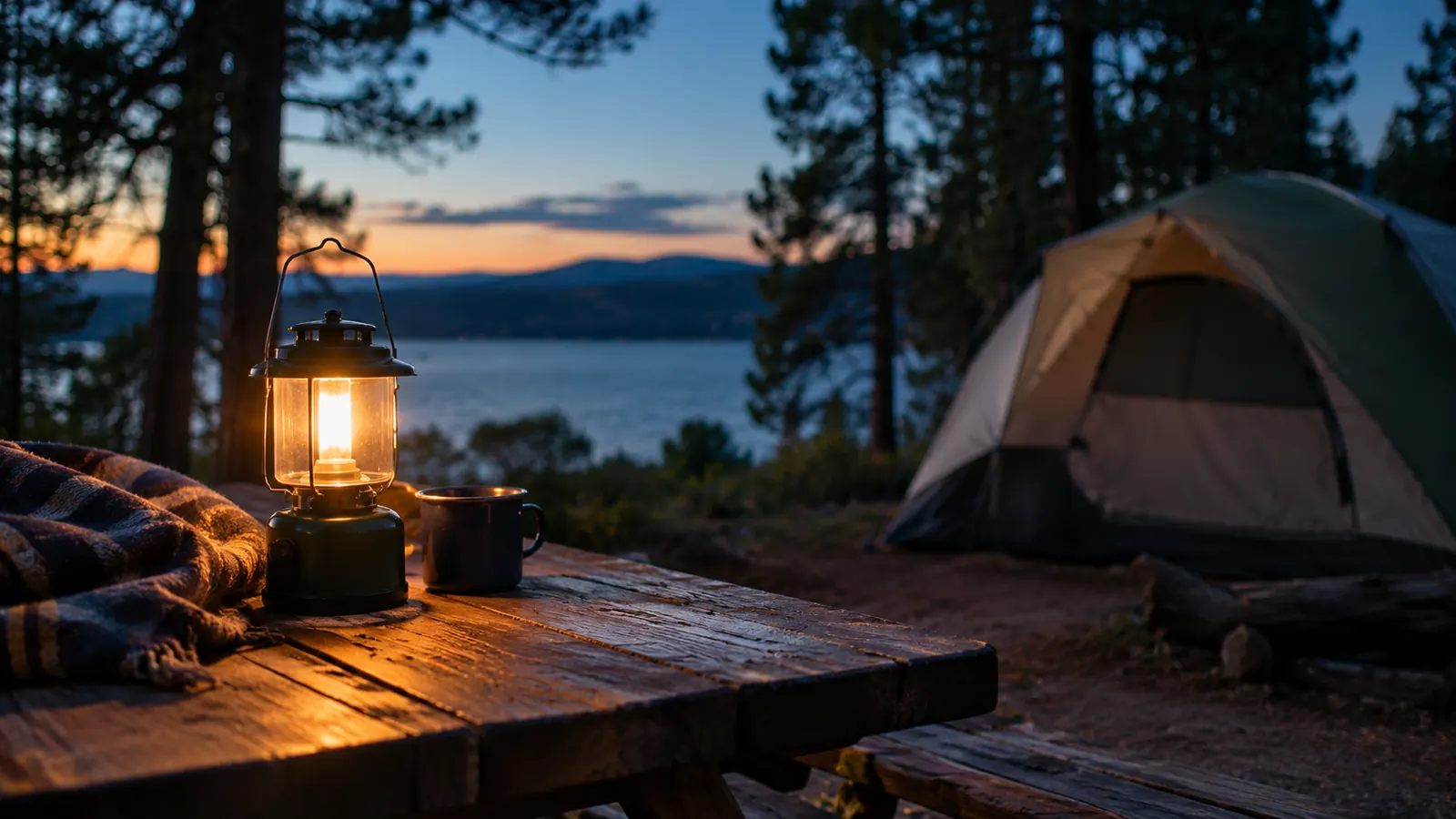
Nobody notices how dark a campsite gets until they are trying to cook dinner in it. The first time I took Marla to Clinton Lake, I packed one flashlight and figured that would cover us. It didn't. She held the beam while I worked, I held it while she ate, and by the time we crawled into the tent we were both sick of juggling a light that never pointed where the other person needed it. That trip is why I now light a campsite on purpose, and the lantern I reach for first is the Energizer LED Camping Lantern X1000.
A lantern is not a flashlight, and that distinction is the whole point. A flashlight throws one narrow beam, so you aim it at whatever you are looking at and everything around it stays black. A lantern throws light in every direction, which is what a campsite actually needs. You want the whole table lit so you can see your plate. You want the whole tent lit so you can find your glasses at 2 a.m. You want the cooking area lit so you are not slicing vegetables in your own shadow. The trick is knowing where to hang each light and how to set it, because a good lantern placed wrong is only a little better than a flashlight.
The lantern I hang first at every site
The Energizer X1000 hangs from a tent loop, sits on a picnic table, and shrugs off a passing shower. It is the one light that comes on every trip I take, from Clinton Lake to the Colorado mountains.
Amazon Check Today's Price on Amazon →Five Steps to a Campsite That Stays Lit
None of this is complicated. It is mostly habit: look at the site before you set anything up, hang the tent light before you need it, and resist the urge to run every lantern on full blast all night. Here is the order I use, and it has worked from Kansas state parks to a rainy week in the Missouri Ozarks. It is the same order I used in the years I ran a propane lantern, minus the hissing and the extra fuel bottle.
Step 1: Walk the Site and Split It Into Zones
Before I unpack a single bag, I walk the campsite once, slowly. I am looking for the four places light will actually matter over the next twelve hours: the tent, the picnic table, the cooking area, and the path to the bathrooms. Most people skip this and end up hanging the lantern exactly where it does the least good, which is usually right next to the cooler.
At a typical state park site, the table is the center of everything. That is where dinner happens, where the card game happens, and where Marla and I sit talking after dark. The tent gets its own light, the cooking area gets its own light, and the path is covered well enough by a lantern set on low at the edge of the site. When I know those zones ahead of time, I know how many lights I actually need. Usually one good lantern plus a headlamp covers the whole site.
This is also the moment to check the obvious things. Is the tent spot on level ground? Is the table under a tree that will drip on it all night? If the forecast mentions rain, I plan to hang the table light rather than set it down, because water finds the lowest surface it can. Fifteen minutes of looking has saved me more aggravation than any piece of gear I own.
The one zone people forget is the path to the bathrooms. At Clinton Lake, the restrooms are a two-minute walk from our site, and that walk is a lot longer when you are doing it in the dark. I have started leaving the lantern on low at the edge of the site, pointed down the path, and it turns a guessing game into a straight line. It is a small thing, but it is the difference between a midnight trip that takes ten minutes and one that takes three.
Step 2: Light the Tent First, From the Top
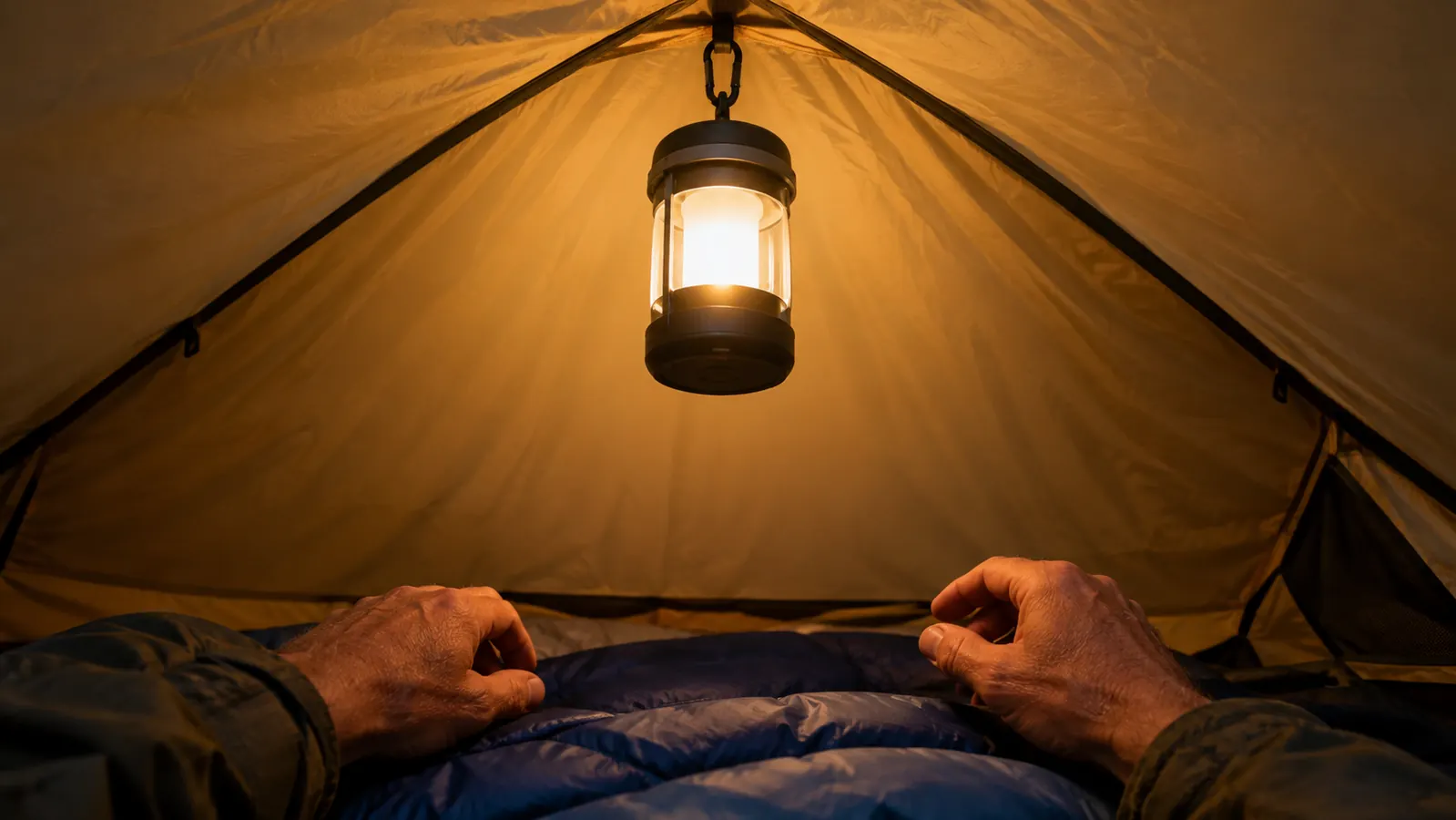
The tent gets its light before anything else, because it is the hardest place to add light later. Once the bags are in and the door is zipped, fiddling with a lantern is a nuisance. So the first thing I do after the tent is up is hang the Energizer X1000 from the loop at the top of the ceiling. Hanging it up high matters more than people think. Light from above fills the whole space evenly, and nothing gets lost in the shadow of a sleeping bag or a duffel.
Inside a tent, I run the X1000 on its low setting. Tents are small, and the reflective walls bounce light around more than you expect, so full power is overkill and it just blinds you when you open your eyes at night. Low mode gives Marla enough light to read for twenty minutes before she falls asleep, and it is gentle enough that it does not wake her when I turn it off.
One habit I picked up after a wet trip to Lake of the Ozarks: if rain is in the forecast, I hang the lantern from the loop and tuck the bottom of it just under the rainfly edge. It stays dry, it does not sit on the tent floor where dampness collects, and it lights the whole interior without a single hotspot. The X1000 is water resistant, which I have tested more than once, but there is no reason to make it earn that rating.
Step 3: Light the Picnic Table From the Center
The picnic table is where a campsite either feels comfortable or feels like a chore. If the only light is a flashlight lying on the bench, dinner is an exercise in passing the beam back and forth. I set the X1000 in the middle of the table, on the low or medium setting, and let it light the whole surface at once. One lantern in the center beats two flashlights held by two annoyed people, and I say that from experience.
There is a trick to placing it. The lantern should sit slightly to one side of the table, not directly in front of whoever is eating, so it lights the plates without glaring into anyone's eyes. At our site, it goes on the far end of the table, past the condiments, angled toward the middle. Marla and I can both see what we are eating, and neither of us is staring into the bulb.
If the wind picks up, I move it to the center of the table and set something heavy beside it. The base on the X1000 is wide enough that it has never blown over on me, but at Perry Lake one gusty evening a lighter lantern of mine took a tumble off the table and rolled under the truck. That is also when I learned to point the handle toward the center of the table, so a stray sleeve does not catch it on the way past.
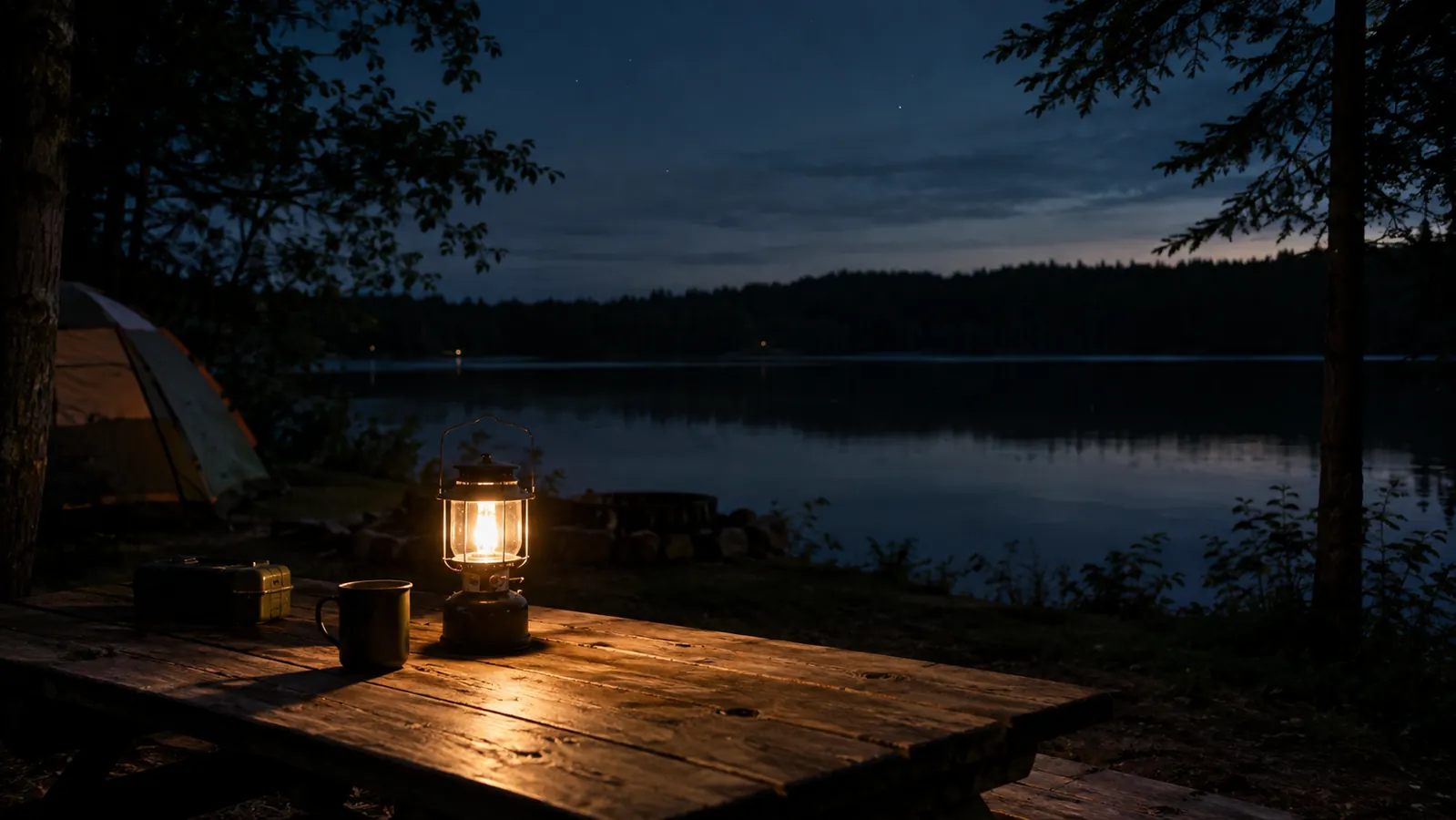
After dinner, I drop the table light to its lowest setting instead of turning it off. It gives Marla enough light to finish a chapter, it keeps the card table from going pitch black between hands, and it marks the site so a late-arriving neighbor does not stumble over our chairs. When we are ready for bed, the lantern comes inside the tent with us, and the table goes dark.
Step 4: Put the Cooking Light Where the Work Actually Happens
Cooking is the one job where people consistently under-light themselves. You are standing over a stove or a grill, your body is between the light and the pan, and suddenly you cannot tell if the onions are browning or burning. The fix is to put the lantern beside the cooking surface, not behind you. I set the X1000 on the picnic table, at the corner nearest the stove, and run it on medium. The light comes from the side, across the cutting board and the pan, instead of from behind my shoulder.
Height matters here. A lantern sitting on the table lights the tabletop beautifully, but the stove surface is a foot higher. I hang the X1000 from the awning pole or a nearby branch when I can, at about chest height, so the light falls across the work area at a useful angle. If there is nothing to hang it from, I set it on the upturned five-gallon bucket I keep in the Tacoma for exactly this kind of job.
A note on bugs, because every campground has them. The lantern will draw insects, especially at dusk. I do not fight it. I put the cooking light on the far side of the work area from where I stand, so the bugs gather around the light instead of around my head, and I cook before full dark when I can. The X1000's light is easy on the eyes, which matters when you are standing over a hot stove for twenty minutes.
Step 5: Dial It Down for the Evening and Keep the Battery in Mind
The biggest mistake I see at campgrounds is a lantern left on full blast all night, burning through batteries while everybody sleeps. I use the X1000's brightness settings like a schedule. Full or medium while we are cooking and cleaning up, low while we sit at the table, and off entirely once we are in the tent with the tent light on its own low setting. The lantern has enough battery for a full evening of this, and I have never had it die on me before we were done with it.
When I say battery, I should be clear: the X1000 takes batteries rather than a built-in rechargeable pack, and that is a feature in my book. I keep a spare set in the truck, and a fresh set is four seconds of work, not a search for a wall outlet in the middle of a state park. The battery life on low is long enough that a three-night trip is one set of batteries, and I have stretched it further by turning the light off the moment we are done with it.
The other habit I stole from my years working in basements and attics: when you turn a lantern off, give the switch a second look. A light left on inside a closed cooler or a gear bag is how you end up with dead batteries at exactly the wrong moment. One glance before we zip the tent has saved me more than once, and it takes all of two seconds.
Cold weather is the one thing that changes my battery math. I learned this in the HVAC trade: batteries lose steam in the cold, and a lantern that ran all summer on low might not make it through a frosty October night at Perry Lake. I keep the spare set inside my jacket instead of in the truck, so it stays warm, and I swap it in before the light gets weak rather than after. It is the same habit I used on job sites, and it has kept us lit on more than one chilly weekend.
What Else Helps
A lantern is the backbone of a lit campsite, but a few small things make the whole system work better. I pack a headlamp for hands-free work at the stove and for the middle-of-the-night trip to the bathroom. I carry a spare set of batteries for the X1000 in a zippered pouch, and I check the seal on the battery compartment before I leave the house, because a lantern that arrives dead is just a heavy paperweight.
I also bring a couple of carabiners. They are small, they weigh nothing, and they turn any lantern into a hanging light the moment you find a branch or a ridge line. If you camp with the same people often, pick a spot for the lantern and keep it there. Marla and I have used the same arrangement for years: tent light up top, table light at the far end of the table, cooking light on the bucket. Nobody thinks about it anymore, and that is exactly the point.
The One Thing I'd Tell a New Camper
If you are just starting out, buy one good lantern before you buy anything else that glows. A headlamp is useful, a string of lights is pretty, and a second lantern is nice to have, but none of it matters if your main light is a flashlight propped against a water bottle. The Energizer X1000 does the job of all of them for the part of the evening that matters most, and it has done that job for me on every trip since I bought it.
That Energizer lantern sat out through a thunderstorm at Perry Lake and never flickered. I dried it off with a towel and it lit the rest of the weekend.
Set your campsite up right once, and every trip after is easier
The Energizer X1000 is the lantern I hang first at every site. It lights the tent, the table, and the cooking area, and it has outlasted every storm I have put it through. If you are tired of juggling flashlights, this is where I would start.
Amazon Check Today's Price on Amazon →