
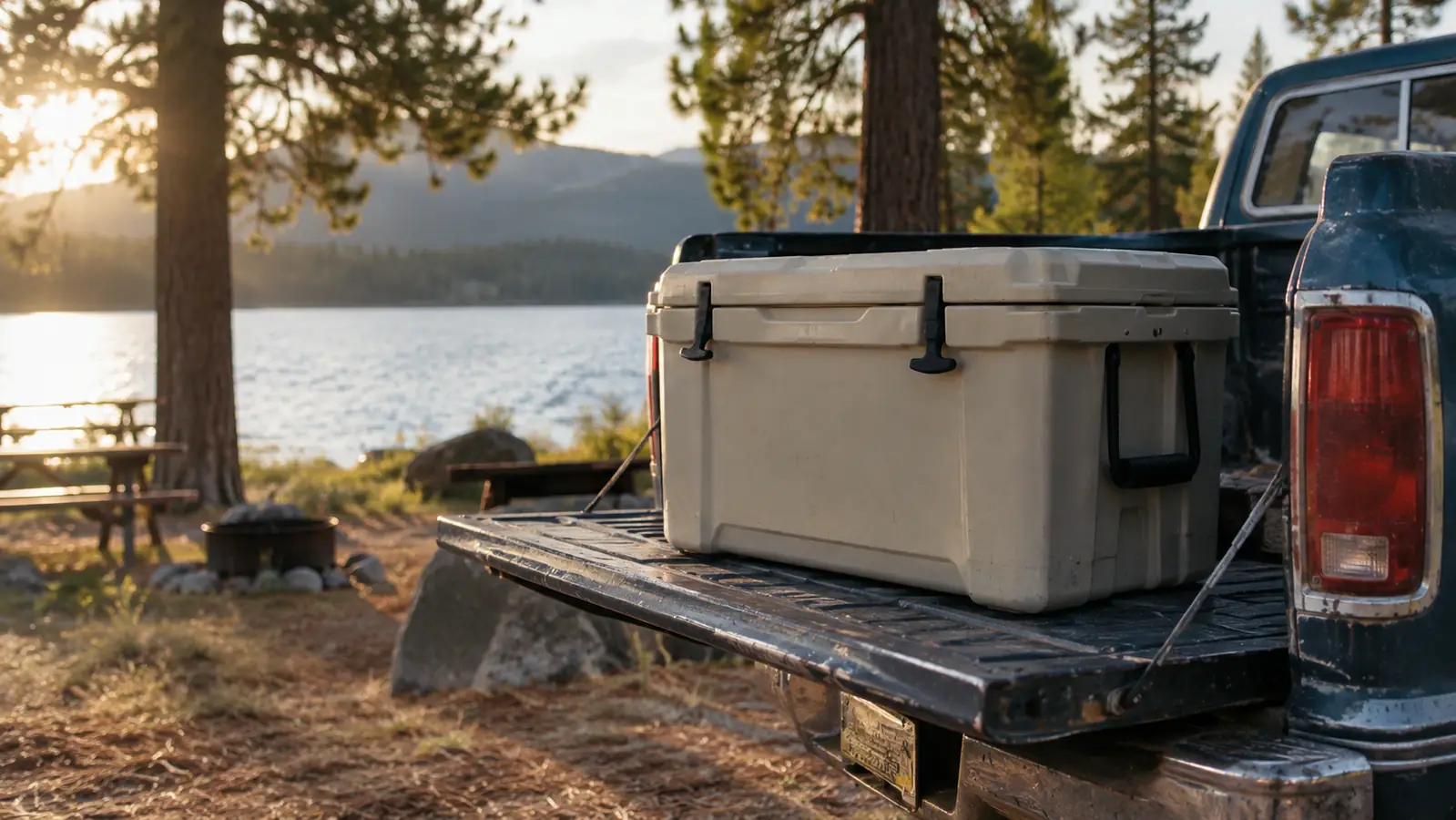
I will tell you straight: I bought the YETI Tundra 45 for the same reason most people do. I was tired of throwing away warm drinks and soggy sandwiches on the second day of a trip. I am Curt, a retired HVAC tech from Olathe, Kansas, and I have camped since I was a kid. My wife Marla and I take the Tacoma out most months from April through October, usually to Clinton Lake or Perry Lake, sometimes down to the Ozarks, and once a summer out to Colorado. This cooler has been on sixteen of those trips now, and I have opinions.
The short version: the YETI Tundra 45 does what the price tag promises. It holds ice longer than any cooler I have owned, it is built like a tank, and it will probably outlive me. It is also heavy, expensive, and awkward for one person to move when it is full. You need to know all of that before you buy one, so here is the honest review I wish I had read before I handed over my money.
The Quick Verdict
The YETI Tundra 45 is the best ice holder I have used in forty years of camping, but it is heavy, pricey, and a two-person lift when full. Buy it for multi-day trips where ice life matters more than your back.
Amazon Check Today's Price →Tired of warm drinks by day two?
The YETI Tundra 45 is the cooler I reach for every single trip now. See today's price on Amazon and decide if it is worth it for your camping style.
Amazon Check Today's Price on Amazon →How I've Used It
I did not do a lab test. I did not fill it with ice and measure melt rates in my driveway for a week. I used it the way a normal person uses a cooler: I loaded it on a Thursday night, drove to a lake, opened it all weekend, and paid attention to what worked and what did not.
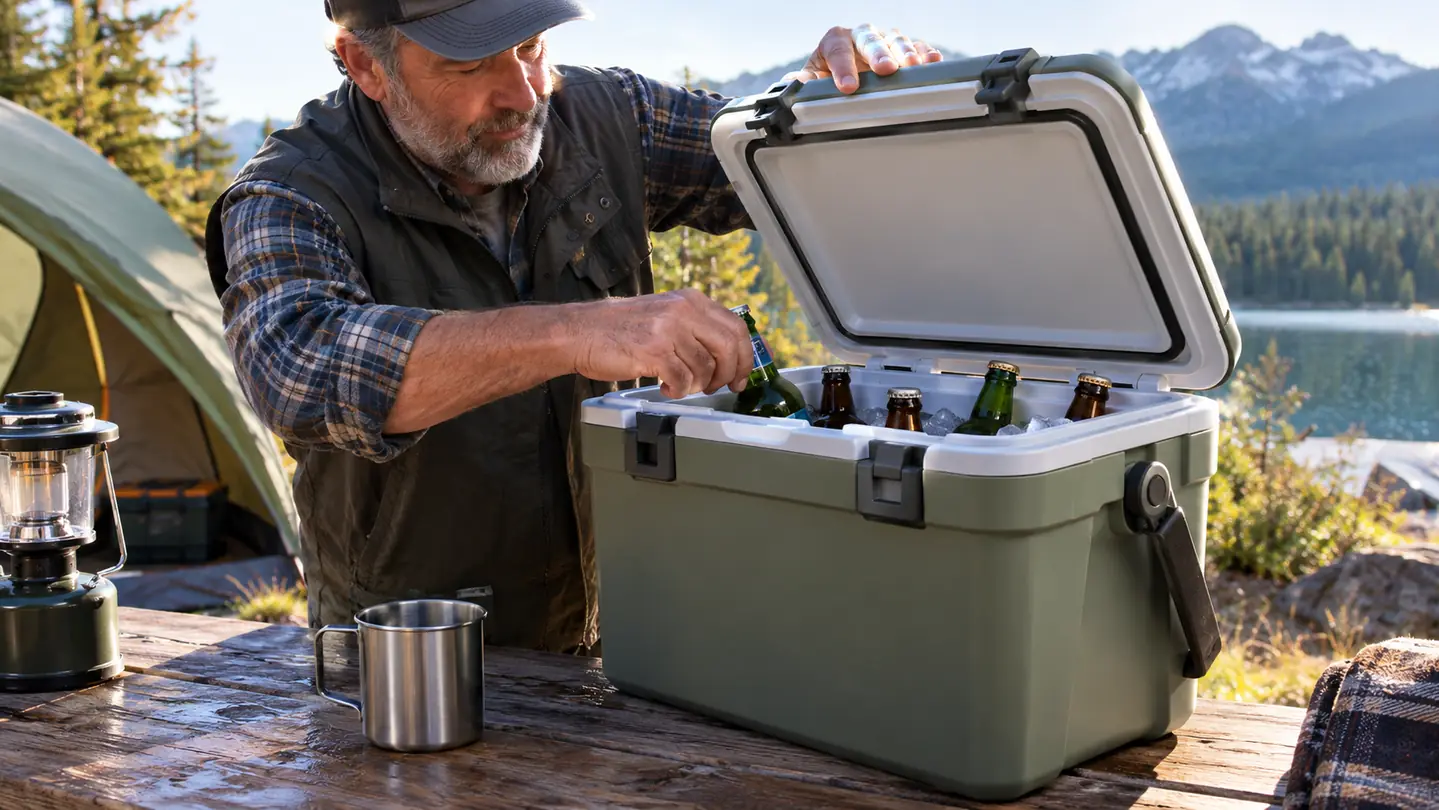
Our standard setup is three days and two nights. I pack a bag of ice on the bottom, then drinks, then a layer of food, then another bag of ice on top. Marla packs the food in plastic containers so nothing sits in melt water. I open the cooler maybe ten times a day, because that is what you do when you are sitting at a campsite with people who like to snack.
In that real-world use, the YETI Tundra 45 keeps ice for three days without a problem. On the fourth day, there is still ice floating in the bottom, just not enough to keep a second bag of drinks properly cold. For a weekend trip, it is overkill in the best way. For a five-day trip, I still bring a second small cooler for drinks we will use on day one, so we do not open the big one as often.
Here is how a typical trip actually goes. On a Friday in late June we loaded it in the Olathe garage at about four in the afternoon, drove an hour to Perry Lake with it riding in the Tacoma bed under the cap, and set up camp by six. The bed of that truck gets hot in summer, and I expected to lose a good chunk of ice on the drive alone. When I opened the lid at the campsite, the cubes still had sharp corners. By Sunday noon, when we packed out, there was a layer of cold water in the bottom and maybe half the ice left floating in it.
What Nobody Tells You Before You Buy
The first thing nobody tells you is the weight. The YETI Tundra 45 is listed at about 26 pounds empty. That does not sound terrible until you load it with a bag of ice, a case of drinks, and three days of food. Now it is sixty or seventy pounds, and you have to lift it out of the bed of a Tacoma. I am 59 and I have a bad lower back from thirty years of crawling under houses. I can do it, but I have to think about it, and I have started leaving the cooler on the tailgate and unloading it in place rather than moving it to the picnic table.
The second thing is the price. The YETI Tundra 45 costs more than some tents I have owned. You are paying for the rotomolded construction, the thick walls, the gasket, and the name. I am not going to tell you it is not worth it, because I think it is, for the right person. But I am also not going to pretend that price is not a real barrier. If you camp twice a summer and buy a bag of ice each time, a cheaper cooler will do the job.
The third thing is the latch. The Tundra 45 has two rubber latches that are easy to open one-handed, which is good. What nobody tells you is that they are not lockable. If you camp where raccoons are smart, and they are smart at every lake in Missouri, you still need a bungee cord or a lock through the holes in the latch tabs. I learned that the hard way at Lake of the Ozarks when a raccoon figured out how to pop the latch with its nose. It did not get in, but it bent the latch enough that I noticed.
The fourth thing is the drain plug. It is a nice feature, and it works, but it is slow. You have to tip the cooler or prop it up to get all the water out, and even then, a little water stays in the bottom. I have started wiping it out with a rag after draining, which is not a big deal, but it is a step nobody mentions in the marketing.
Something else worth knowing: the YETI Tundra 45 is smaller inside than the number suggests. The walls are thick, and that thickness is exactly what keeps the ice, but it eats space. With a proper two-to-one ratio of ice to food, it holds enough for Marla and me for a long weekend and not much more. If you are feeding a family of four, or you want to bring a full case of drinks plus food, you will either be playing Tetris every morning or carrying a second cooler just for drinks, which is what we ended up doing on our week in Colorado.
The YETI Tundra 45 keeps ice for three days without a problem. On the fourth day, there is still ice floating in the bottom, just not enough to keep a second bag of drinks properly cold.
How It Handles Real Camping Conditions
I have used this cooler in Kansas heat in July, in Missouri humidity, and in Colorado mountain nights. The heat is where it earns its keep. At Clinton Lake in August, with the cooler sitting in the bed of the truck in full sun, the ice lasted two full days and most of the third. My old cooler, the one I replaced, would have been a puddle by noon on day two.
The cold nights are almost funny. In Colorado, we left the cooler outside overnight and the drinks were still cold in the morning, but the ice did not melt much at all. That is not YETI doing anything special, that is just physics. The thick walls work both ways. If you leave it in the sun, it stays cold longer. If you leave it in the cold, it stays cold longer. It is a good trade.
Rain is where I was surprised. The gasket on the lid is real. We had a hard rain at Perry Lake and the inside of the cooler stayed dry. The outside was wet, the lid was wet, but the food was dry. That matters more than you think when you are camping in Missouri and it rains for two days straight.
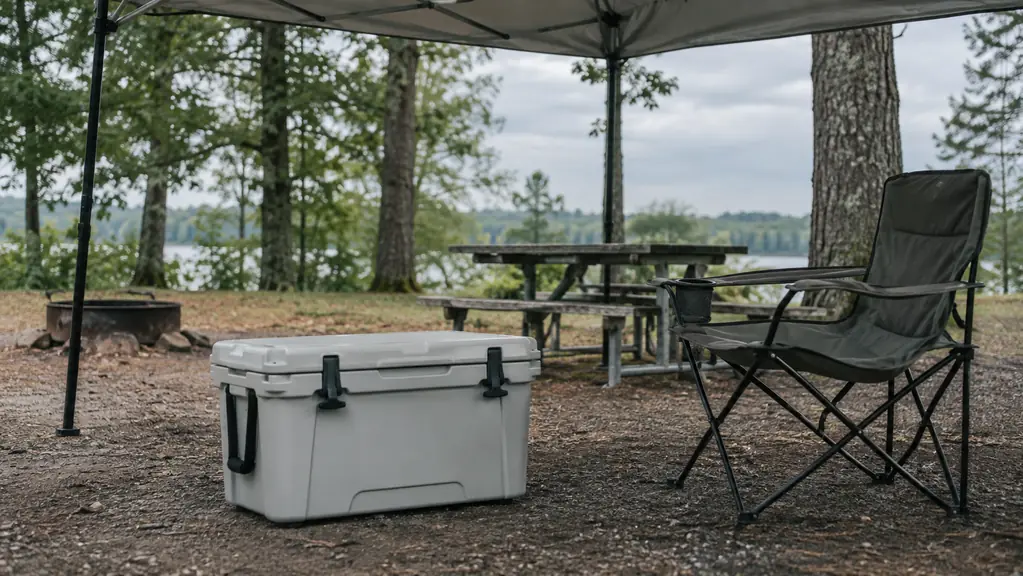
Wind and sun were the other test. At Clinton Lake one August weekend our site had no shade after about ten in the morning, and the cooler sat in direct sun on the picnic table bench for most of two days. The white lid helped. I put my hand flat on top in the middle of the afternoon and it was warm, but not hot the way a dark plastic cooler gets. When I moved it under the table on the second day, in the shade with a towel over it, the ice lasted noticeably longer, so where you put it at the site matters almost as much as the cooler itself.
The one thing I will say about the cold is that it is not magic. If you open the cooler every hour, the ice melts faster. If you put warm drinks in, the ice melts faster. If you leave it in the sun, the ice melts faster. The YETI Tundra 45 is better than other coolers at resisting that, but it does not ignore physics. I still pre-chill drinks the night before a trip, and I still keep the cooler in the shade when I can.
The Build Quality, From a Guy Who Fixes Things
I spent thirty years in HVAC, so I have a habit of looking at how things are made. The YETI Tundra 45 is made the way I would make a cooler if I had unlimited money and a machine shop. The walls are thick, the hinges are solid, the lid seals tight, and the handles are molded into the body so there is nothing to break off.
The exterior is a hard plastic that does not flex. I have dropped it, slid it across a truck bed, and bumped it into trees. It has scratches, but no cracks, no dents, no broken parts. The latches are the only thing I would call a weak point, and even those have held up fine. They just are not raccoon-proof, which is not really a design flaw, it is a feature of living in Missouri.
The interior is smooth and easy to clean. I have spilled chili in it, I have had a leaky jug of water in it, and I have had a bag of ice melt in it. A hose and a rag handle all of it. The drain plug lets you get most of the water out, and the rest wipes out. I have not had any smell stick around, which I cannot say for my old cooler.
The hinge is the part I watched most closely, because on every cheap cooler I have owned that is what failed first. On the YETI Tundra 45 the hinge is a full-length pin built into the body rather than two little plastic tabs. After a couple of seasons of opening it a dozen times a day, it has no wobble and the lid still closes square against the gasket. The rope handles are also better than they look. I was skeptical of rope instead of molded handles, but they do not cut into your fingers on a long carry from the truck to the site the way a hard handle does.
What I Liked
- Holds ice for three full days of summer camping, with some left on day four
- Thick, rigid walls and a real lid gasket that keeps rain out
- Full-length hinge and rope handles that hold up to years of use
- Smooth interior that cleans up easily after spills
- Drain plug lets you empty meltwater without tipping it
Where It Falls Short
- Heavy, about 26 pounds empty and much more when loaded
- Less interior room than the size suggests because of the thick walls
- Costs far more than a basic cooler
- Drain plug is slow to empty
- Not big enough for a family of four on a long trip
Who This Is For
The YETI Tundra 45 is for people who camp for multiple days, who are tired of buying ice every morning, and who want a cooler that will last longer than their truck. It is for the person who packs a cooler like it is a job, who pre-chills drinks, who keeps the cooler in the shade, and who still wants the best possible result. It is for the person who would rather spend money once on something that works than buy a cheap cooler every two years.
It is also for the person who does not mind the weight. If you camp out of a truck or an SUV, if you have a second person to help lift, or if you leave the cooler in the vehicle and unload it in place, the weight is a non-issue. Marla and I have a system now: I slide it to the edge of the tailgate, she takes one handle, I take the other, and we set it on the ground together. It takes ten seconds.
Who Should Skip It
Skip the YETI Tundra 45 if you camp once a year, if you only need a cooler for a day at the lake, or if you are carrying it any real distance. This is not a beach cooler. It is not a kayak cooler. It is a heavy, insulated box that is happiest in the back of a truck or on a tailgate. If you have to carry it a quarter mile from the parking lot to a campsite, you will hate it by the time you get there.
Skip it if the price makes you wince. There are good coolers for half the price that will keep ice for a day and a half, and if that is all you need, buy one of those and spend the difference on gas. The YETI Tundra 45 is a buy-once, cry-once purchase. I do not regret mine, but I also did not buy it lightly.
Alternatives I Considered
I looked at the other rotomolded coolers before I bought this one. The ones with the same thick walls and similar claims were all within a few dollars of the YETI, and most of them were heavier or had latches I liked less. I also looked at the cheaper hard coolers, the ones with thin walls and a latch that breaks in a year. I have owned three of those. They work for a weekend if you are careful, but they do not hold ice like this.
The YETI Tundra 45 is not the only good cooler, and I am not going to tell you it is. What I will tell you is that I have not once wished I bought a different one. Sixteen trips in, it still looks and works like it did on day one, and I expect it to look and work the same in ten years. That is the whole point.
Still on the fence?
I get it, it is a lot of money for a cooler. But if you camp as much as we do, the YETI Tundra 45 pays for itself in ice and replacement coolers. Check today's price on Amazon and see if it fits your budget.
Amazon Check Today's Price on Amazon →