I grew up cooking over campfires. Hot dogs on sticks, foil packets buried in the coals, a grill grate balanced on rocks that slid sideways every time I touched it. I did it that way for years, and I'll still do some of it this summer, because a few meals just taste better with smoke in them. But once my wife Marla and I started taking longer trips out of Olathe in the Tacoma, I had to admit the truth: for most of our meals, the fire was the thing slowing us down.
We bought a Coleman Triton 2-burner propane stove two seasons ago, mostly because Marla wanted coffee before noon without a 40-minute fire ritual. After two summers of state park mornings at Clinton Lake, Perry Lake, and down in the Ozarks, I have a clear answer on the old question. Here are ten reasons the Coleman Triton beats cooking over the fire, in the order I actually noticed them.
Most campfire breakfasts take 45 minutes. This stove takes about 10.
If you're tired of waiting on coals before you can eat, the Coleman Triton is the stove we've kept on every trip since we bought it. Check today's price and customer reviews on Amazon.
Amazon Check Today's Price on Amazon →Ten Reasons the Stove Stuck Around
Breakfast is done before the coffee finishes brewing
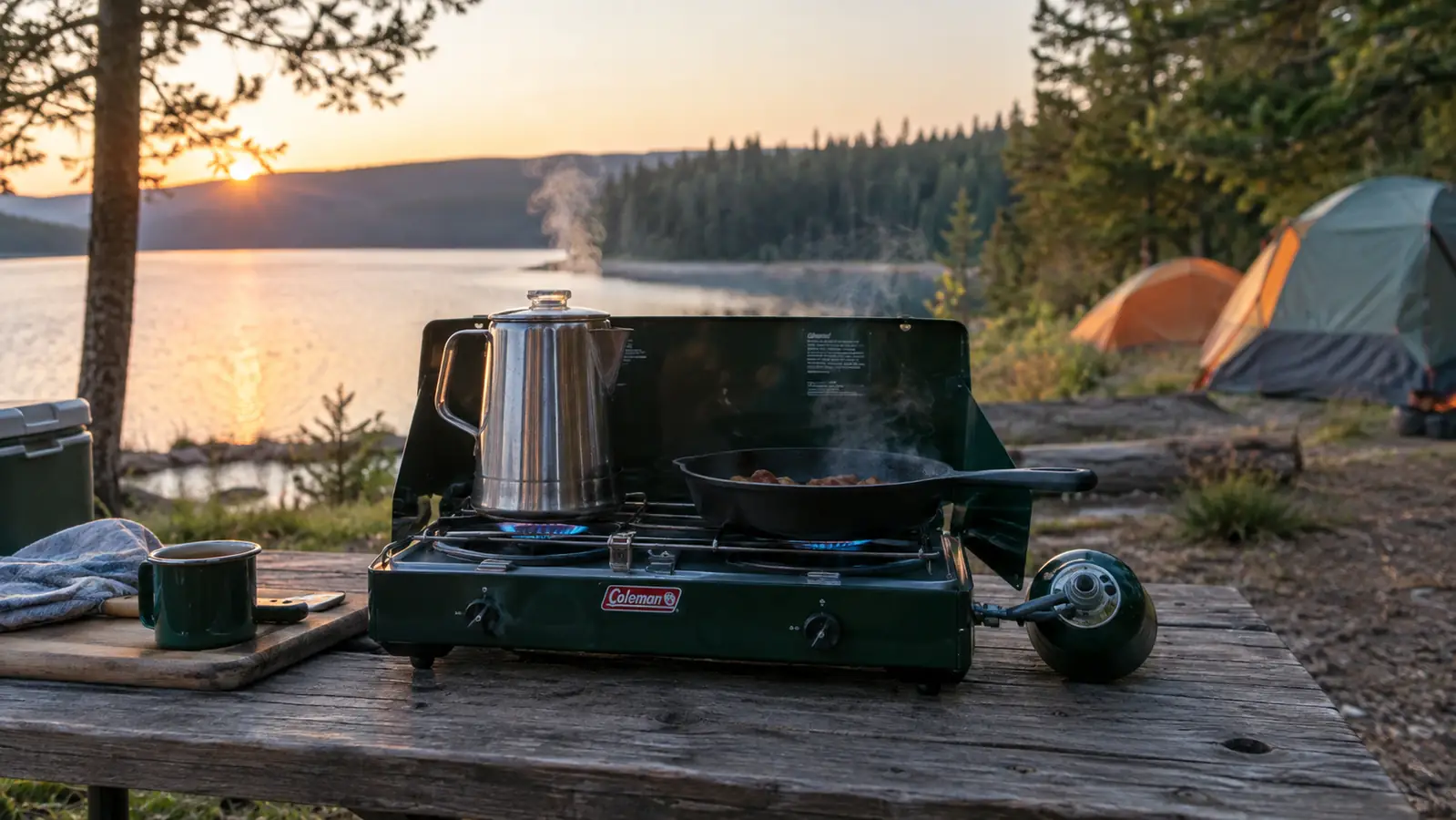
With a fire, breakfast starts with building one. You gather wood, nurse the flames, wait for coals, and only then do you cook. On a cold morning at the lake, that meant Marla and I ate at 9:30 more often than not. The Triton lights in seconds. I set the coffee percolator on one burner and the pan on the other, and we're eating eggs and bacon in the time it used to take me just to get the fire hot enough to cook on. The percolator goes on the back burner, the pan on the front, and by the time the coffee drips through, the eggs are done.
Two burners mean the meal comes together at once
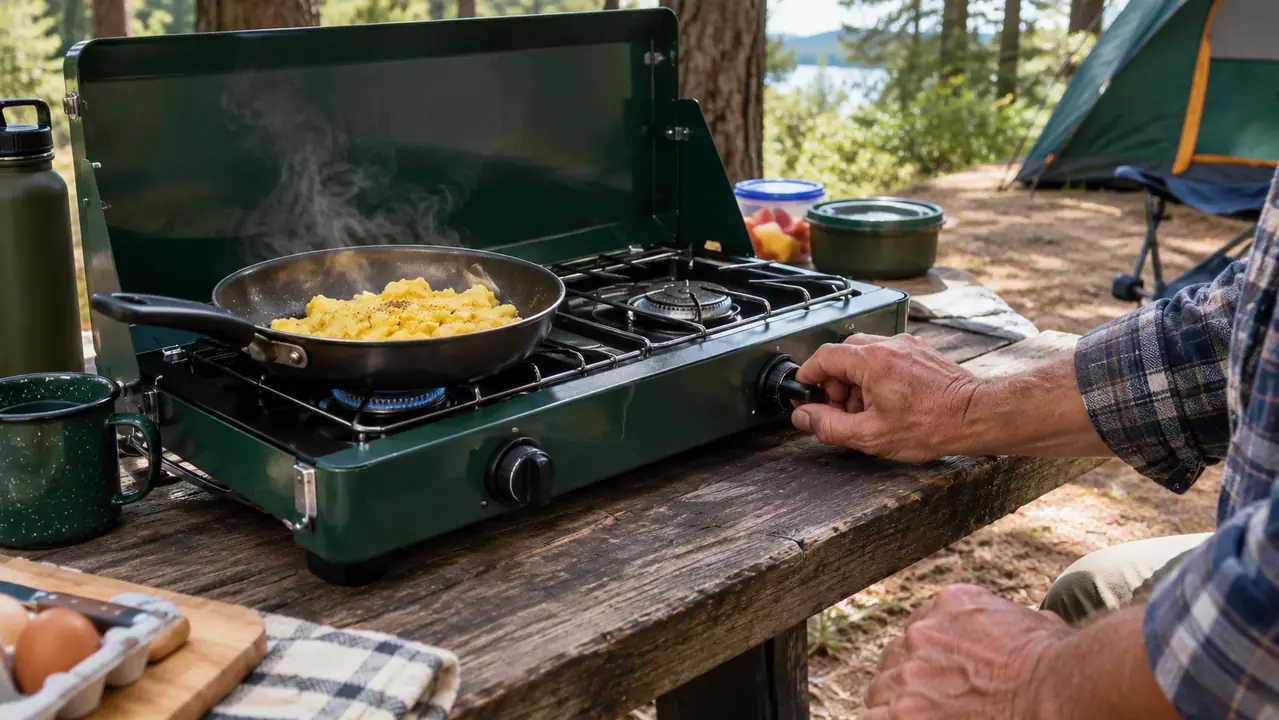
Over a fire, you cook in sequence. The meat goes first, then the side, then you try to keep the first thing warm while the rest catches up. With two burners, I run coffee on one and the main dish on the other, or the main dish and a side at the same time. Everything lands on the table hot, which sounds obvious until you've eaten a lukewarm meal you cooked in three stages. It also means I can keep a pot of water hot for washing dishes while dinner cooks, which sounds small until you've done dishes in cold lake water.
You know exactly where the heat is
A fire has hot spots and dead spots, and finding them is a skill I never fully mastered. One side of the pan burns while the other side simmers. The Triton spreads even heat across both burners, and the dials give you a real simmer instead of a choice between inferno and nothing. For anyone who cooks more than hot dogs, that control is the whole difference. Pancakes are the test. On a fire, the first batch burns and the last batch is raw. On the Triton, they come out the same every time.
It still cooks in the rain
Rain is where fires quit. We had a cold drizzle at Lake of the Ozarks one May, and the fire pit was a puddle by dinner. The Coleman Triton sat on the picnic table under the tarp, lit on the first try, and made dinner while the rain came down. We set the stove on the table, hung the tarp over the picnic bench, and ate hot soup while the fire ring filled with water. If you camp more than one weekend a year, you will eventually need to cook in weather that won't cooperate with a fire.
It gets around most fire bans
Kansas and Missouri both tighten open-fire rules in dry stretches, and some state parks ban ground fires entirely. Propane stoves are almost always still allowed because they are a contained cooking appliance. That means the trip doesn't cancel when the county goes dry. We cooked full meals at Perry Lake during a stretch when every fire pit in the park sat empty. I checked the rules at Clinton Lake one dry August and the notice said it plainly: no ground fires, propane stoves welcome.
You get your mornings back
Building, tending, and breaking down a cooking fire eats daylight. On a weekend trip, that's maybe an hour and a half a day that I used to spend on fire chores. With the stove, we roll out of the tent, get the coffee going, eat, and wash up before the fire crowd has their first flame steady. By 8:30 we are packed and heading to the trailhead while the coffee drinkers are still feeding twigs to a flame. We see more of the lake and less of the smoke.
One little bottle lasts longer than you'd think
I expected to burn through propane cylinders and buy more at every gas station. In practice, one 16-ounce bottle covered a long weekend cooking breakfast and dinner, with enough left over for a lunch. Two bottles in the bed of the Tacoma cover a full week in Colorado. The bottles are cheap to replace at any hardware store, and they store flat under the truck seat. You trade a little weight in the cooler for not having to source dry wood in a strange area.
Your pans stop looking like they went through a fire
Cooking over coals coats every pan in soot, gets ash in the food, and turns cleanup into a scrubbing session. The Triton burns clean, so a quick wipe handles the pans, and the stove itself folds down with the grates still attached. The grates lift off for a quick rinse, and the whole thing fits back in its case without a fight. We spend less time at the spigot scrubbing and more time sitting by the actual campfire, which is where the fire belongs anyway.
The fire goes back to being the fire
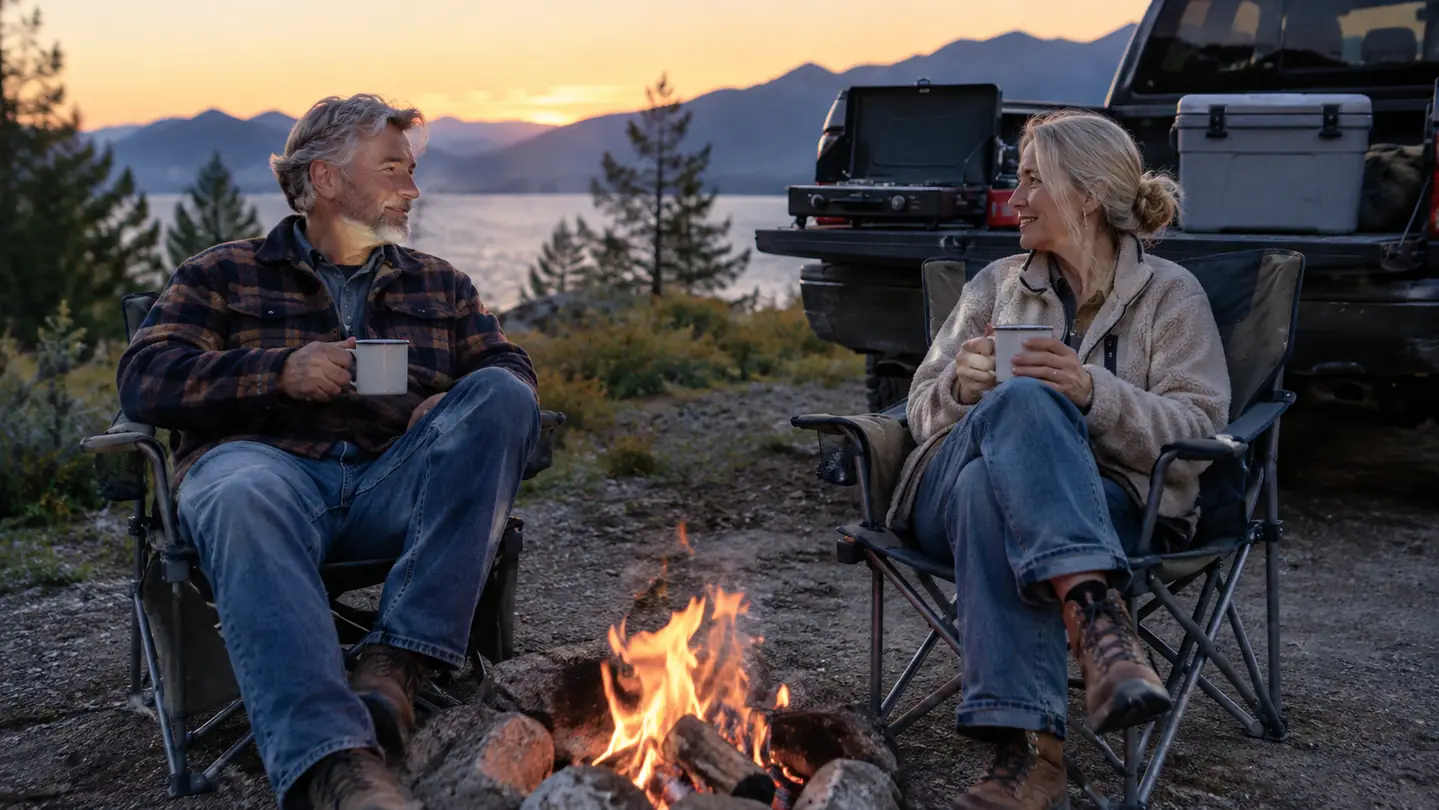
Once the stove handles the cooking, the campfire gets to be what it's good at: a place to sit, talk, and watch the flames after dinner. I still build one most nights, but it's a small one for chairs and coffee, not a production kitchen. Cooking and campfire are two different jobs, and trying to make one thing do both made both of them worse. That separation made both better: faster meals, and a fire that's actually worth sitting around.
Anyone can cook on it, including people who never camped
Marla didn't grow up camping and was never comfortable judging coals or rotating a pan over an uneven fire. The Coleman Triton works like the stove in her kitchen: turn a knob, adjust the flame, cook. That matters more than you'd think. When both people can handle dinner, the trip gets easier in every direction, and our trips got longer because of it. Now she volunteers to cook breakfast while I break down the tent, and that alone is worth the space it takes up.
What I'd Skip
The Triton isn't the right tool for everyone. If your whole reason for camping is cooking over coals, a stove will feel like a step backward, and you should keep your grate and your patience. It's also bulky. It takes up real space in the truck bed, and the propane cylinders are one more thing to pack and recycle. And on a genuinely cold morning, propane pressure drops and the stove runs weaker until the bottle warms up. None of that changed my mind, but I'd be lying if I said the stove replaced fire cooking without any tradeoff.
We ate eggs, bacon, and coffee in the time it used to take me just to get a fire hot enough to cook on.
Ten trips in, I still build a fire most evenings. I just don't cook on it anymore. If you're on the fence about a two-burner stove, that's the whole review in one sentence.
Two summers in, the Triton is the first thing I pack
If you are done waiting on coals before you can eat, check today's price and customer reviews on Amazon.
Amazon Check Today's Price on Amazon →