
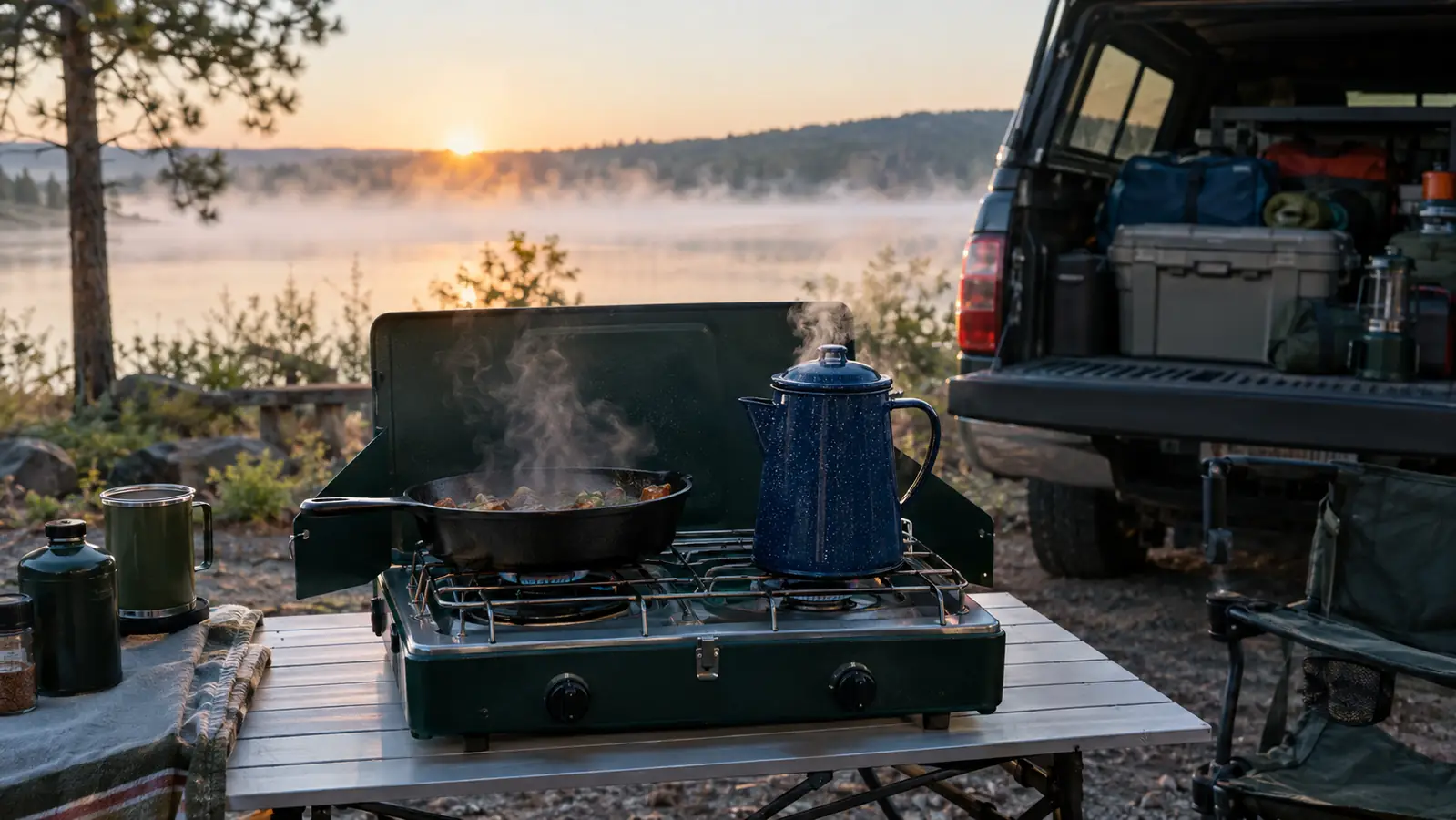
Wind off the lake at Clinton Lake State Park killed the Gas One's flame twice before my eggs got a crust on them. I turned the fire back up, held a hand over the stove, and watched it gutter out anyway. That was the morning I stopped pretending the cheaper stove I'd grabbed would be fine for real camping. The Coleman Triton on the tailgate, the one I'd been hauling around as a spare, lit on the first push and cooked the whole breakfast without a complaint. Marla noticed I didn't say a word about the stove the rest of the day, and she was right. I spent forty years as an HVAC tech getting paid to make things work reliably, and a stove that needs coaxing offends me on principle. What follows is the comparison I ran over the next three seasons to make sure that one morning wasn't a fluke.
Short answer: the Triton is the stove that lives in the back of my 2014 Tacoma under the bed cap, and the Gas One has been demoted to the garage. It isn't because the Gas One is junk. It's a perfectly honest two-burner stove for the money it costs going in. But on the mornings that matter, cold and windy with a lake in front of you, honest for the price isn't the same as a tool I trust. The Triton's 20,000 total BTUs, its fold-out baffles, and its push-button ignition turn breakfast into the fastest part of the morning, and that is what I'm actually paying for.
Head to Head
Both stoves ran on the same 16.4-ounce propane bottles, sat on the same picnic tables, and cooked the same meals. Here's the scorecard.
| Coleman Triton | Gas One | |
|---|---|---|
| Total heat | 20,000 BTU across two burners. Handles a 12-inch skillet and a 10-inch pan at the same time. | Lower combined output. One burner is fine; two at once drifts toward a simmer. |
| Wind handling | Fold-out baffles on both sides. Cooks through a lake breeze without babysitting. | Open burner deck. A gust off the water killed both flames on my first test morning. |
| Weight and carrying | Heavier steel body, no carry case. Rides in the truck with a rag over the grates. | Lighter, and it ships with a plastic carry case that clips shut and stores behind the wheel well. |
| Ignition | Push-button ignition lights both burners on the first try. | Slower to catch on damp mornings, and it needs the wind blocked to light. |
| Price | Costs more going in. You're paying for the steel, the baffles, and a brand that still stocks parts. | Cheaper from the start. For a spare stove or a light packer that matters most. |
| Warranty | One-year limited warranty, and Coleman answers the phone and sells you a part. | One-year limited warranty. I never had to call, so I can't rate the follow-through. |
How I Tested Them
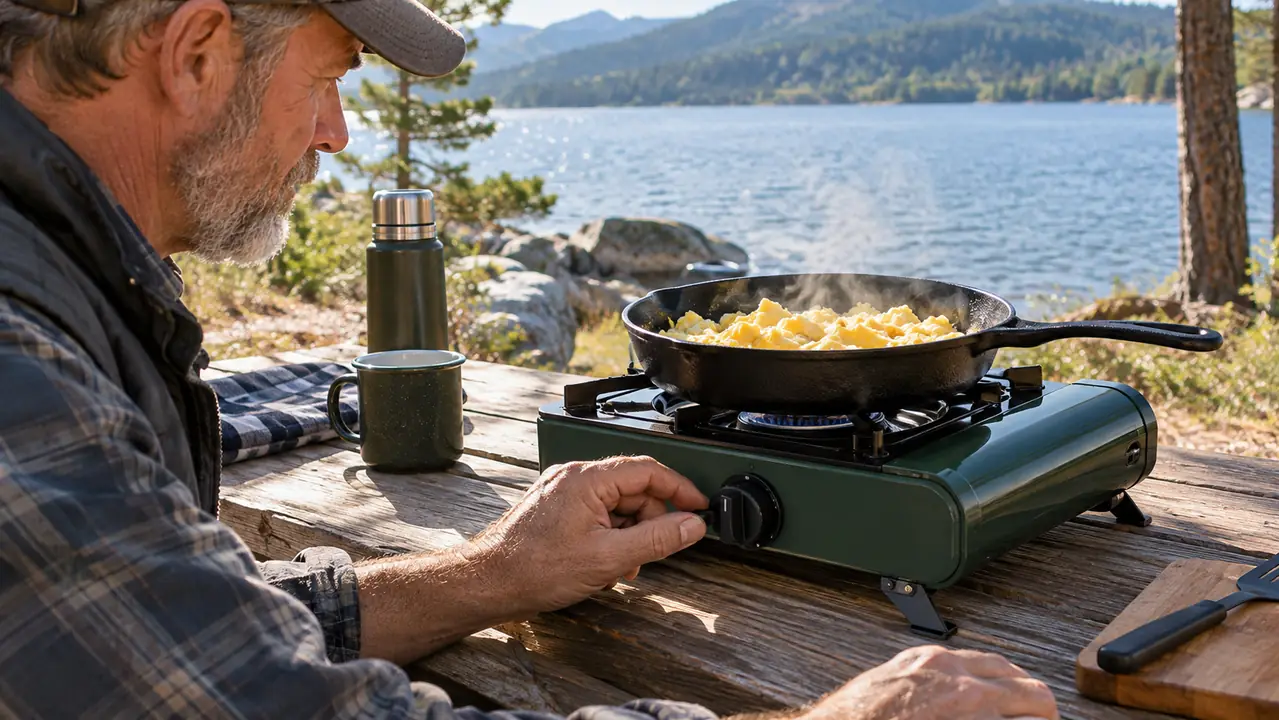
I didn't run these two stoves on one afternoon and call it a verdict. Both went to Clinton Lake and Perry Lake through the spring, down to the Lake of the Ozarks in the summer, and out to Colorado for the long trip west in August. The spring trips were the first weekend of April and the first weekend of May, which is the season in Kansas when the wind doesn't quit, so I got the worst conditions early. Every trip I ran the same drill: a quart of water for coffee first thing, a skillet of eggs and bacon after that, and at least one evening meal with both burners going. I deliberately did not take notes on the first two trips. I wanted the answer to come from steady use, not from a clipboard I'd convince myself I followed. The drill stayed the same trip after trip so the only variable was the stove itself.
The test that separated them was the wind test. On the picnic table at Clinton Lake, with a steady breeze off the water, the Triton's baffles kept both burners going all morning. The Gas One went out twice before breakfast was over. The first time I was reaching for the salt. The second time I was standing right over it, and it still died. That isn't a knock on its workmanship. It's a design difference. One stove treats wind as a normal part of camp. The other treats it as something that won't happen.
I also watched the aggravations that don't show up on a spec sheet. Which stove needed a match when the air was damp. Which one's grates held a skillet still while I scraped stuck eggs. Which one took more than ten minutes to wipe down before it went back into the truck. On the Ozarks trip, a grease spill from a sausage link took two passes with a rag to get out of the Gas One's tray, while the Triton's slide-out tray handled the same mess with one wipe. The small things counted as much as the big tests.
Why I Bought the Gas One in the First Place
I bought the Gas One during a spring when I wanted a spare two-burner for tailgating and didn't want to spend much. That's an honest use. If you need a stove for the back of a car on the way to a ball game, the Gas One does its job, and it's easy to tell yourself you saved real money. I told myself the same thing. The Triton was already in the truck from a summer of work trips, so the Gas One came along as the everyday stove for a while.
Here's what I learned. The everyday stove follows you to the places where wind, rain, and cold mornings actually happen. The Gas One cooked fine on calm evenings at the farm pond. The first time the wind came up off Perry Lake, a Saturday in May with a front moving through, I spent more time relighting it than I spent eating. I had the burner knob open and a hand cupped around the flame, and it still went out three times before the bacon was done. Marla finally said, 'Use the other stove,' and she was right. That's the trip I swapped them. The Gas One went to the garage, and the Triton took back its spot in the truck, where it has stayed since.
What the Specs Don't Tell You
Neither brand's spec sheet tells you what a stove does at six thirty in the morning in damp air. The Triton has lit on the first push every single trip, including mornings when the table was wet and the wind was up. The Gas One needed a couple of tries on those same mornings, and once or twice I had to shield it with my jacket to get the flame to catch. That difference repeated itself often enough that I stopped wanting to live with it.
The spec sheets also don't tell you which stove cooks the way you actually cook. Marla and I eat a cooked breakfast most trips, which means two pans at once plus a kettle for coffee. The Triton's wide grate setup lets a 12-inch skillet sit dead in the center without tipping, and the 10-inch pan sits beside it with room to spare. The Gas One's burner spacing is tighter. At Mark Twain National Forest in June, the handles on my two usual pans touched, and I spent the meal nudging them apart instead of flipping eggs. When the potatoes are about to hit the ground, that's the difference you notice.
Where Coleman Wins
The Triton wins in the categories a stove has to win. Twenty thousand BTUs means I can run a 12-inch cast iron skillet for the eggs and a 10-inch pan for the potatoes without either one dropping to a simmer. The wind baffles fold out, stay where I put them, and shrug off a gust that would gut the other stove. And the push-button ignition lights both burners before I've set the spatula down. For hands that are done with forty years of wrench work, that's not a luxury. It's the whole point.
It also wins on the things that show up after the honeymoon. The steel body has taken gravel, pine needles, a dropped skillet, and one Colorado hailstorm in August that rolled in while breakfast was still on the burners. I wiped the pea-sized ice off the grates and the stove lit again the next morning like nothing happened. It still sits flat on every table we've set it on. The chrome grates lift off and the drip tray slides out, so ten minutes with a sponge gets it ready to store. Coleman has been building these stoves for generations, and it shows in the parts shelf. When something wears out on mine, it'll be a part I can order, not a stove I have to replace.
Where Gas One Wins
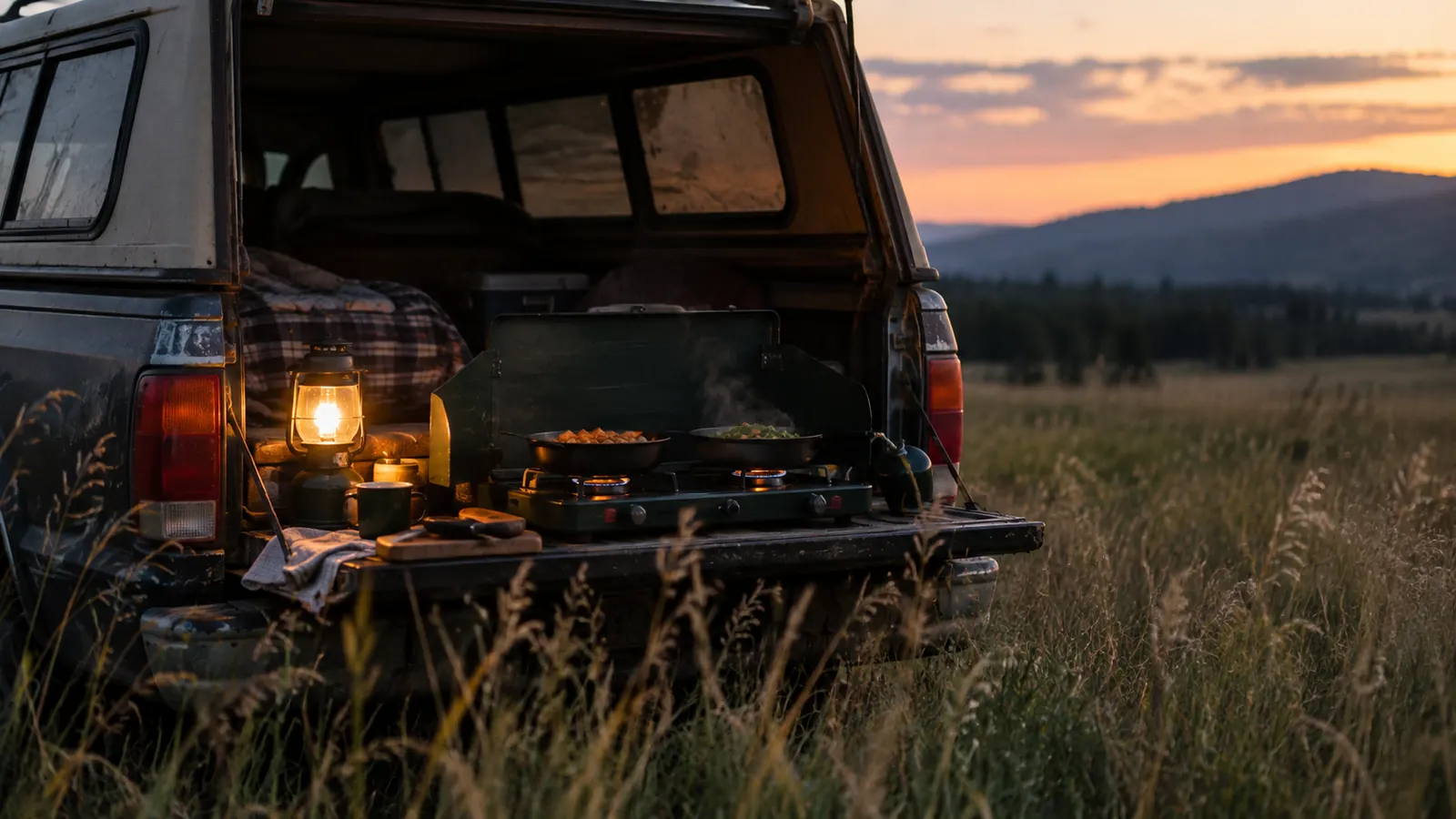
The Gas One wins the two categories that decide the sale for a lot of people: what it costs going in and how easy it is to carry. It's lighter than the Triton by a noticeable margin, it comes with a plastic carry case that clips shut, and it stores flat behind the wheel well of the Tacoma. I checked one afternoon: it fits in the gap behind the wheel well with the lantern and the axe, while the Triton needs the bed floor. For a weekend camper packing a small car, or for someone who wants a spare stove that takes up one garage shelf, that's the whole ballgame.
It's also the right answer when you're honest about what you cook. If your camp meals are one pot of chili, a pan of burgers, or a kettle for coffee, the Gas One will get you there. The rule that came out of my season of testing is simple: if you can cook for two with one pan at a time, the Gas One is plenty. I believed that before the test. I just believe it with a better story now.
Keep the stove that survives the wind
I ran both for a full season, and the Coleman Triton is the one that stayed in the truck. Twenty thousand BTUs, baffles that work, ignition that starts the first time, and a company that will sell you a part when something finally wears out.
Amazon Check Today's Price on Amazon →Who Should Buy Which
Buy the Coleman Triton if you camp the way we do: two people, two burners going at once, a breeze off a lake most evenings, and gear that has to survive a season in a truck bed. Buy the Gas One if you want a cheaper spare, pack small, or only need one burner's worth of cooking on the occasional weekend. There's an honest place for both stoves, and I'd rather you buy the Gas One and be satisfied than stretch for the Triton and never use it. The difference is which one you reach for when the wind comes up off Perry Lake at a quarter to seven in the morning.
What Shows Up After a Season
Some differences don't surface until a stove has lived in the truck for a while. The Triton's grates are solid enough that a cast iron skillet doesn't skate when I scrape eggs loose. The knobs have a positive click, so I can set a simmer by feel in the dark. The gas connection stays snug, so I don't catch a whiff of propane when the stove is bouncing around in the bed. Little reliability details like that are what separate a stove I reach for from a stove I work around.
The Gas One showed honest wear with time. The body is thin enough that a cooler sliding against it on the washboard gravel into the Perry Lake campsite left a dent the size of my thumb. The handles on the carry case feel like they'd crack if I didn't treat them gently, and one latch sits crooked after the Colorado trip. None of it was fatal, and I'd still tell a light packer to buy one. But it told me what I needed to know: the Gas One is a fair-weather stove that earns its lower price, while the Triton is the stove that keeps cooking when the trip stops being pretty.
Bottom Line
If I had to buy one two-burner stove tomorrow on my own money, it would be the Coleman Triton. It's the one I light on the first try, the one that cooks two pans at once in a breeze, and the one that has fed Marla and me from eastern Kansas to the Colorado high country. The Gas One has its place, and I'll be the first to say a cheaper stove has a right to exist. But the thing you want at six thirty on a cold morning is trust, and trust is earned over seasons, not on a shelf. The Triton earned mine, and that's the whole review.
The stove that stayed in my truck
Three seasons of camp breakfasts and the Coleman Triton has never let me down. Check today's price on Amazon and see if it earns a spot on your tailgate too.
Amazon Check Today's Price on Amazon →