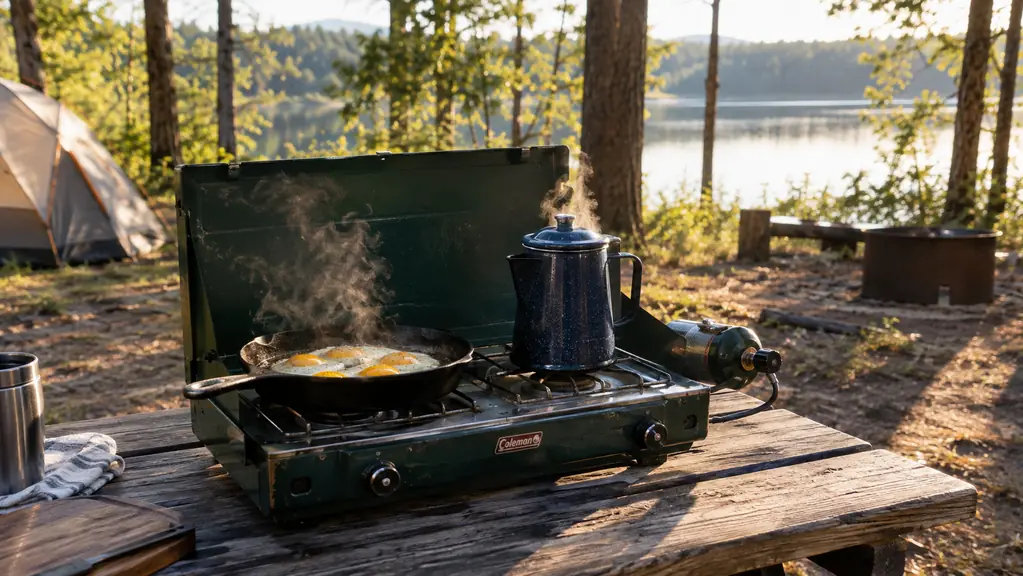
Breakfast is the first meal to get skipped on a camping trip. You wake up cold, the wind is up, and firing up the stove means standing over it while the eggs take forever and the flame keeps blowing sideways. For years, that was my wife Marla's problem, not mine. She'd be up first, coffee going, eggs in the skillet, and I'd handle the tent stakes and the cooler. Then last April at Clinton Lake, she stayed in her sleeping bag. She sleeps cold, always has, and that morning the temperature hadn't climbed out of the forties. So breakfast became my job. I made it with a single burner that couldn't hold a flame in a breeze, and I learned exactly why that meal gets skipped.
I grew up with Coleman stoves. My dad had one that lived in a metal case and looked like it had survived the Korean War. We cooked on it every trip, and it never once let us down. So when I decided breakfast was going to be my job, I didn't shop around much. I read the reviews, checked the numbers, and bought the Coleman Triton two-burner propane stove. It's not the cheapest stove on the shelf, but I've learned the hard way that cheap camping gear costs you twice.
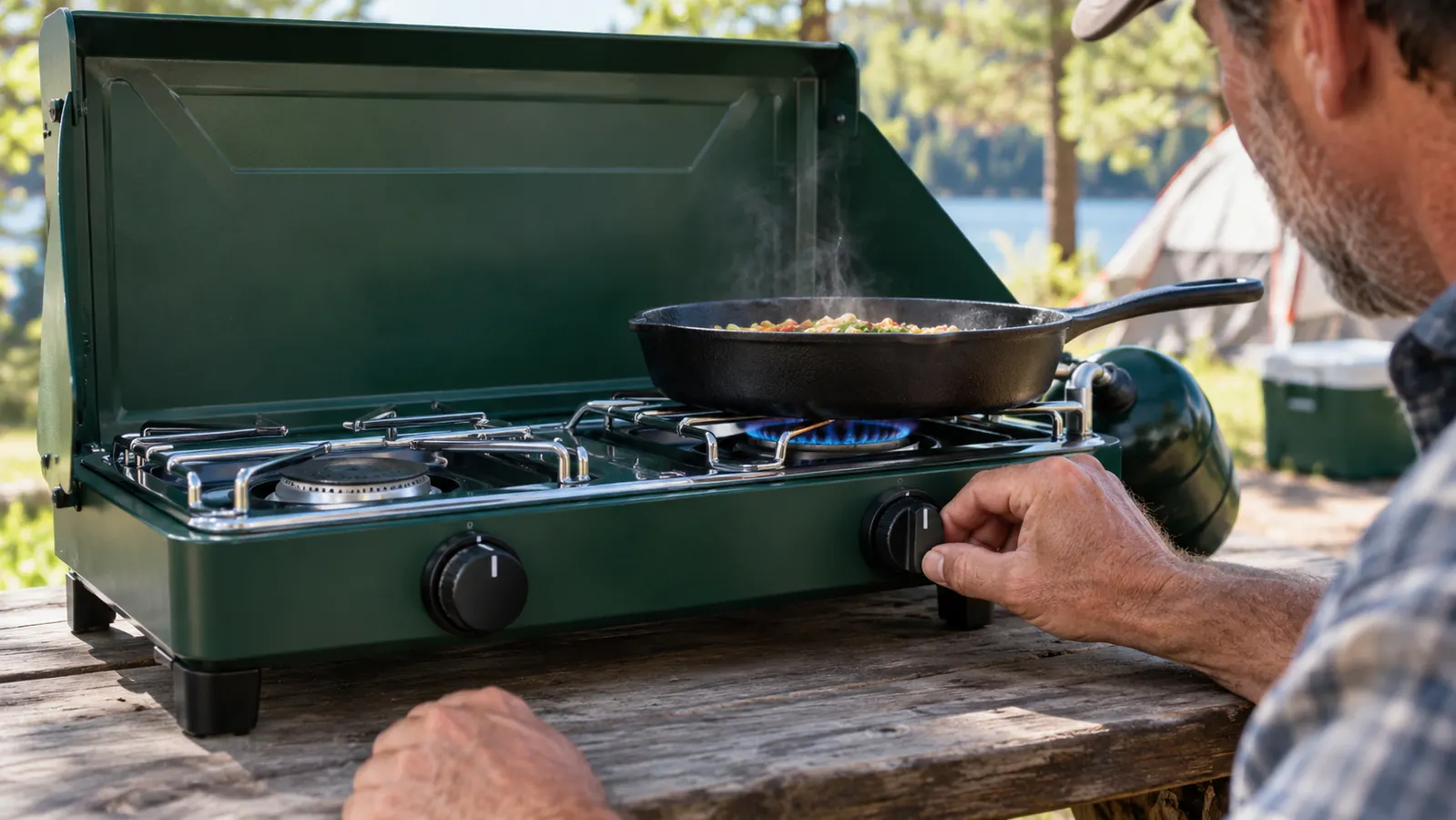
The first morning out, I had my doubts. The Triton is not a small stove. It takes up a good chunk of the table, and it's heavy enough that you notice it when you lift it out of the bed of the Tacoma. But it lit on the first push of the igniter, and the flame stayed put even with the wind coming off the water. The wind guards built into the sides made the difference. The big burner took a twelve-inch skillet, the little one held the coffee pot, and for the first time in years we had bacon, eggs, and coffee done at the same time.
Here's what changed. It wasn't just that breakfast got faster. It was that I didn't have to babysit it. I could start the eggs, walk over to the table, pour myself a cup of coffee, and come back to find the bacon done instead of burnt. Marla noticed before I said a word. She sat in her camp chair with her coffee, watching the skillet instead of hiding from the cold, and after a while she said, "I could get used to this." That's the whole review, right there.
The second morning, I tested it on purpose. I set the stove up on the tailgate of the Tacoma, which is not perfectly level, and cooked a full breakfast anyway. It handled it. I learned that morning that the Triton doesn't need a perfect setup. It needs a reasonable one. Level the table with a flat rock under a leg and it behaves like a kitchen range.
Three trips in a row, we had bacon, eggs, and coffee done in about twenty minutes, and I wasn't standing over the stove the whole time.
Twenty minutes from cold to breakfast.
The Coleman Triton is the stove I've used every trip since April. If you're tired of skipping the meal that starts the day right, it's worth a look.
Amazon Check Today's Price on Amazon →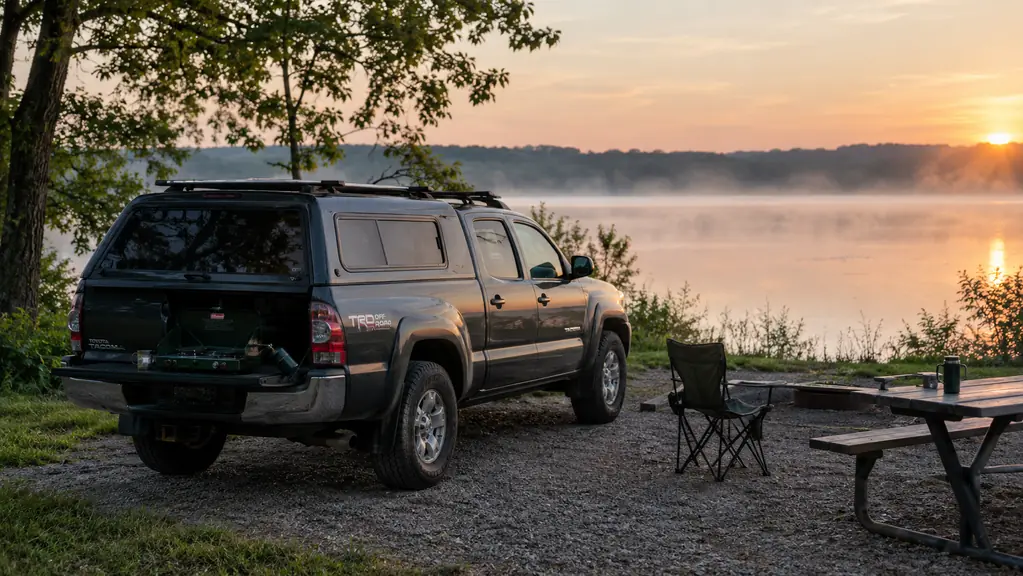
Since April, it's been to Perry Lake twice, down to the Lake of the Ozarks, and over to Mark Twain National Forest. It's spent a week in the bed cap of the Tacoma, bounced down gravel roads, and been set up on more picnic tables than I can count. The igniter still fires on the first push. The burners still put out a clean, even flame. Nothing has come loose, nothing has melted, and the grates clean up with a wet rag.
Now the honest part, because every piece of gear has one. The Triton is bulky, and it's not light. If you're backpacking, this is not the stove for you, but you already knew that. The dials are stiff when they're cold, and the grates are wide enough that a small coffee pot can wobble if you don't set it dead center. And in a real wind, the kind that comes straight across a Kansas lake, the wind guards help but they don't make the wind disappear. You find a spot with the wind at your back. That's just camping.
The other thing I learned is that the stove wants a flat surface. The first trip, one leg of the picnic table was sunk in soft ground and the whole stove rocked. I slid a flat rock under that leg and the skillet sat still. Don't level it and you'll chase your eggs across the pan. That's true of any two-burner stove, but the Triton is big enough that you notice it more. It's a trade I'm willing to make. I'd rather haul a slightly heavy stove than eat a cold breakfast.
What I'd Tell You If We Were Sitting at My Kitchen Table
I'd tell you this. If breakfast is the meal you skip when you camp, a two-burner stove fixes more of your trip than any other single piece of gear. Not because it's fancy. Because it lets you start the coffee and the bacon at the same time, and it keeps the flame lit long enough to finish the eggs. The Coleman Triton is not the cheapest two-burner stove you can buy, and it's not the smallest. It's the one I'd buy again. We're heading back to Colorado this summer, and it's coming with us. That's the highest praise I can give any piece of gear: it gets loaded into the truck without me thinking about it.
Make breakfast your easy job, not your skipped meal.
The Coleman Triton two-burner stove has made every trip since April. See today's price on Amazon and decide for yourself.
Amazon Check Today's Price on Amazon →